How Venwiz Applied Project Execution Management to a 1.6 GW Greenfield Solar PV Manufacturing Project

Overview
Our client, India's leading manufacturing-as-a-service (MaaS) company, was setting up a 1.6 GW solar panel manufacturing plant in Telangana. The greenfield project required extensive civil and MEP work running in parallel.
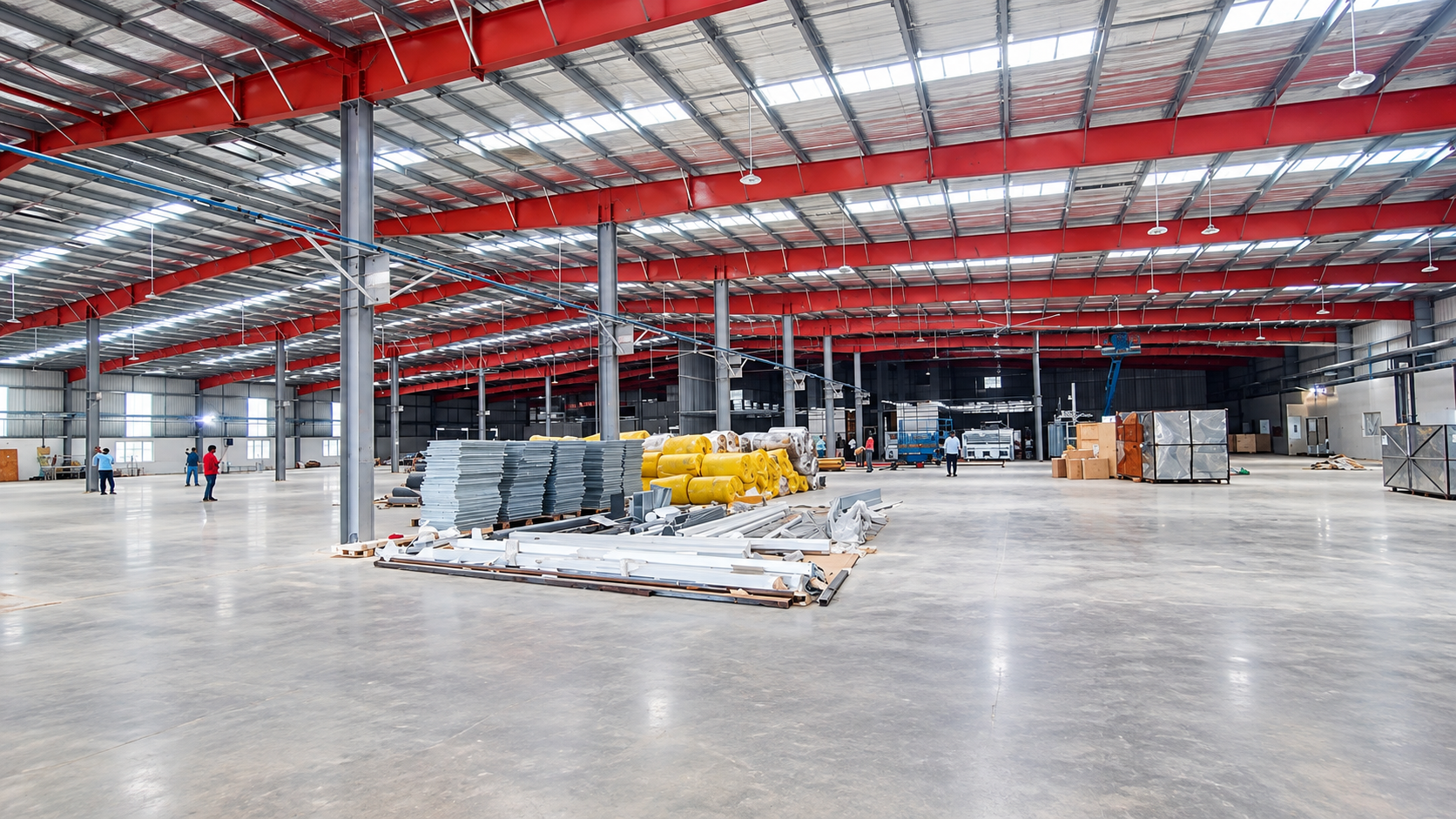
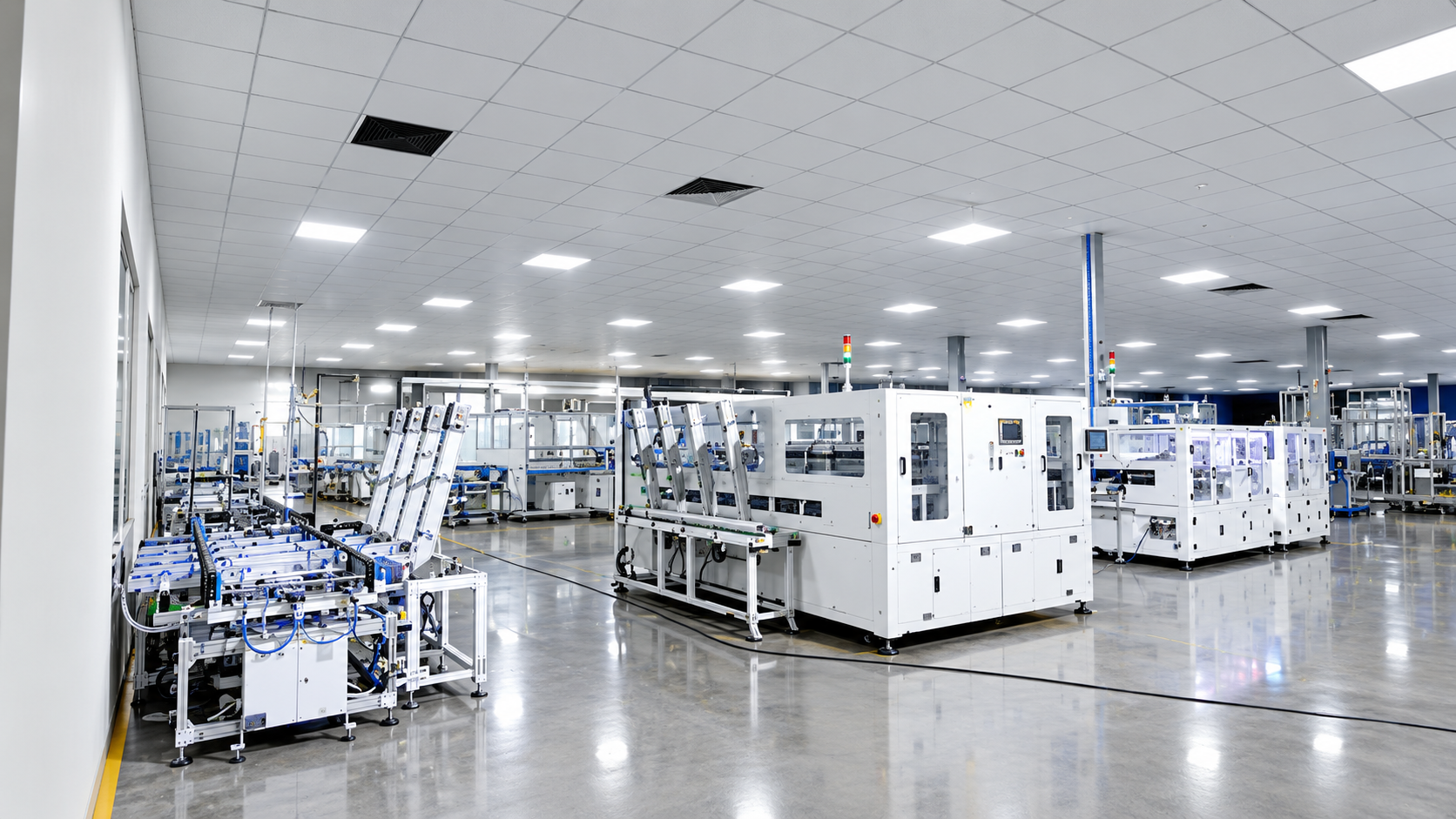
The civil scope covered the East Side Platform (EP) culverts, pump room, security room, scrap yard, canteen, visitor block, gas bank, waste shed, and administrative-area tiling. The MEP scope covered electrical, plumbing, firefighting, sewage treatment, false ceiling, and internal partition wall work.
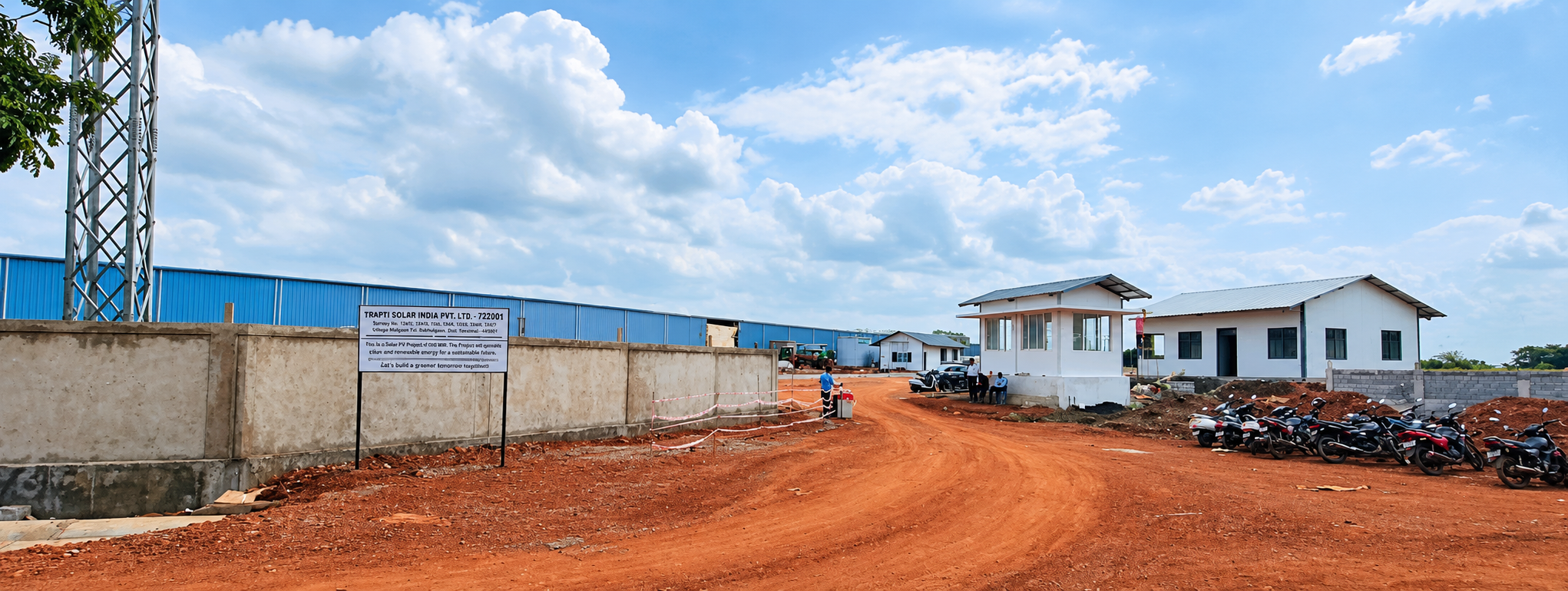
With multiple contractors, vendors, and internal teams working simultaneously, the client needed tighter execution oversight and real-time visibility into project progress. Venwiz deployed SitePulse to provide structured monitoring and execution control across the project.
Project Challenges
During the course of the project, Venwiz identified the following 5 execution bottlenecks that required immediate intervention :
1. Interdependent Work Fronts
Several work fronts depended on preceding activities, creating a chain of delays, such as :
- EP: Around 20% complete, with culvert work dependent on platform completion. Any delay in platform handover would directly affect the culvert schedule.
- MEP: The partition wall at Column 30 required HVAC and production activities to be completed first. Although the partition contractor was ready and staffed, the blocked work front left deployed manpower idle while upstream activities were completed.
2. Manpower and Productivity Constraints
Limited manpower was slowing progress across civil and MEP activities. The ESP required separate teams for steel binding and casting to progress in parallel, but limited manpower forced the activities to be sequenced. Even false ceiling installation faced a different constraint: payment delays affected cash flow and manpower deployment. This extended the completion timeline, and schedule revisions alone could not address the constraint.
3. Execution Readiness Gaps
Scheduled activities were not always ready to start. Gas bank and waste shed work required drawings and technical approvals, while plumbing materials had procurement purchase orders issued but no installation contractor allocated to the site. The 33kV power connection from the government substation was delayed due to payment issues and pending internal work. This left the material without a work front and put electrical testing and commissioning at risk.
4. Technical Non-Conformances
Several technical issues were identified that could have led to costly rework, including:
- STP: A structural connectivity issue between the bar screen chamber and equalization tank, along with a bar screen mismatch against the approved bill of quantities (BOQ), risked concrete breakout and equipment repositioning.
- Firefighting: A routing conflict between the transformer substation cable tray and external hydrant main header, along with a missing jockey pump in the sprinkler system scope, required resolution before installation.
5. Limited Work-Front Level Visibility
Progress varied significantly across the project, with Pump Room and Security Room civil work largely complete, administrative-area tiling around 67%, the Visitor Block around 50%, and Scrap Yard and Canteen work around 35%. A single project-level progress figure did not show which work front required immediate attention. Defects, cracks, workmanship issues, and pending technical matters also needed structured tracking and clear ownership to prevent them from affecting dependent activities or requiring rework.
Venwiz Solution
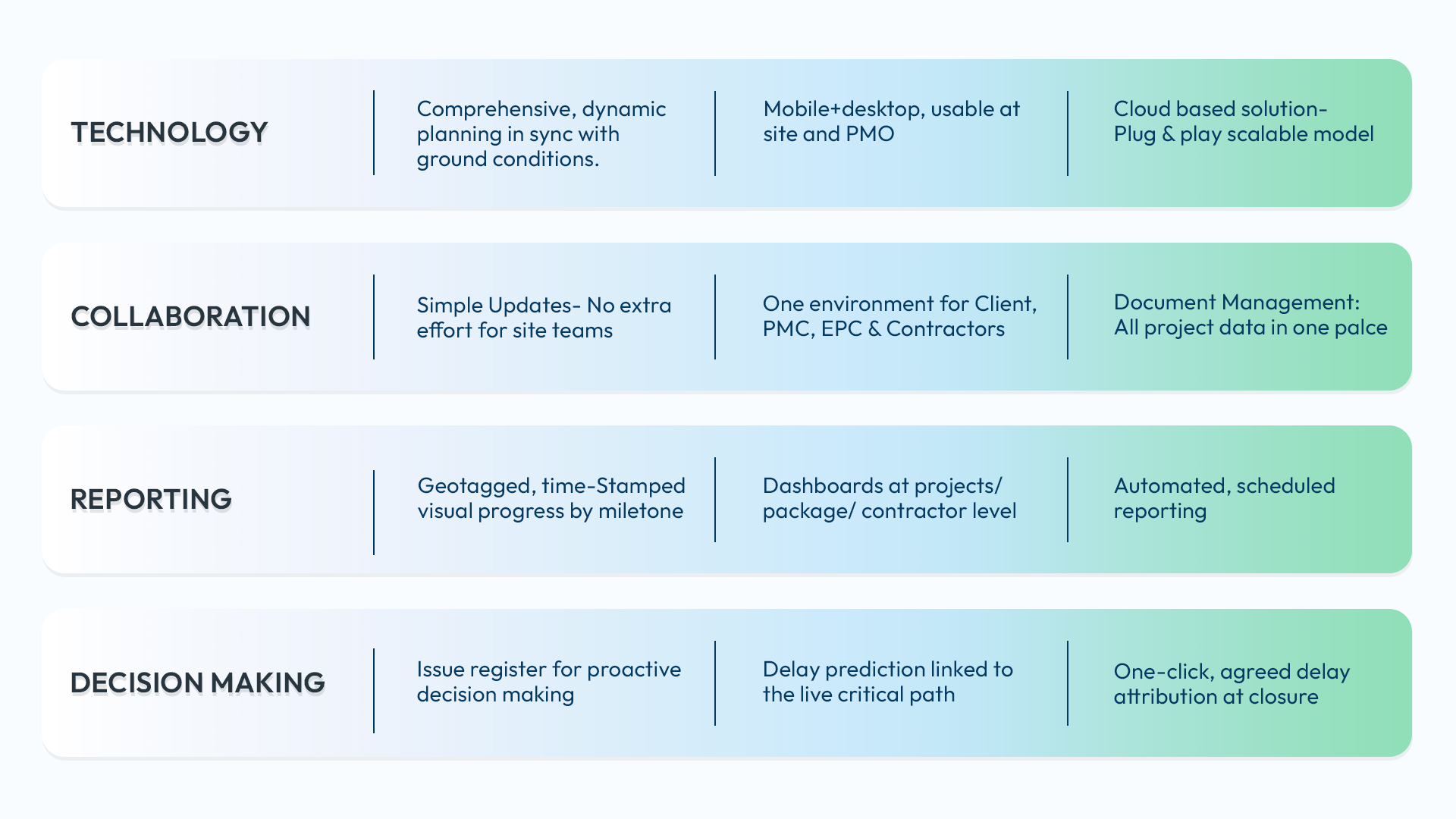
Venwiz used SitePulse to establish project execution control at the work-front level. Each issue was linked to its cause, dependency, responsible stakeholder, and next action.
This gave the project team a structured view of what was blocking progress and what needed to happen next.
Below is an illustration of how SitePulse structures execution control across four areas.
1. Cross-Team Work-Front Coordination
Venwiz identified dependencies between Civil and MEP work fronts and coordinated activities to release them.
- EP: Platform and culvert activities were tracked together, with separate reinforcement and casting teams pushed to improve the work rate.
- Column 30 partition: The dependency on HVAC and production activities was tracked and coordinated, while work continued in accessible areas.
This helped the project team manage connected activities as a sequence rather than treating each scope as an isolated package.
2. Manpower and Productivity Management
Venwiz monitored manpower and productivity across critical work fronts, addressing constraints through additional resources, separate teams, and daily tracking. Separate reinforcement and casting teams enabled parallel execution on the EP. For false ceiling work, manpower and payment-related constraints were escalated, and recovery actions followed up. Tiling progress was tracked through daily planned versus actual output to identify productivity gaps early.
3. Resolving Technical Issues Before Execution
Venwiz tracked technical issues before they progressed into physical rework.
- STP: Venwiz flagged the structural connectivity issue and bar screen mismatch against the approved BOQ, and followed up on revised machine layout, panel cable tray layout, and equipment repositioning drawings before construction progressed.
- Firefighting: The cable tray and external hydrant main header conflict was identified, cable-tray rerouting proposed, and the additional jockey pump requirement flagged before installation.
These interventions resolved design and technical issues before they caused rework on completed or concealed work.
4. Planning and Scheduling at Every Level
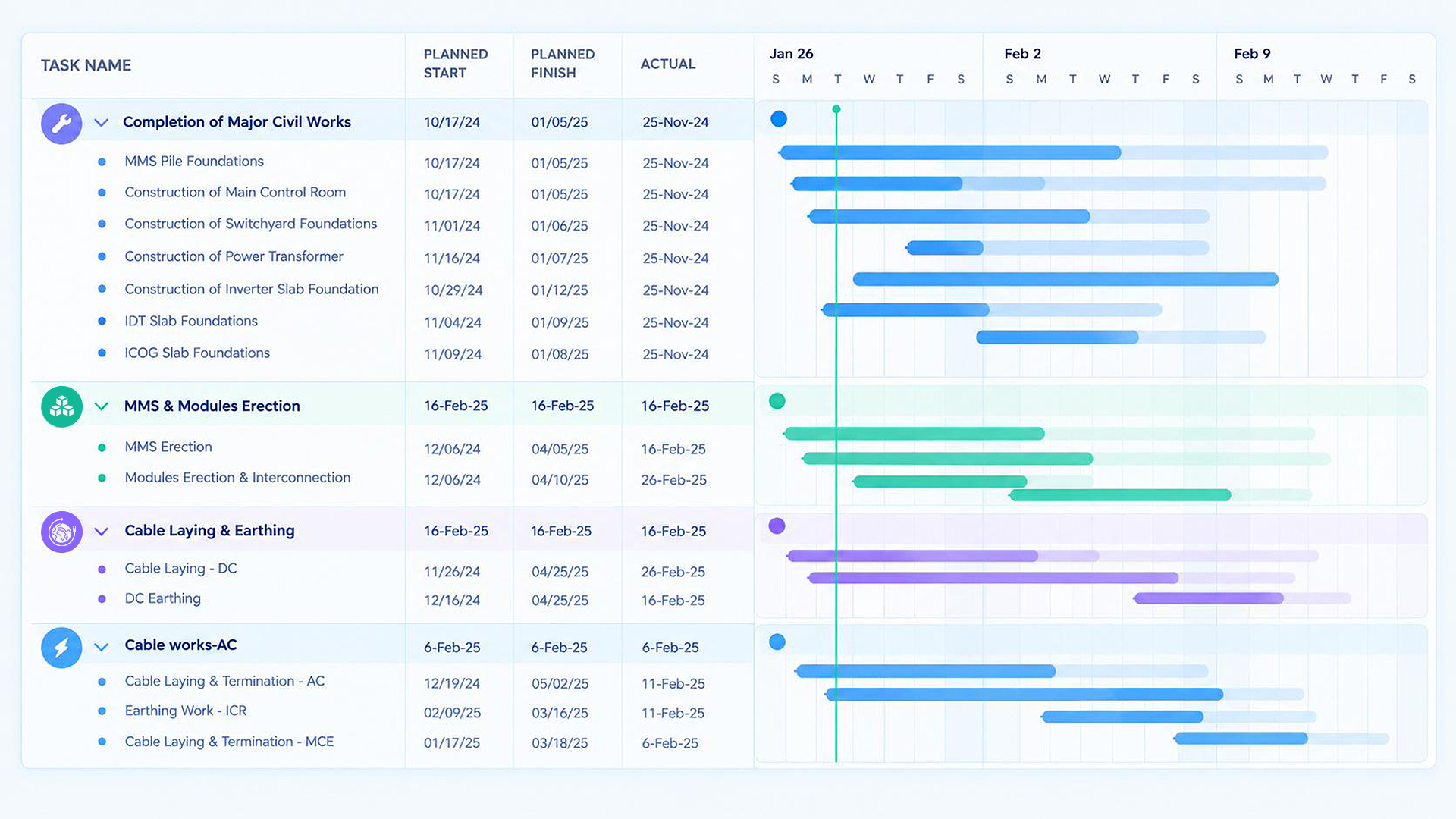
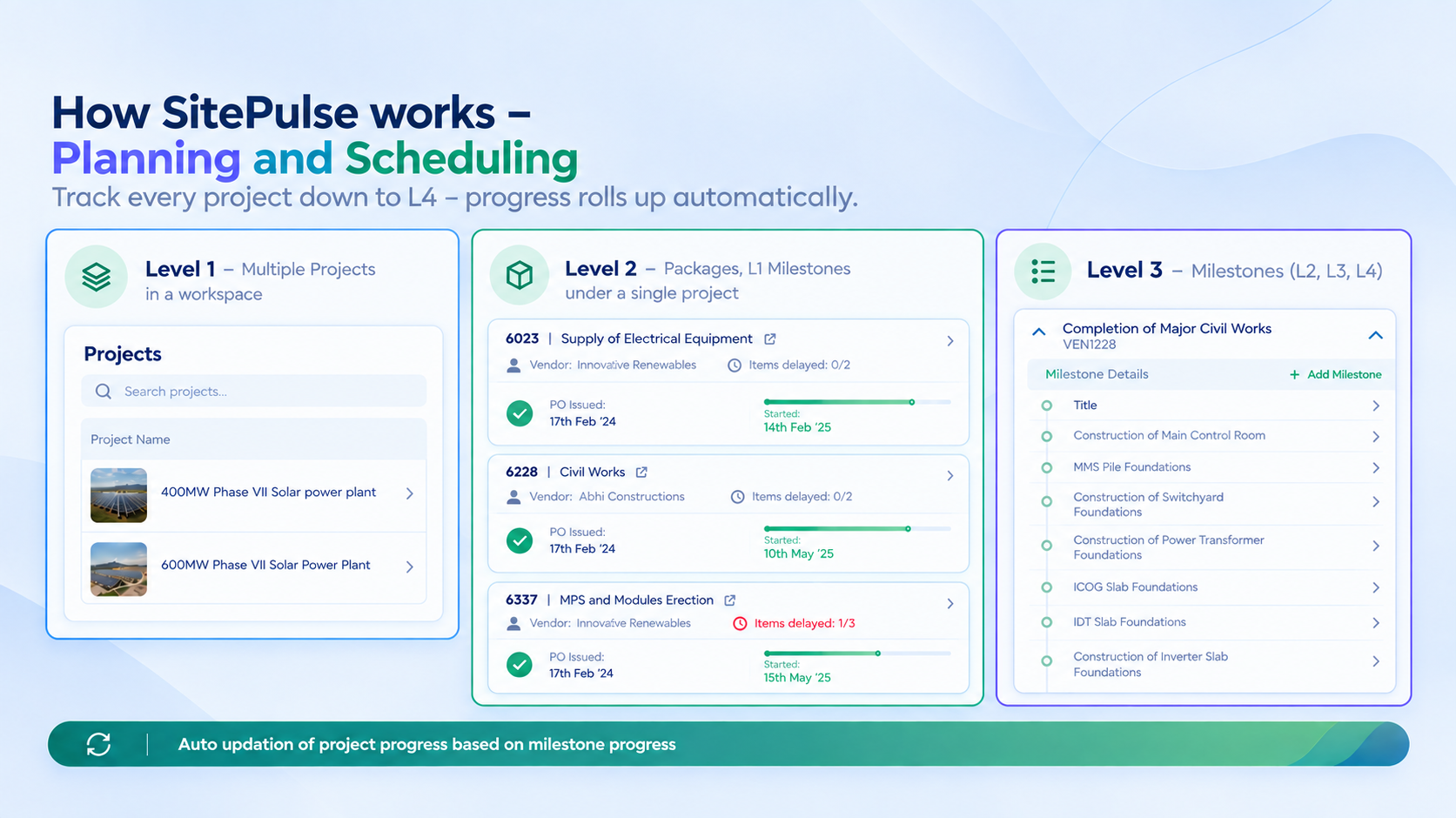
SitePulse tracked the project down to Level 4 milestones, with progress rolling up from milestone → package → project. Venwiz used revised schedules, completion dates, and day-wise work plans to compare planned versus actual progress, identify slippage, and trigger follow-up actions.
Importantly, it provided a single view of work-front progress, including the ESP (20%), administrative-area tiling (~67%), Visitor Block (50%), and Scrap Yard and Canteen (35%). This improved visibility and enabled focused intervention on priority tasks.
Here are screenshots of the critical path made for the project.
5. Tracking Execution Readiness
SitePulse helped the team distinguish between scheduled and execution-ready activities. Readiness was tracked through drawings, technical approvals, materials, contractor allocation, manpower, and upstream dependencies.
- For the Gas Bank and Waste Shed : pending drawings and technical approvals were tracked as execution dependencies.
- For plumbing : procurement had been initiated, but client-side contractor allocation was pending, so procurement progress was not treated as work-front readiness.
Moreover, the 33kV power connection was tracked through its payment and internal-work dependencies. Since its availability was critical to electrical testing and commissioning, Venwiz provided dependency visibility to all relevant stakeholders.
Here’s how SitePulse tracks projects, packages and milestones on a single dashboard, with progress rolling up automatically.
6. Structured Issue Tracking and Follow-Up
SitePulse provided a structured register for open issues, dependencies, corrective actions, and ownership. These were recorded and followed through to closure, including site observations, workmanship concerns, pending approvals, manpower constraints, material requirements, and inter-agency dependencies.
Critical issues were escalated to relevant stakeholders, actions tracked against agreed timelines, and work fronts reviewed against planned completion dates. This gave the project team clear visibility into work-front status, constraints, and actions required to keep execution moving.
Project Impact
Venwiz reviewed 20 civil and MEP initiatives, identifying 8 (40%) with high time-saving potential.
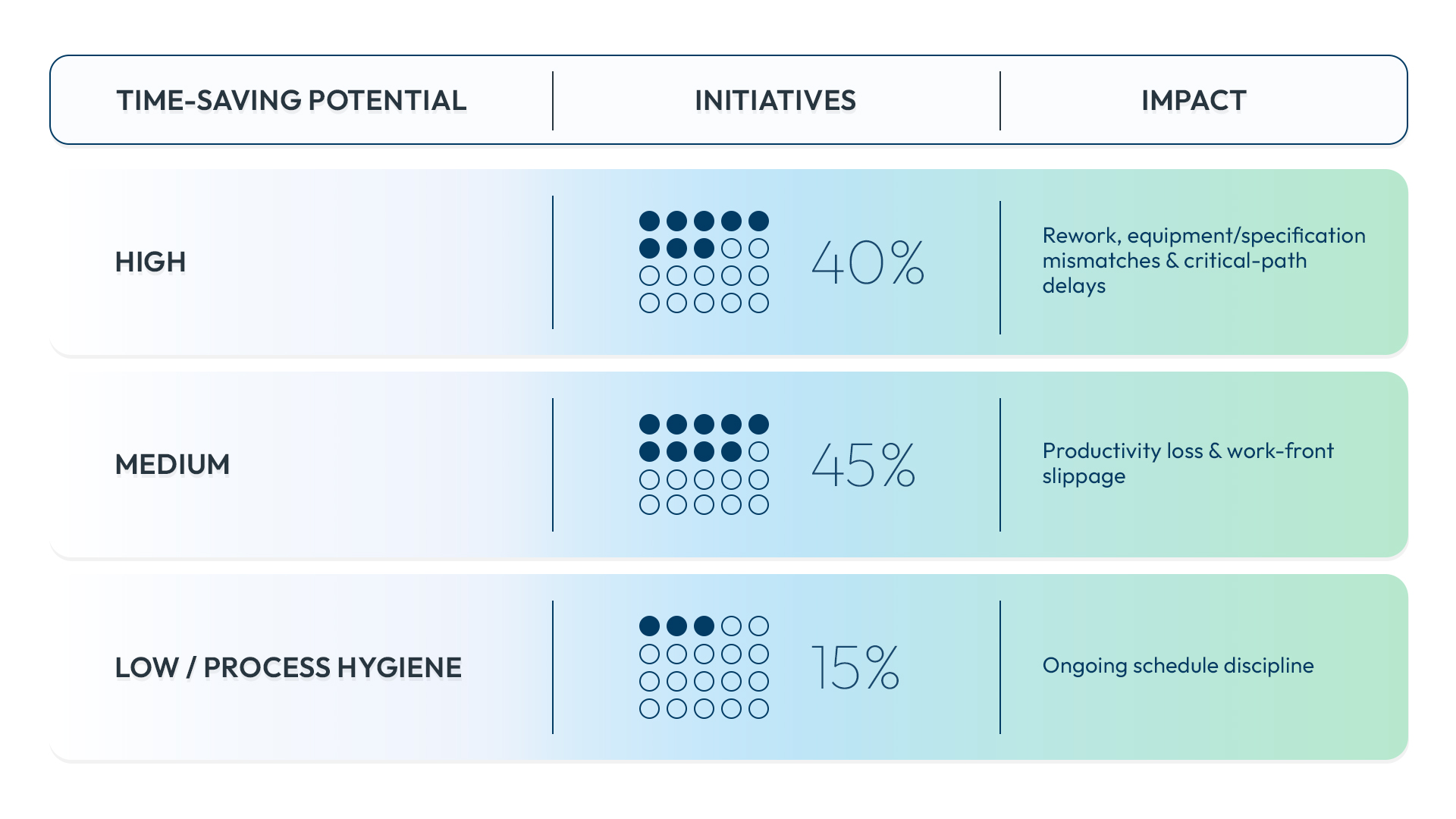
40% (8 of 20) had high time-saving potential, with 2 Civil and 6 MEP, including 6 linked to design, quality or drawing control. The greatest potential came from resolving issues before execution progressed.
Top Time-Saving Interventions
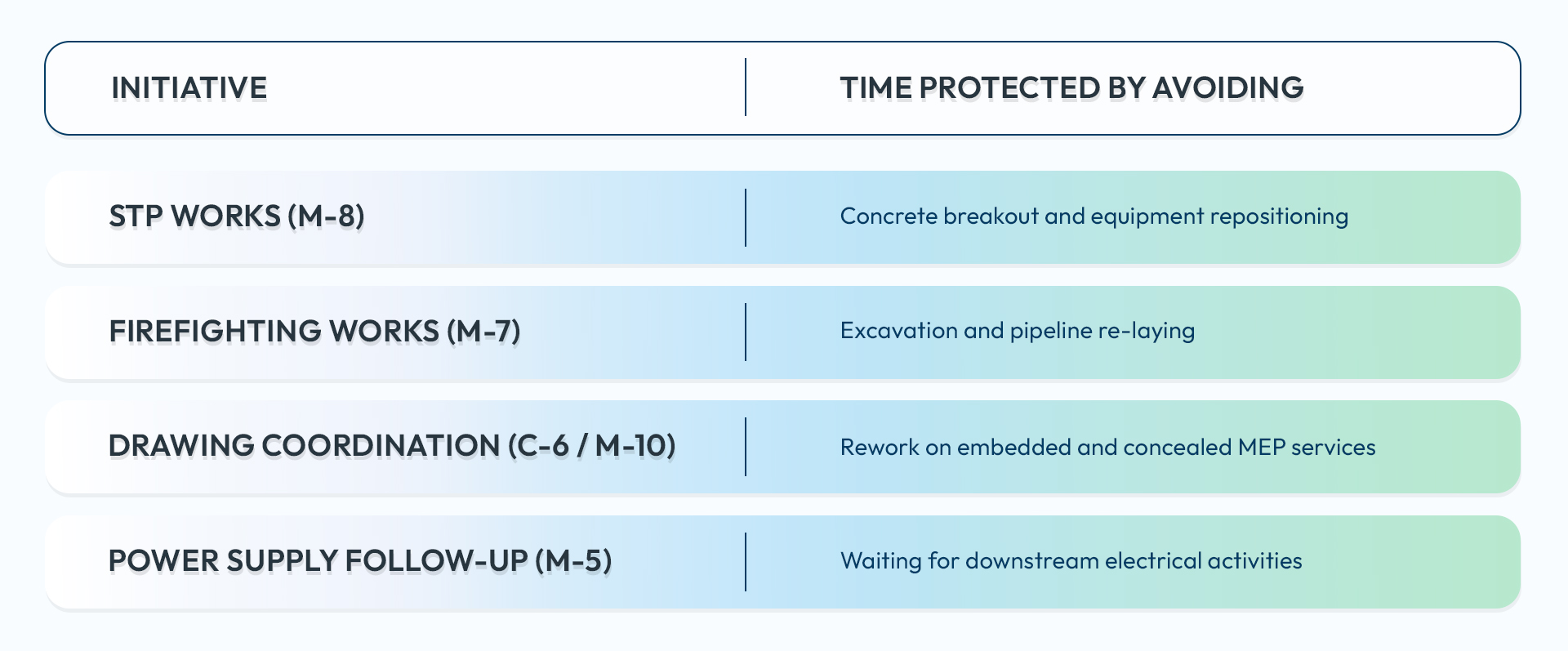
Together, these interventions helped protect project time by limiting avoidable rework, idle resources, and downstream schedule impact.
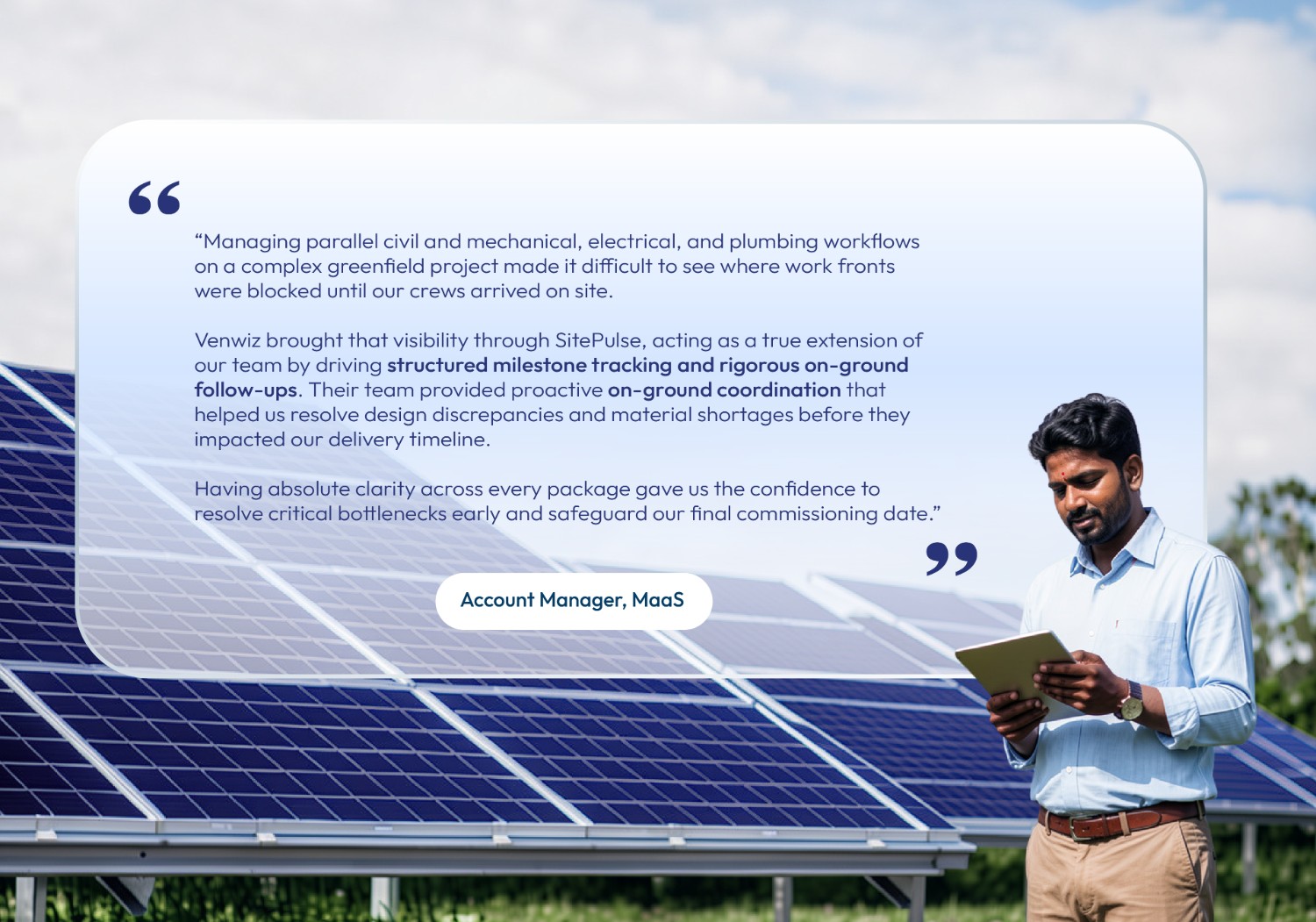
This is what our client had to say:
Conclusion
Effective execution management gave the project team greater control and visibility across civil and MEP activities on the greenfield project. This helped them identify dependencies, address issues early, and keep critical work fronts moving.
Across the 20 initiatives reviewed, 40% had high time-saving potential, with early intervention helping avoid rework, minimise work-front disruption, and reduce downstream schedule impact.
Looking to strengthen project execution management across your projects? Contact us today!
Related Blogs


Let’s talk about your next project
Our AI, expertise, and execution model close POs faster, cut slippages, and keep capital projects on schedule.