How a 50% Machining Shortfall Was Identified Across 500+ Components Through Real-Time Expediting

Overview
Our client, the Indian arm of a global leader in paper, pulp equipment & automation, was executing an international order for six proprietary equipment units.
Each unit included 70 to 80 sub-assemblies, making machining accuracy, sequencing, and dispatch readiness critical to execution.
The total scope covered 500+ machined components and around 145 metric tonnes of material, all assigned to a single vendor. With a delivery window of just 1.5 to 2 months, the challenge was to ensure the right components moved through cutting, fit-up, machining, and dispatch at the right time.
In a project with this many parallel dependencies, even small gaps in planning, machine allocation, or material readiness could quickly impact execution timelines.
Project Challenges
- Limited machining capacity: 500+ components had to be machined within 1.5 to 2 months. However, the vendor operated only five machines, limiting throughput from the start.
- Conflicting machine allocation across clients: Same machines allocated to other ongoing orders created scheduling conflicts and inconsistent prioritization of critical components.
- Unstructured material flow for precision components : Gaps across cutting, fit-up, machining, and welding left components idle between stages and disrupted downstream readiness.
- Single vendor dependency risk: With the entire machining scope assigned to one vendor, any delay in planning, capacity ramp-up, or coordination had the potential to impact execution timelines.
Venwiz Solution
Venwiz implemented a structured expediting framework to bring execution under control through capacity alignment, improved visibility, and data-driven decision-making.
1. Granular capacity mapping & planning
Venwiz mapped 542 components against actual machine capacity and created a week-wise execution plan. This exposed planning gaps early and improved scheduling and sequencing across machining activities.
2. Cross-order capacity balancing
Machine-hour allocation across ongoing orders was reviewed to identify overcommitment. The vendor was advised to move non-critical work out of its plant to free up machine capacity for priority components.
3. Workload redistributed through outsourcing
Tracking showed that several orders were still constrained by the same machine capacity despite earlier adjustments. Venwiz onboarded additional vendors and outsourced nearly 30% of the fabrication and machining scope to reduce pressure on the primary vendor.
4. Execution visibility through live dashboards
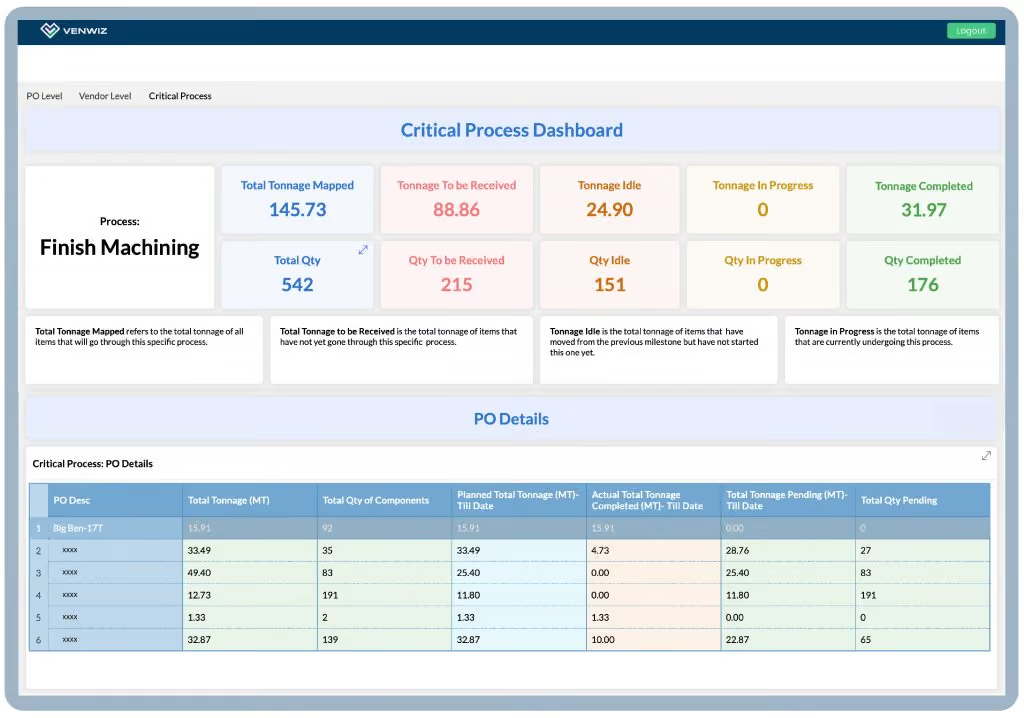
Customized dashboards tracked execution across 145.73 MT of work, helping teams monitor readiness, idle material and completion in one view.
5. Delay analysis and milestone tracking
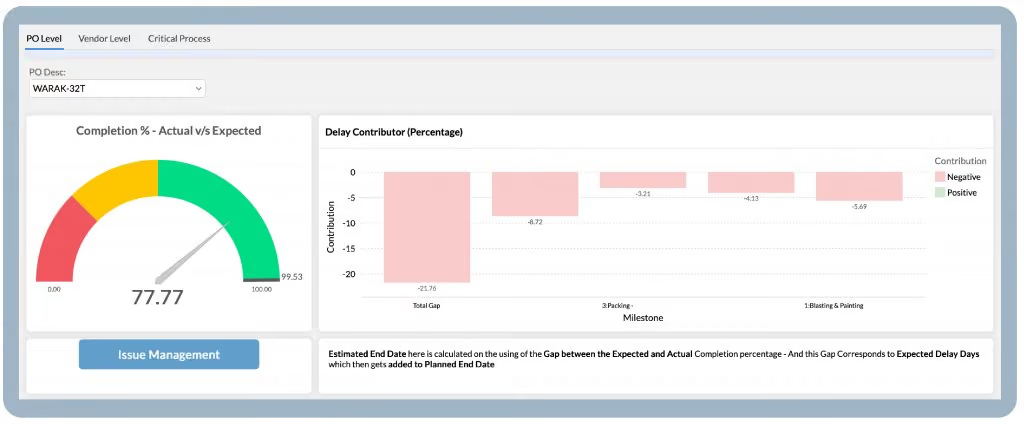
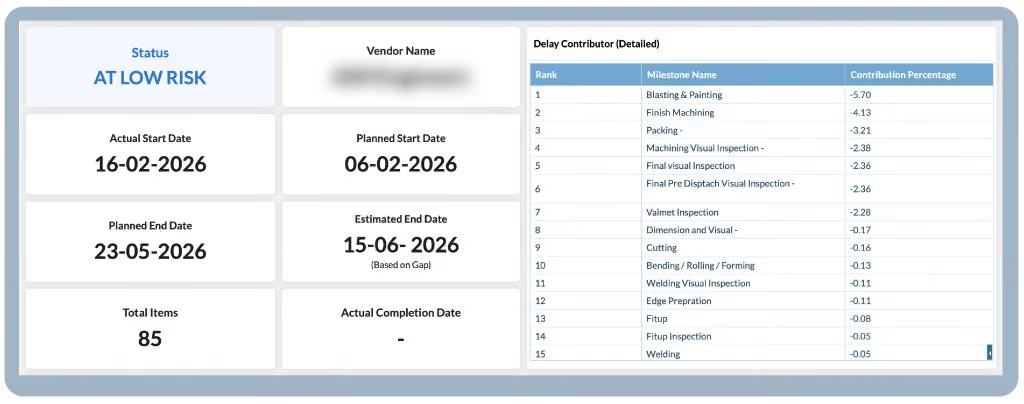
Introduced a delay intelligence layer linking execution gaps to milestone-level root causes. Teams could quantify deviations from plan, identify high-impact delays, and prioritize critical stages (e.g. machining and fit-up).
The visuals below show how milestone-level delay tracking helped teams identify execution gaps early
6. Idle work identification through execution tracking
Combined tonnage and stage-wise tracking helped identify material ready for machining but not progressing into execution. This helped teams spot idle material early and improve execution flow.
7. Field execution visibility
Manual Excel-based tracking was replaced with live dashboards, enabling expeditors to analyze 70 to 85 components instantly during site visits.
The infographic below shows how teams tracked readiness, machine utilization, tonnage, and completion in one view.
Impact
The shift to structured execution visibility improved planning, tracking, and intervention across the project.
This is what our client had to say :

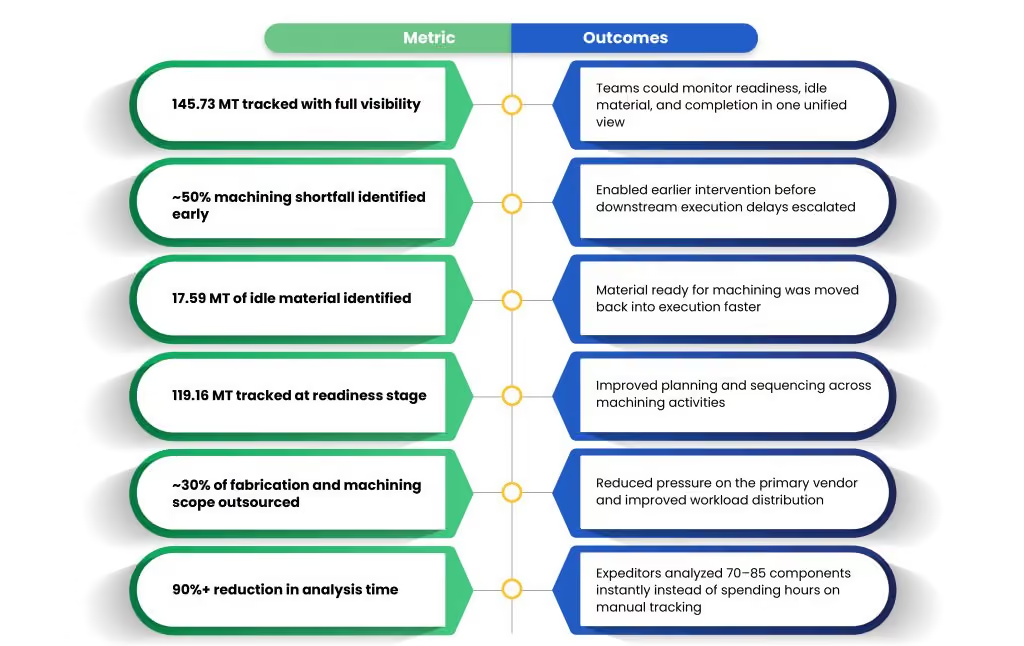
The shift to structured execution visibility delivered measurable improvements across planning, tracking, and intervention.
Conclusion
This project showed that machining delays rarely come from a single issue.More often, they build up through a combination of capacity constraints, sequencing gaps, and limited execution visibility.
By connecting machine capacity, material readiness, milestone tracking, and component-level progress in one view, teams were able to identify delays earlier and intervene before they affected downstream execution.
The result was better planning, faster execution decisions, improved workload distribution, and greater control across a high-volume precision manufacturing project.
If you are managing complex, multi-vendor industrial projects and facing similar execution challenges, Venwiz can help you improve visibility and strengthen execution control across operations.
👉 Book a demo with Venwiz to see how you can transform your project execution with intelligent supply-chain expediting.
Related Blogs




Let’s talk about your next project
Our AI, expertise, and execution model close POs faster, cut slippages, and keep capital projects on schedule.