How Venwiz Prevented a 45-Day Delay in Fabricating Riser Stacks Through Structured Expediting

Project Overview :
A leading manufacturer of combustion and environmental solutions secured an overseas order to fabricate two riser stacks for an international client.
Each riser required multi-segment structural fabrication with integrated electrical and instrumentation systems. And while the complexity was high, the delivery timeline was also non-negotiable.
The client assigned the fabrication scope to a vendor facility in Gujarat. However, as execution progressed, the project began falling behind schedule. Without structured expediting in procurement, delays threatened export commitments and downstream installation schedules.
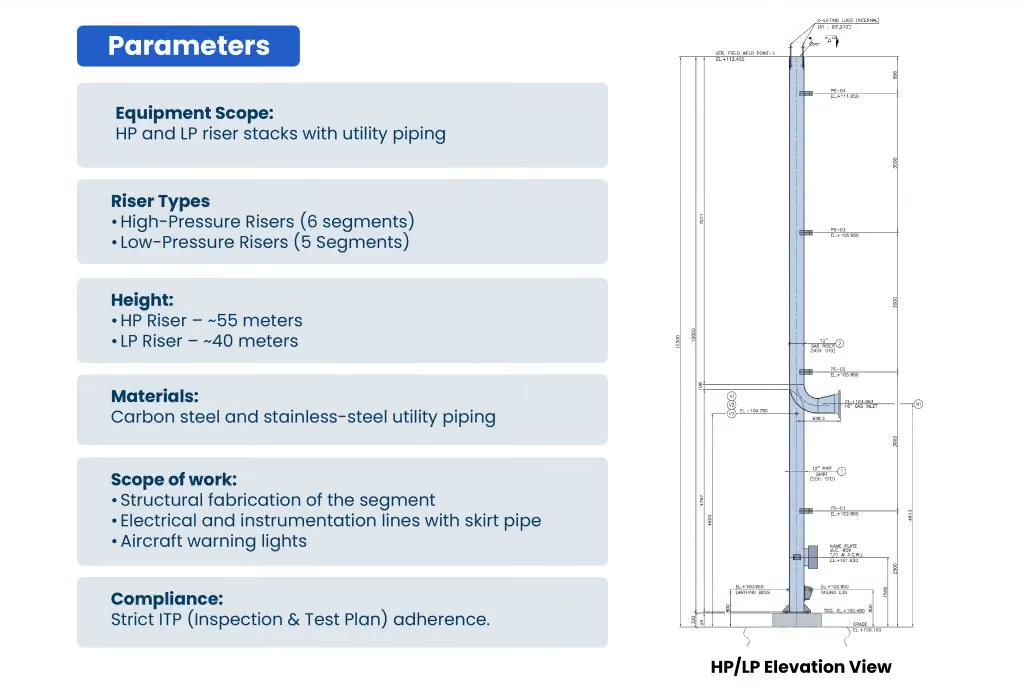
To understand the scale and technical depth involved, the key project parameters are summarized below.
Given the scale of fabrication and the strict inspection requirements, maintaining manufacturing discipline and inspection readiness was critical to project success.
Project Challenges
Given the complexity of this export-grade, multi-segment fabrication project, the gaps at the vendor’s end became more visible as execution progressed.
- Planning & Production Gaps: With no “vendor documented” manufacturing plan for the segmented riser structure, fabrication moved without a clear sequence or milestone framework. This made it difficult to track segment-wise progress, anticipate delays and reliably forecast completion timelines.
- Governance & Ownership Issues: Accountability across fabrication, inspection and coordination wasn’t clearly defined. Progress tracking was inconsistent and reactive, which meant the client had limited visibility into stage completion and dispatch readiness.
- Quality & Compliance Weakness: While the project required strict adherence to ITP checkpoints for export compliance, inspection documentation remained informal and stage approvals were not systematically tracked. In a multi-segment assembly with embedded instrumentation, this increased the risk of rework and delays.
- Material Sourcing: Critical raw materials and bought-out components were not tracked against fabrication milestones. As a result, procurement delays began to directly impact fabrication progress and overall timelines.
Venwiz Solution
To regain control over execution, Venwiz introduced a structured expediting approach grounded in detailed planning, real-time tracking, and close vendor follow-ups.
This integrated system combines technology and on-ground expediting, as illustrated below.
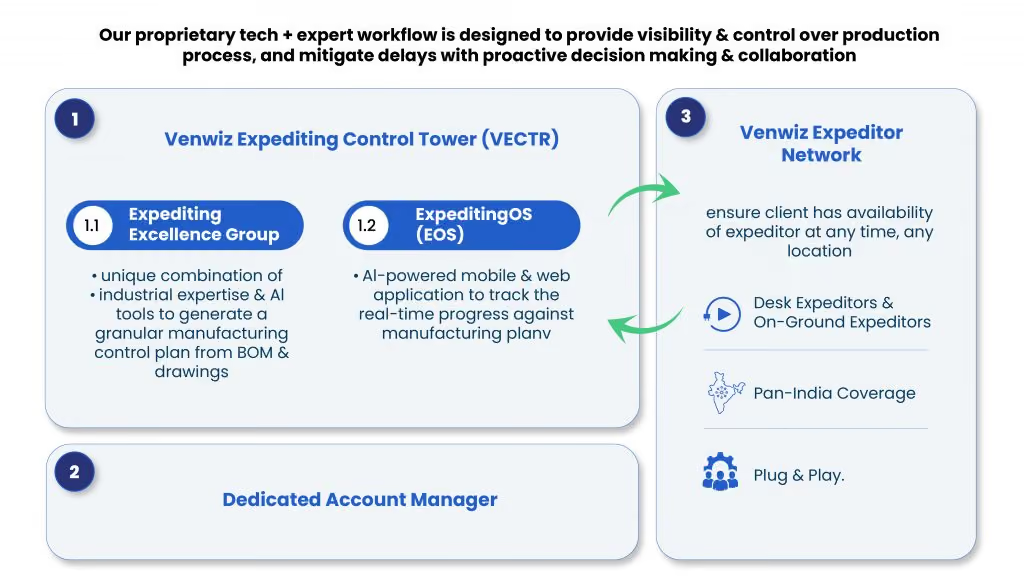
Here’s how Venwiz worked closely with the client and vendor to introduce tighter planning, on-ground monitoring, and stronger coordination across fabrication, inspection, and procurement.
Mapping of Control Plan to BOM
Venwiz’s Expediting Excellence Group developed a detailed Venwiz Control Plan derived from the Bill of Materials.
The plan:
- Translated the scope into detailed manufacturing milestones
- Defined clear production sequencing across fabrication stages
- Embedded ITP checkpoints within execution stages
- Linked material readiness to fabrication milestones
What this looked like in practice is captured below:
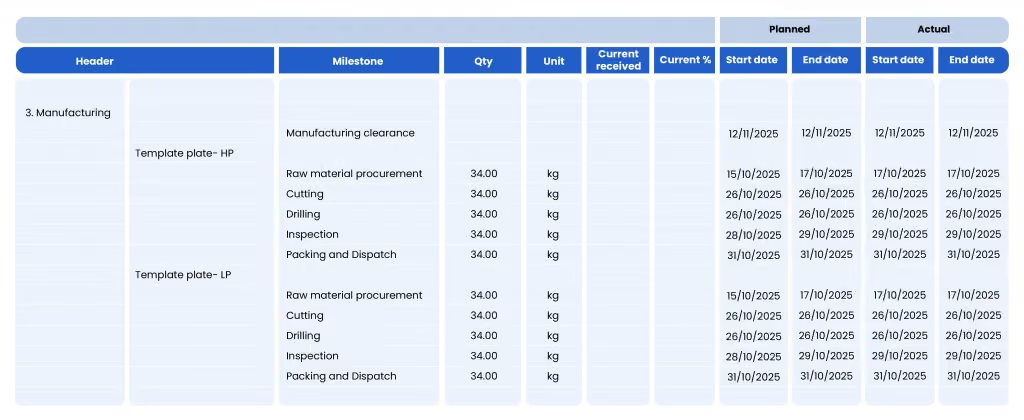
The client and vendor jointly vetted the plan, establishing a single source of truth for project execution.
This structured framework allowed stakeholders to track fabrication progress and inspection readiness with greater clarity.
On-ground expediting
We deployed dedicated Venwiz expeditors at the vendor facility to monitor fabrication activities in real time.
Their responsibilities included:
- Verified progress as per Venwiz Control Plan
- Ensured the sequence was followed.
- Providing daily progress updates to the client
- Monitored ITP inspection readiness
This on-ground presence enabled early detection of bottlenecks and immediate corrective action.
Milestone-Based Tracking
The team broke fabrication into clearly defined, measurable checkpoints. They tracked progress daily, conducted regular reviews, identified deviations early, and implemented recovery actions promptly. This brought tighter alignment between vendor teams and client stakeholders, with clearer ownership at each stage.
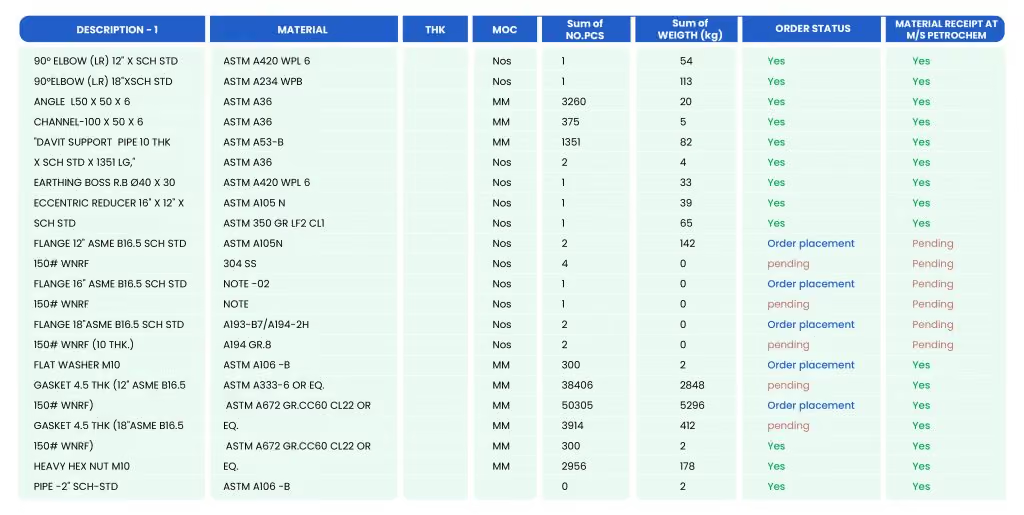
Material Readiness Monitoring
On-ground expeditors tracked materials against fabrication milestones, flagged procurement gaps early, and enabled timely ordering to prevent shop-floor disruptions.
Here is a snapshot of how we tracked material readiness is shown below :
Inspection Coordination & Governance
The team planned schedules for visual, dimensional, and TPI inspections in line with execution, reducing delays caused by last-minute coordination gaps. Regular reviews strengthened accountability across teams and ensured each milestone was inspection-ready when required.
Having worked closely on the project, this is how the team saw the shift:

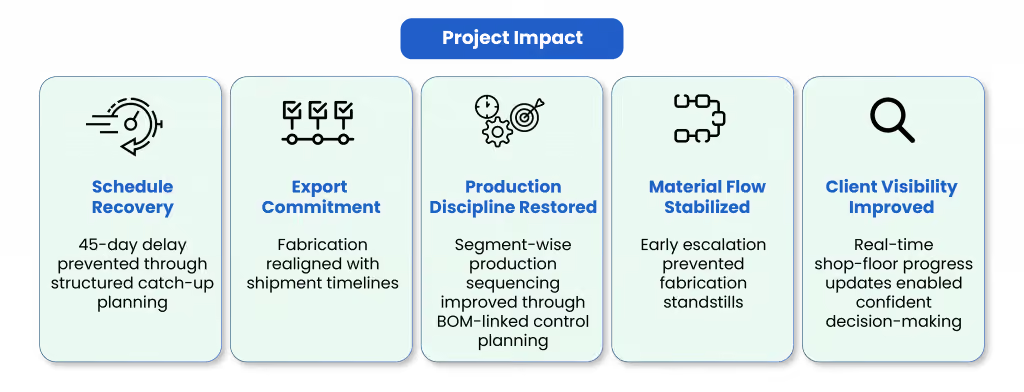
Project Impact
Key outcomes are summarized below.
Conclusion
In projects like these, how execution holds up on the shop floor determines the overall outcome. Bringing execution back under control required tighter planning, continuous on-ground follow-through, and clear milestone ownership.
With a structured expediting approach, Venwiz was able to turn a drifting project into a controlled, export-ready execution environment.
Prevent delays before they impact delivery. Deploy Venwiz’s supply-chain expediting solutions. Book a demo
Related Blogs





Let’s talk about your next project
Our AI, expertise, and execution model close POs faster, cut slippages, and keep capital projects on schedule.