4 Fabrication Metrics Every Intelligent Supply Chain Network Management Tracks

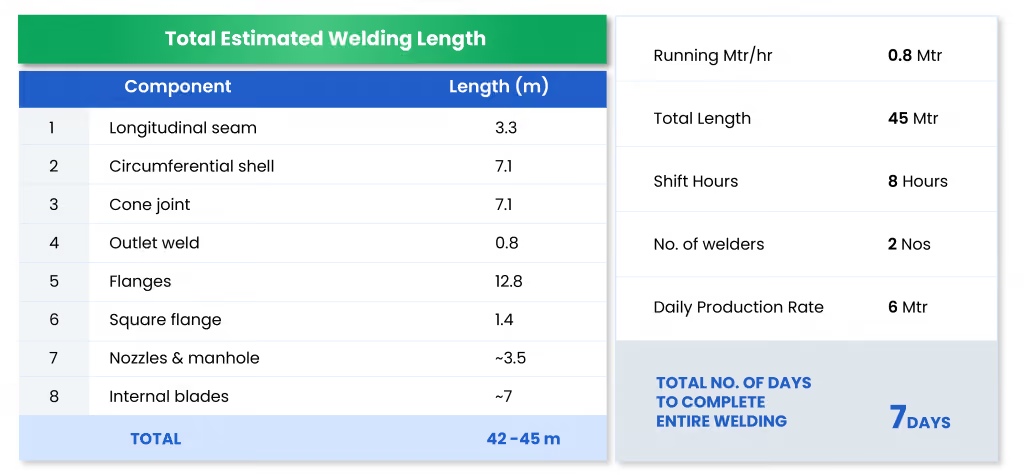
A pressure vessel with 45 meters of pending weld scope and two welders running 6 meters a day will take 7 days to clear fabrication. Most procurement teams only find out when the dispatch date has already slipped.
Vendor status updates rarely answer the question that matters: Will this package be ready on time? The answer “Welding in progress” confirms activity. It says nothing about whether the remaining scope, available manpower, and inspection dependencies can close within the required window.
The metrics that determine milestone readiness sit deeper than status labels. They live in fabrication drawings, shopfloor productivity data, and inspection queues. This article breaks down what intelligent supply chain network management teams track at each fabrication stage, and why most schedule risk is visible long before a dashboard turns red.

In this blog, we explain how tracking welding, dish-end formation, structural fabrication, and painting metrics helps project teams identify schedule risks early, improve milestone visibility, and keep fabrication packages on track for timely dispatch.
1. Welding Metric
In pressure vessel and piping fabrication, welding is often the most schedule-critical activity. Experienced expeditors begin by studying fabrication drawings to quantify the actual welding scope:
- Total running meters of welding
- Dia-inch load based on pipe diameter and thickness
- Joint counts by weld category
They assess execution capacity against that scope:
- Number of qualified welders deployed
- Shift patterns and inspection dependencies
- Vendor-specific productivity rates
This produces a realistic completion forecast. If available manpower can finish the remaining welding within the schedule, the package is on track. If not, the risk becomes visible before it becomes a delay.
The five metrics below translate raw fabrication data into a dispatch-ready, package-level forecast.
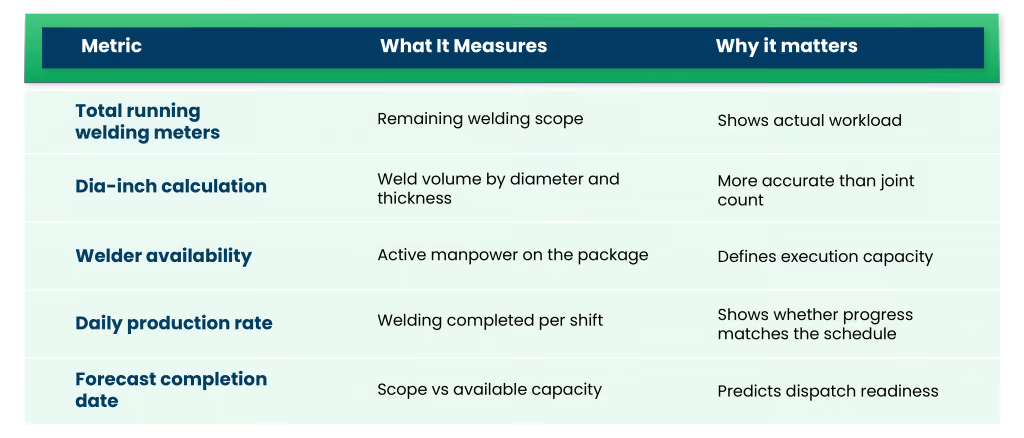
This process requires someone who can read fabrication drawings, understand shopfloor realities, and translate both into a completion forecast. That is what separates execution visibility from status reporting.
The example below shows how an on-ground expeditor calculates the number of days required to complete welding on a steam drum. The calculation uses welding length from the drawing, the number of welders on the shopfloor, and their production rates.
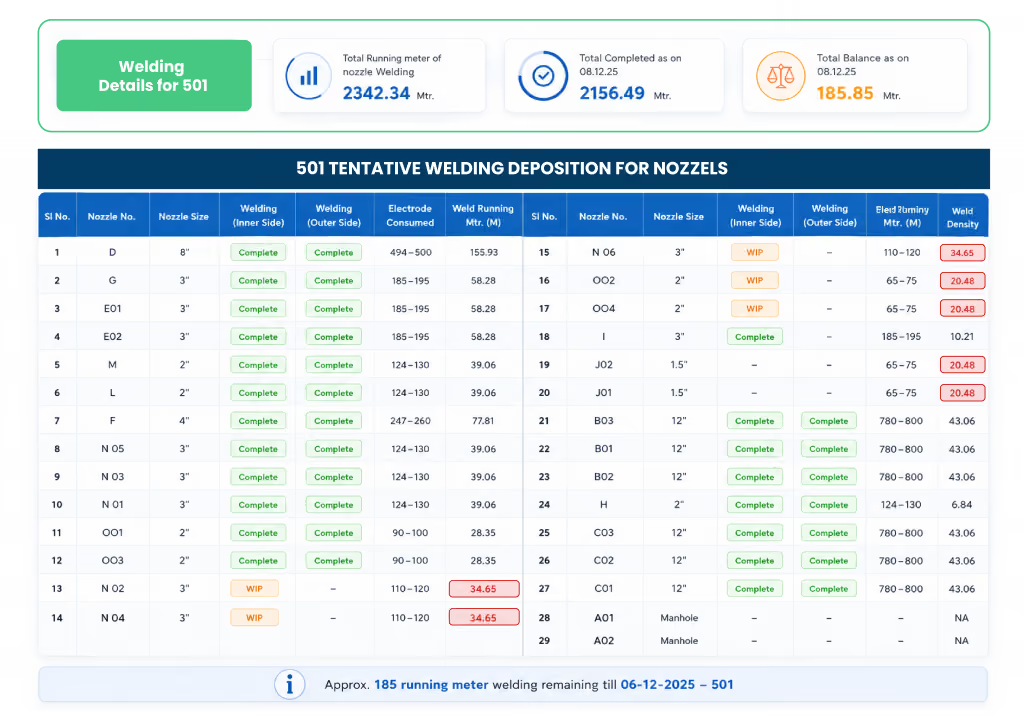
The example below shows our expeditor report for nozzle welding for the steam drum. The items marked in green are on track, while those marked red can derail the steam drum dispatch dates.
2 Dish-End Formation Metric
Dish ends are the curved end caps (torispherical, ellipsoidal, or hemispherical heads) welded to the end of the cylindrical shell of pressure vessels, boilers, reactors, and storage tanks. Manufacturing of high-quality dished ends strictly follows major international standards (e.g., ASME Section VIII, EN 10253).
Manufacturing involves blanking and preparation, hot forming under hydraulic presses, edge preparation for beveling, post-form heat treatment, and NDT clearance through ultrasonic, dye penetrant, and radiographic testing.
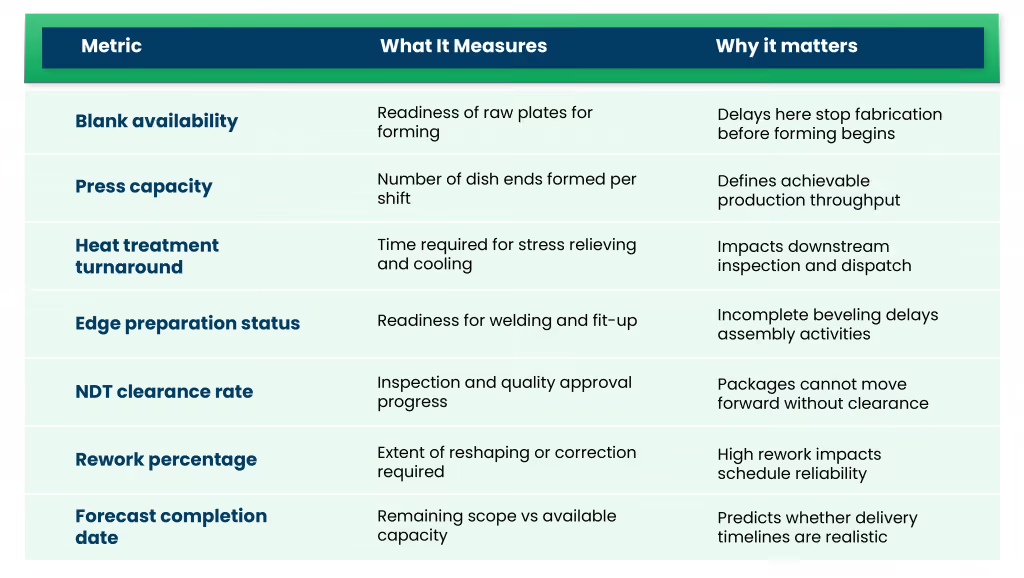
From an post PO management perspective, the challenge isn’t whether forming has started. The real question is whether the forming, heat treatment, inspection, and rework cycles can finish within the required timeline.
A vendor may report that dish-end fabrication is “in progress,” but that doesn’t reveal whether press capacity is overloaded, heat treatment slots are delayed, or NDT clearance is becoming a bottleneck.
These seven metrics give expeditors the visibility to identify exactly where the bottleneck sits and whether it can be cleared within the required window.
3. Structural Fabrication Metric
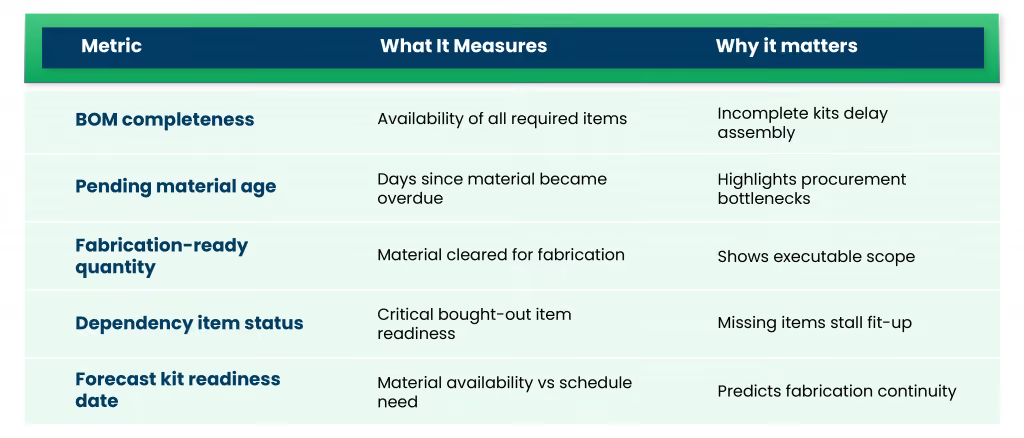
Structural fabrication delays usually start with incomplete material availability. Fabrication begins with partial steel, missing fasteners, or pending bought-out items. Shops continue partial fabrication, but assembly and fit-up activities slow down later in the cycle. Without full-kit visibility, reported progress can look healthy while critical dependencies remain unresolved.
On-ground experts track the following five metrics to confirm whether all material inputs are in place before fabrication commits to assembly.
4. Painting Metric
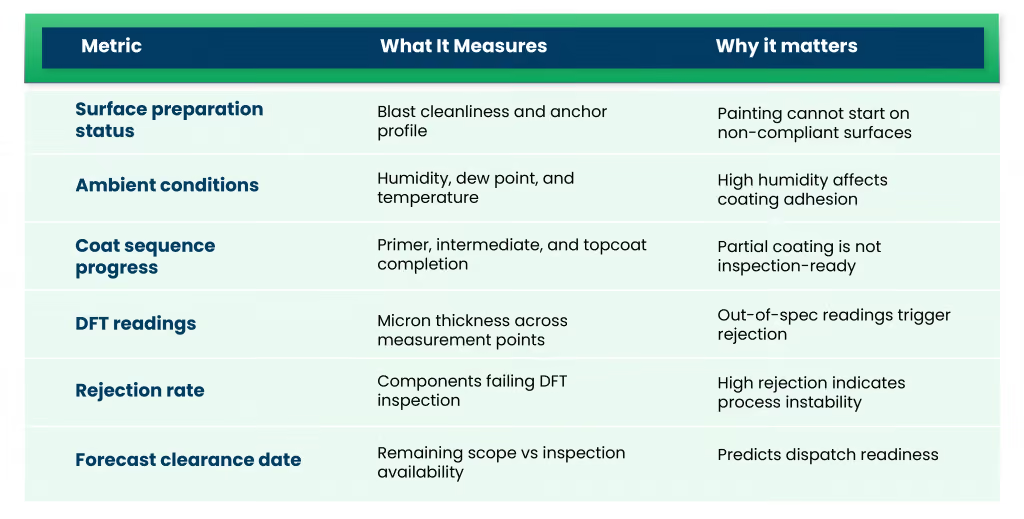
Painting directly impacts corrosion protection, inspection acceptance, and dispatch readiness. A package may appear complete, yet still fail inspection because of poor surface preparation, humidity exposure, or inconsistent dry film thickness (DFT). Experienced expeditors monitor measurable process conditions instead of relying on visual completion updates.
The six metrics below capture the conditions and completion indicators that determine whether a package will pass inspection and be cleared for dispatch.
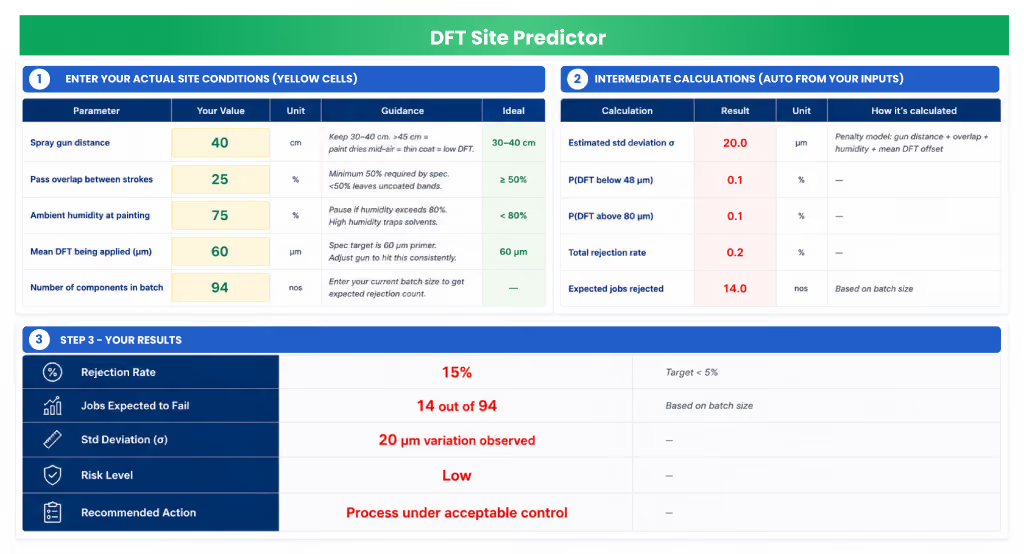
The image below shows how the expeditor calculates the time required to paint the structure. Input parameters include spray-gun distance, pass overlap between strokes, and batch composition. These calculations quantify the painting schedule risk directly.
How Intelligent Supply Chain Network Connects These Metrics Across the Post-PO Lifecycle
Each metric discussed so far answers a specific question:
- Will the welding scope finish on time?
- Will the dish-end formation clear inspection as planned?
- Will structural fabrication continue without material shortages?
- Will painting clear quality checks without rework?
These metrics do not exist in isolation. A fabrication package moves through multiple stages before dispatch, and every stage introduces its own schedule risks. Intelligent supply chain network connects these stages into a single execution view.
The metrics in the previous sections forecast the readiness of individual fabrication activities. To assess whether an entire package will meet its delivery commitment, these activity-level signals must be read against the broader post-PO lifecycle shown below
Milestone tracking and work go hand in hand. We have tabulated the key stages in manufacturing and inputs that need to be tracked.
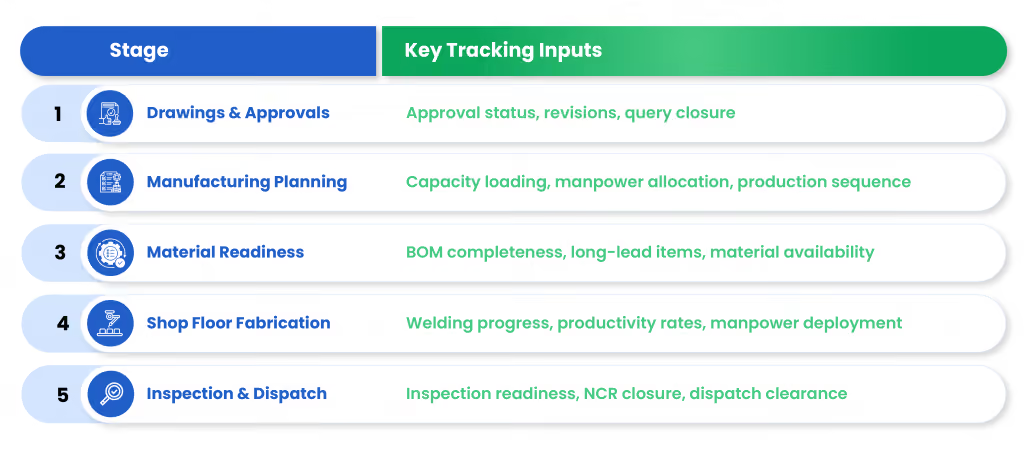
At Venwiz, these milestones are managed through central planning, Milestone Management OS (AI) (MMOS) based tracking, and on-ground verification by our Pan India Operators. Together, they provide visibility from engineering release through final dispatch. Teams can identify bottlenecks, validate reported progress, and take corrective action before delivery commitments are affected.
Conclusion
Most fabrication delays are measurable long before a dispatch date slips. The signals already exist in fabrication drawings, production data, material readiness reports, and inspection records.
Whether the activity is welding, dish-end formation, structural fabrication, or painting, the objective remains the same: to understand what remains to be done and whether it can be completed within the available timeline.
The metrics covered in this article help teams answer that question with confidence, turning milestone tracking from a reporting exercise into a forecasting tool.
Looking to improve milestone visibility and on-time delivery across your fabrication packages?
Contact us to see how Venwiz combines digital tracking, expert expediting, and shop-floor verification to identify risks early and keep projects on schedule.
Related Blogs









Let’s talk about your next project
Our AI, expertise, and execution model close POs faster, cut slippages, and keep capital projects on schedule.