A Bird’s-Eye View of Expediting: Where Human Expertise Meets AI-Powered Tracking

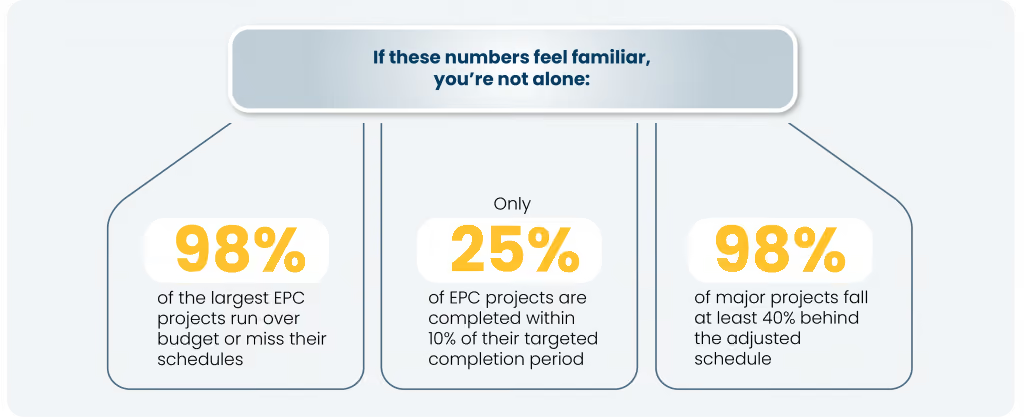
The issue is rarely the plan itself. It’s how planned milestones hold up under real manufacturing conditions.
Anyone who has run equipment-heavy projects will recognise this pattern. A drawing approval that takes longer than expected. A machining slot that moves by a week. An inspection that gets pushed because documentation wasn’t ready. None of these issues feel critical in the moment. Until suddenly, delivery dates are under pressure and recovery options are limited.
Projects with custom-built equipment, especially those with long manufacturing cycles, tend to expose this gap more clearly. While project schedules appear achievable at the planning stage, post-PO execution rarely unfolds as expected. This is a familiar reality across heavy manufacturing, mining, cement, chemicals, and oil and gas industries.
Once the purchase order is released, multiple activities run in parallel: fabrication, machining, inspections, material movement, and vendor coordination. And that’s exactly when visibility starts to drop.
The impact goes well beyond a shifted commissioning date. Idle manpower, penalty clauses, cashflow stress, and strained customer relationships follow quickly. A lack of consistent purchase order tracking, irregular PO status updates, and unclear order progress visibility make these risks far harder to detect and control. What started as a small execution gap becomes a business risk.
This is where expediting changes the equation.
An expeditor functions as the project’s early-warning system. Staying close to on-ground manufacturing, validating progress and documentation, holding vendors accountable, and surfacing risks while there is still room to act. It directly addresses the most common execution pain points that teams discuss every day: lack of visibility after the PO, unresponsive vendors, and delivery milestones that slip without warning.
The Expeditor’s Role: Turning Chaos Into Control
An expeditor ensures that the manufacturing plan agreed between the customer and vendor is actually followed on the ground. Each activity: cutting, welding, machining, inspection, and dispatch, is interconnected. A slip at any stage affects the next. This is why vendor performance monitoring, supplier delivery performance, and procurement delay escalation are essential.
The manufacturing plan itself becomes the expeditor’s most important reference point and baseline for order progress monitoring.
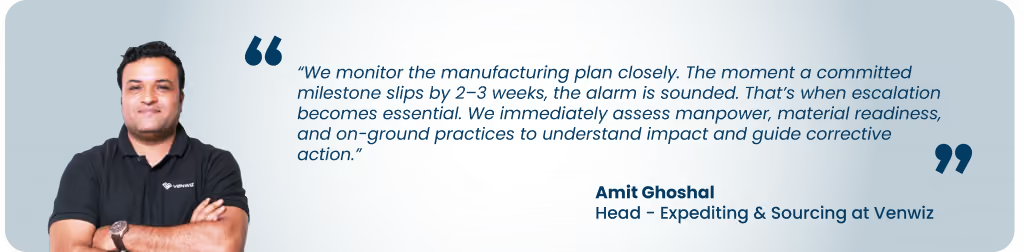
Experienced expeditors do more than track milestones. They read the signals that hint at future delays and intervene before small issues cascade.
Part of their responsibility includes:
- Manpower availability and skill competency
- Availability of material as per the BoM
- Readiness of jigs, fixtures, and consumables
- Fabrication sequence progress
- Machining and inspection readiness
- Lead times for castings, bought-outs, outsourced work
- Unsafe practices that pose quality or safety risks
At every stage, the expeditor evaluates recoverability and ensures the right escalation goes to the right stakeholder.
Ground Reality of Expediting: Challenges vs Impact
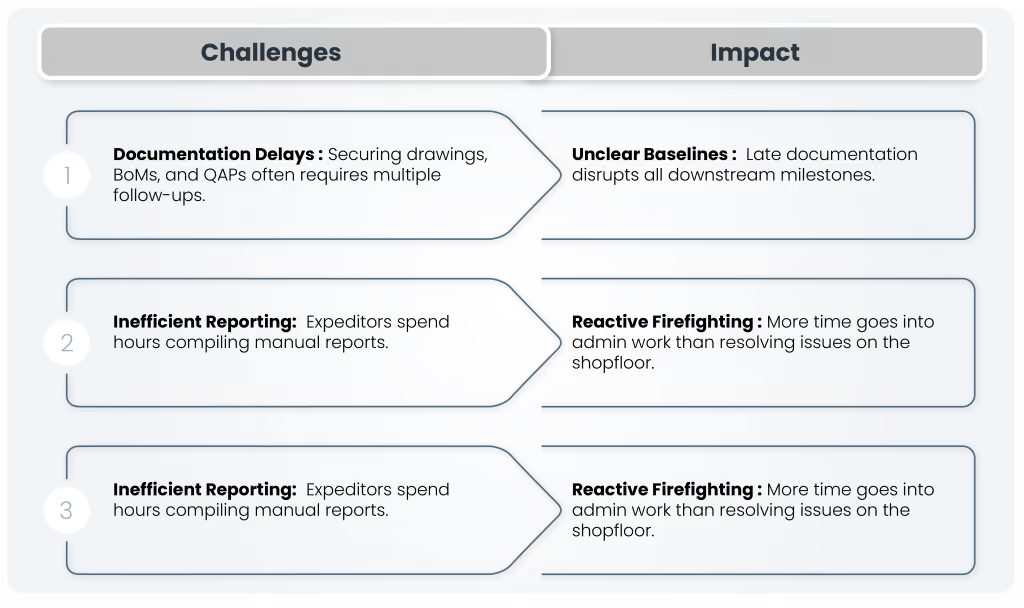
Once a PO is released, the project moves through documentation, manufacturing, assembly, inspections, and dispatch. Each stage introduces its own set of risks, often unfolding in parallel.
Without real-time procurement visibility, expediting quickly turns reactive, driven by follow-ups, partial information, and fragmented updates rather than clear insight.
This breakdown in communication is not incidental. A PMI study shows that 56% of project delays are linked to communication gaps, reinforcing how quickly execution can drift when visibility weakens. [2]
Below is a consolidated view of the most common challenges and their impact across the manufacturing ecosystem :
Venwiz Approach: On-Ground Expertise Meets AI-Powered Tracking
Venwiz uses a hybrid model that combines experienced expeditors with a digital tool that enhances procurement workflow visibility, PO execution tracking, and risk alerts in procurement.
1. On-ground Expert Expeditors
With 55+ expeditors across India, Venwiz ensures:
- Verified shopfloor progress at every stage
- Early detection of fabrication and machining delays
- Validated manufacturing timelines grounded in reality
- Strong vendor accountability and adherence to commitments
- Clear escalation pathways for critical issues
- Consistent PO status updates
- Reliable order progress monitoring
These expeditors act as the eyes and ears on the ground, interpreting signals that dashboards alone cannot capture.
2. Digital Visibility with the Pocket Expeditor
The Pocket Expeditor provides the real-time visibility that manual systems often lack, making expediting structured, traceable, and proactive.
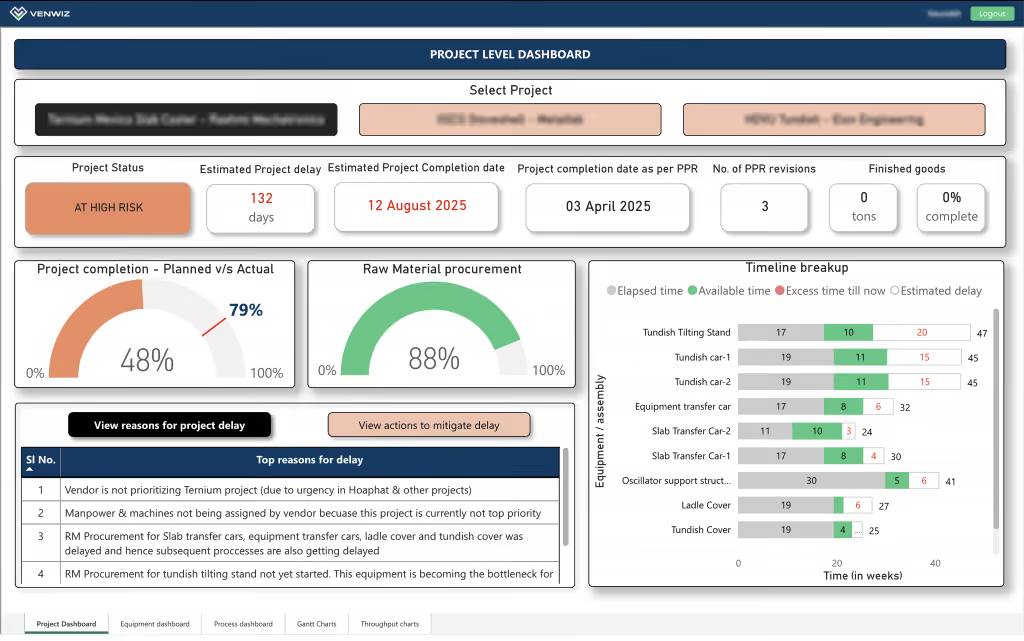
Below is a dashboard of the Pocket Expeditor giving users an overview of the project status :
Pocket Expeditor Advantages
- Full Project Visibility: Track all milestones on a single dashboard, monitor timelines, and forecast potential delays
- On-Ground Transparency: Geo-tagged, time-stamped shopfloor images and verified progress updates, delivered daily or weekly
- Early Risk Detection: Automated alerts for slippages, enabling intervention before delays cascade
- Smart Automation: Auto-generated reports that expeditors can validate, letting them focus on shopfloor action instead of paperwork
- Centralized Repository: All project documents in one secure hub, reducing scattered emails and Excel dependencies
Why the Hybrid Model Works The combination of expeditor judgment and Pocket Expeditor visibility ensures that documentation delays, fragmented updates, and late escalations are systematically addressed rather than discovered after the fact.
How Visibility Transforms Expediting?
With this structured approach, teams gain:
• A single source of truth for all stakeholders
• Proactive risk tracking starting from early documentation delays
• Streamlined reporting via automated dashboards
• Simplified collaboration across clients, vendors, and expeditors
Thus, expeditors evolve from data collectors into strategic problem-solvers, improving delivery lead times and reducing the root causes of PO slippage.
Conclusion: Expediting That Keeps Projects On Track
Expediting is not about chasing updates. It is a strategic discipline that ensures the manufacturing plan stays aligned with actual ground conditions. Without accurate visibility, companies face cascading delays, financial penalties, rework, and loss of client confidence.
Venwiz in Action : Real-World Scenarios Case Study 1: Coordinating two vendors across two states for 20 sand filters → learn how structured expediting ensured on-time delivery.
Case Study 2: Preventing a two-month delay caused by a misinterpreted drawing → see how early detection saved the schedule.
With experienced expeditors supported by the pocket Expeditor, Venwiz helps organizations shift from reactive firefighting to predictable and on-time delivery. This ensures stronger vendor accountability, reduced risk, and smoother execution across the entire project lifecycle.
Interested in learning more? Book a demo today.
Related Blogs








Let’s talk about your next project
Our AI, expertise, and execution model close POs faster, cut slippages, and keep capital projects on schedule.