Site vs. Shop Floor: Why Multi-Vendor Chaos Derails CBG Project Execution

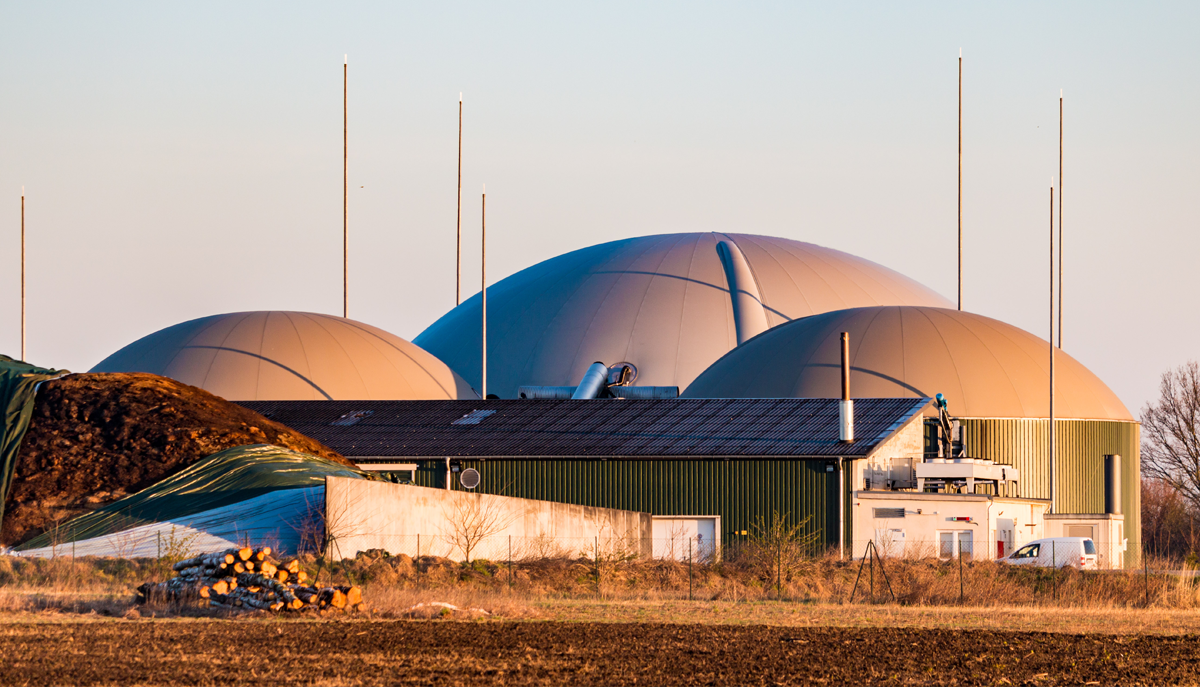
If you scan the registry for India’s Compressed Biogas (CBG) sector, you will find 1,908 projects—yet only 217 are actively producing gas today. The numbers reveal a hard operational truth about the sheer complexity of coordinating and integrating a multi-vendor CBG plant.
More importantly, that massive pipeline of registered projects is driven by a ticking clock: the race to meet strict government supply deadlines and capitalize on major new policy mandates.
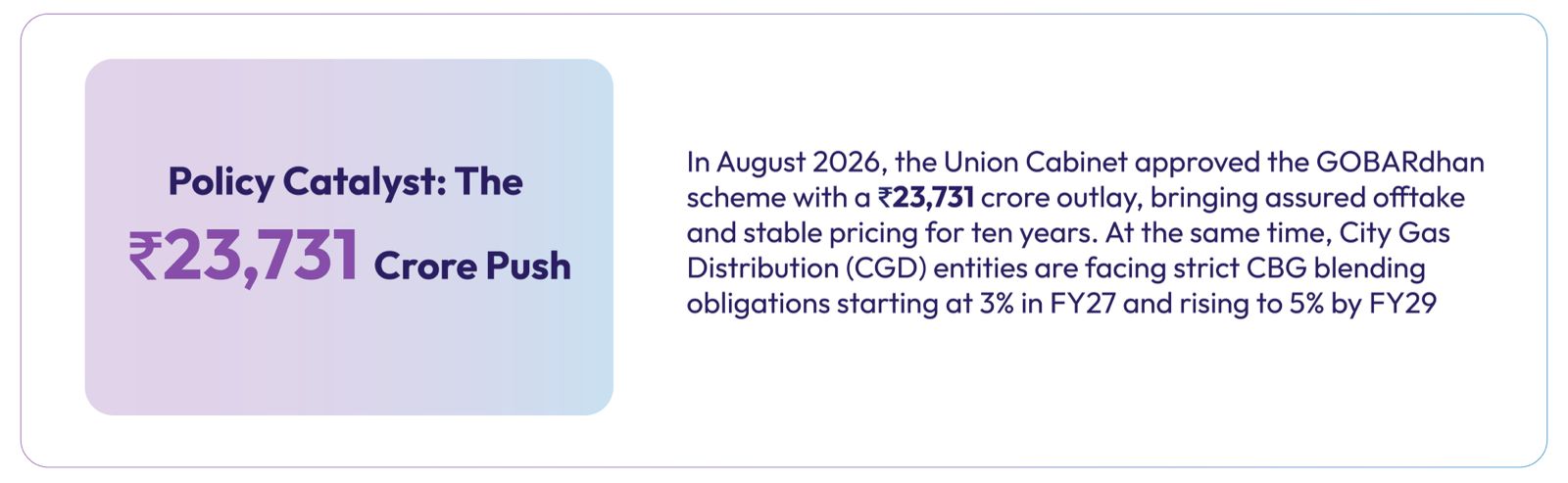
Investment and intent are clearly at an all-time high. However, converting capital into capacity requires highly synchronized procurement across diverse equipment packages. A single delay in feedstock handling, a lag in digester civil works, or a missing pipeline connection will stall commissioning, even if the rest of the facility is ready.
For CBG developers, the biggest execution hurdle is simply coordinating a fragmented supply chain. The following sections break down these specific challenges and explore how better visibility keeps delivery timelines on track.
Where CBG Projects Stall: The Execution Dependencies
A CBG plant isn't a single plug-and-play facility; it is a complex ecosystem. Three distinct friction points routinely derail execution timelines:
- The Multi-Vendor Maze: Whether a plant uses wet or dry anaerobic digestion, the equipment comes from highly specialized, separate vendors. Pre-treatment systems, digesters, gas upgrading and cleaning units, and high-pressure compressors are rarely sourced from a single supplier. Tracking manufacturing progress across these fragmented packages—from raw material readiness to Factory Acceptance Testing (FAT)—is incredibly complex.
- The Site vs. Shop-Floor Mismatch: Equipment delivery means nothing if the site isn't ready to receive it. In CBG projects, civil works and utility infrastructure must perfectly align with vendor dispatch schedules. If a gas upgrading unit arrives before the mechanical installation foundations are complete, you have a stranded asset. If the site is ready but the vendor is delayed on the shop floor, expensive labour and cranes sit idle.
- The Evacuation Bottleneck: Producing CBG doesn't guarantee delivery. According to recent PNGRB data, out of 207 functional CBG plants, only 24 had pipeline connectivity. If cascade-filling facilities or pipeline connections are treated as late-stage activities, commercial delivery will stall even if the digester is running perfectly.
How Venwiz Supports CBG Project Execution
To hit commissioning targets, project teams must move away from static spreadsheets and manual vendor follow-ups. Execution requires connecting what is happening at the supplier's facility with what is happening on the ground.
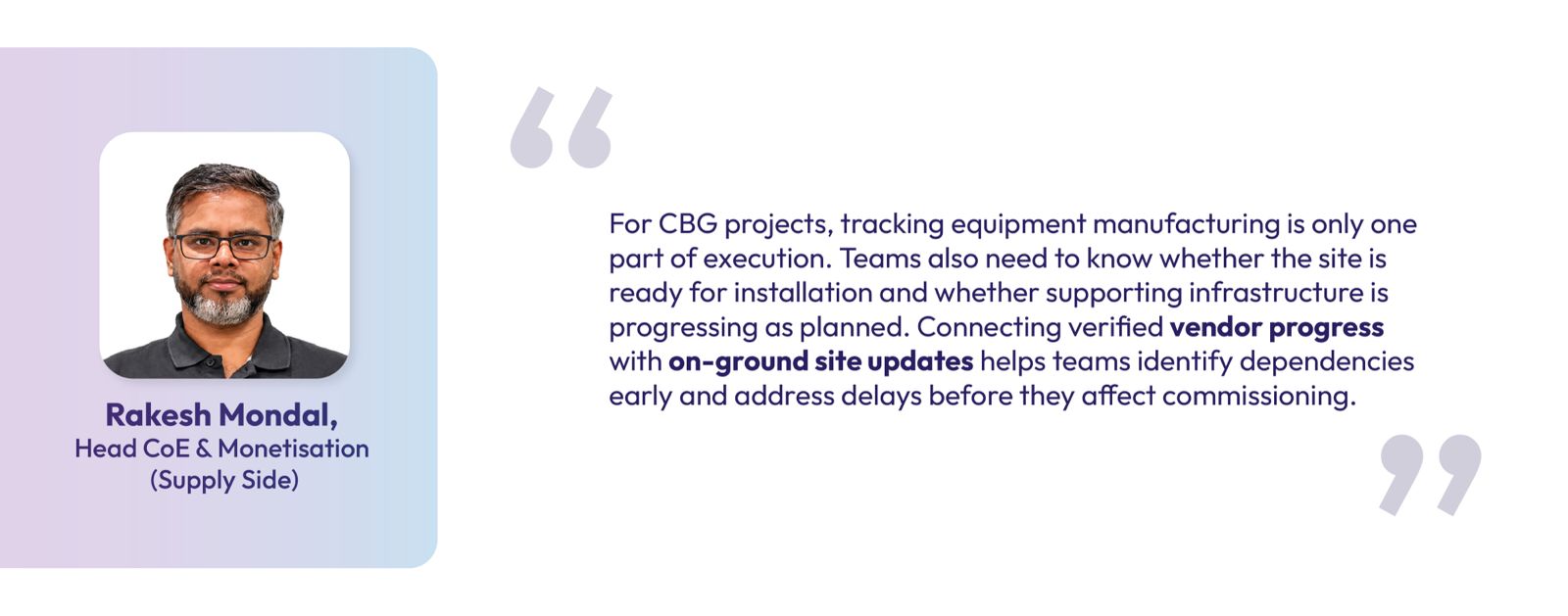
As Rakesh Mondal, Head of CoE & Monetisation (Supply Side) at Venwiz, notes:
Venwiz addresses two important aspects of CBG project execution through its AI-led solutions, OrderPulse and SitePulse.
While OrderPulse focuses on tracking vendor-side manufacturing and delivery, SitePulse provides visibility into on-site project execution.
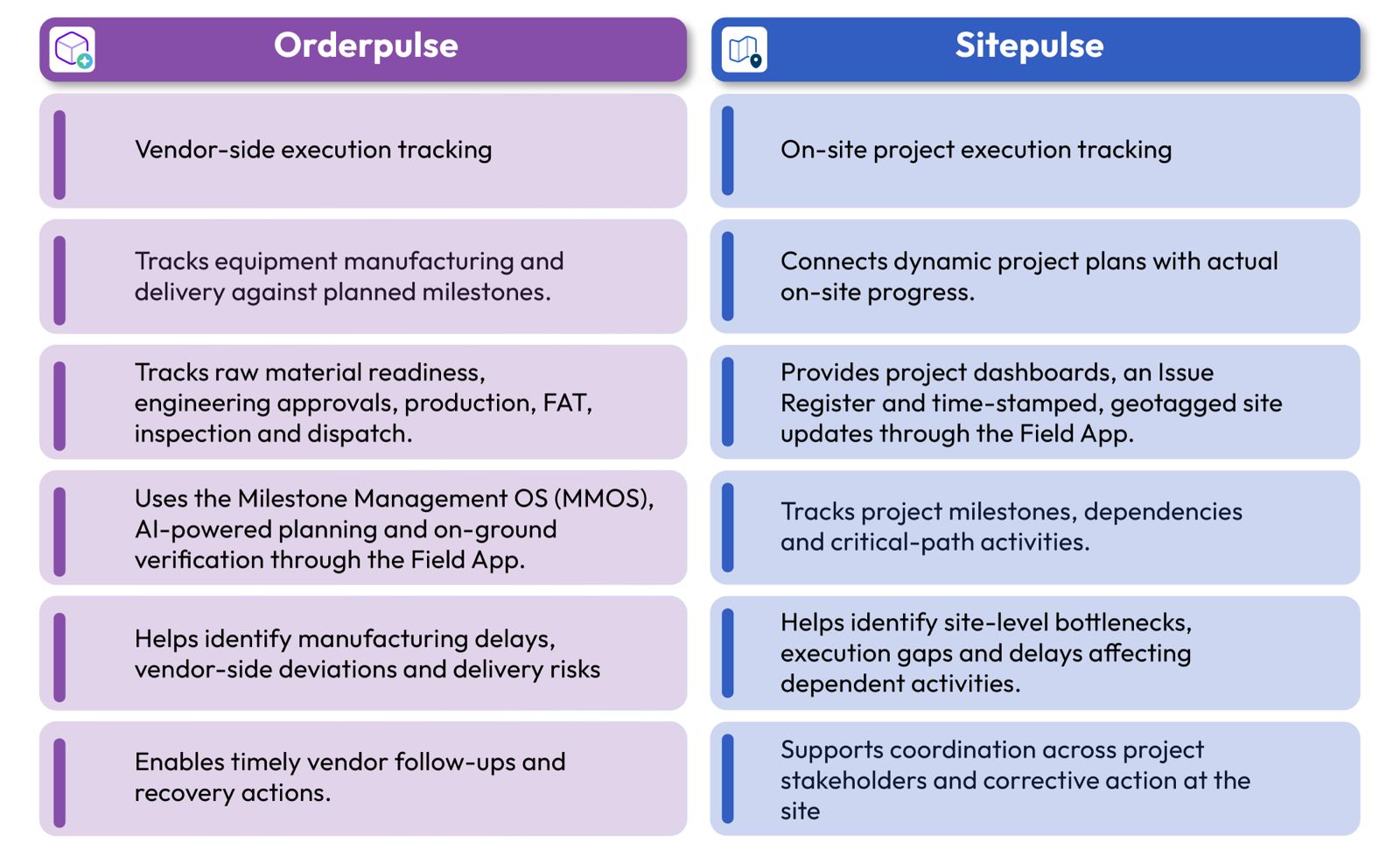
While OrderPulse tracks the equipment, SitePulse tracks the ground it will sit on. Together, they give CBG project teams visibility across two connected parts of execution.
For instance: A gas upgrading package may be nearing dispatch while the site's supporting utilities or installation arrangements are still incomplete. OrderPulse helps track the vendor's manufacturing and dispatch progress, while SitePulse provides visibility into the readiness of dependent site activities.
Connecting these two views helps teams identify mismatches between equipment delivery and site readiness, understand their impact on project milestones, and take corrective action before commissioning is delayed.
Conclusion
India’s CBG ambitions depend on more than investment, feedstock availability and demand. Projects must bring equipment, utilities, processing systems and gas evacuation infrastructure together in the right sequence. As the project pipeline expands, coordinating vendor progress with site readiness becomes essential to keeping projects on track towards commissioning.
Venwiz supports this coordination through OrderPulse and SitePulse, connecting verified manufacturing progress with on-ground site execution. This helps project teams identify execution gaps, assess their impact on dependent activities and take corrective action before delays affect wider project milestones.
Planning a CBG project or managing execution across multiple projects? Contact Venwiz to discuss how its post-PO execution offerings support better visibility and coordination from vendor manufacturing to site execution.
Related Blogs




Let’s talk about your next project
Our AI, expertise, and execution model close POs faster, cut slippages, and keep capital projects on schedule.