A Practical Guide to Cement Plant Construction: Key Steps and Challenges
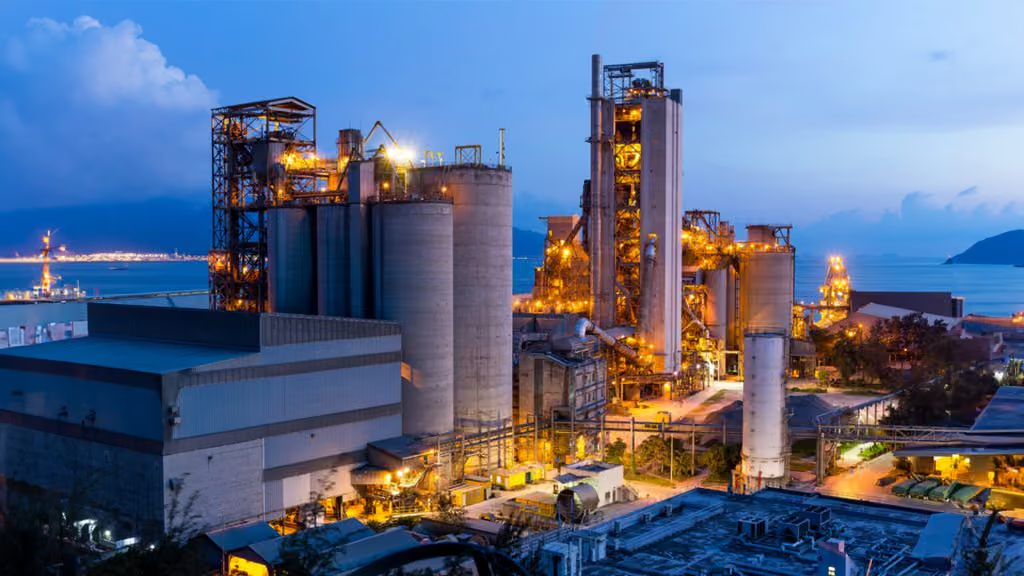
Setting up a cement plant from the ground up? We know it’s no small feat—it takes more than just blueprints and raw materials.
Demand for cement manufacturing in India is skyrocketing, with the country producing an impressive 3.96 billion tonnes of cement in 2023 (and set to hit 5.99 billion tonnes by 2032 1). Steel and cement are the primary raw materials for any construction project. But behind every cement plant lies a maze of procurement challenges—sourcing rotary kilns, constructing silos, setting up automated packaging, and more.
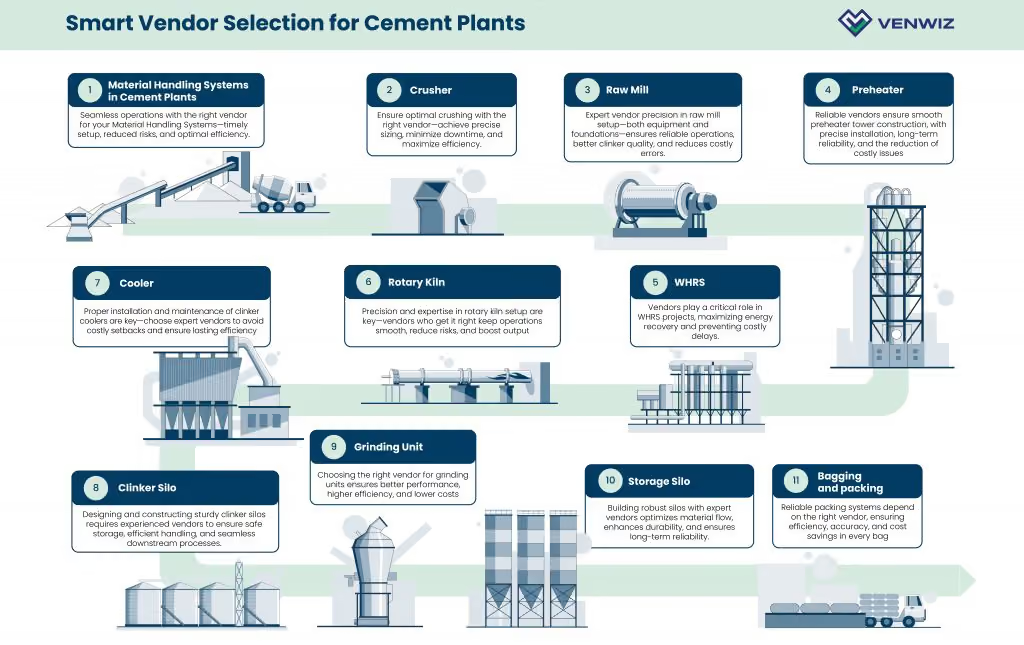
The real challenge? Securing the right vendor with expertise in constructing critical cement plant units. Any delays in vendor selection can derail project timelines—driving up costs and postponing production. Every structure—from material handling and clinkerization units to the bagging system—plays a crucial role in maintaining operational efficiency.
That’s why selecting the right vendor at the right time isn’t just routine—it’s critical. A well-planned procurement strategy drives construction forward, prevents costly delays, and ensures the cement plant is up and running on schedule.
In this blog, we break down the biggest procurement hurdles in cement plant construction—and what it takes to navigate them successfully.
Read about Material Handling Systems
Material Handling Systems
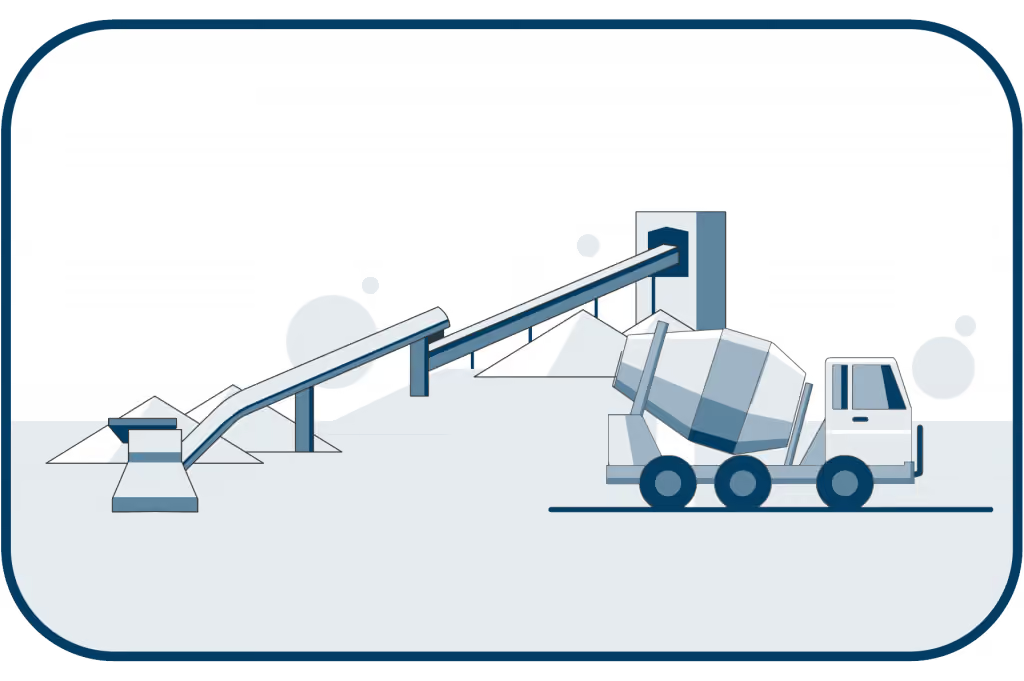
Did you know that inefficient material handling can result in significant raw material losses due to spillage, degradation, and transportation inefficiencies?
In cement manufacturing, bulk materials like limestone, alumina, silica, iron oxide, and other additives are essential. Material handling systems do more than just move raw materials—they also handle everything in between. That includes intermediate products (raw meal and clinker), the final product (cement and mortar cement), and even dust collected from different processes.
So, what’s next? These materials need to be efficiently transported, unloaded, and fed into production to keep the plant running smoothly and prevent material loss. That’s where systems like Wagon Tipplers, Truck Tipplers, and Bulk Reception Units (BRUs) come in—ensuring efficient material movement, reducing waste, and keeping operations uninterrupted.
Common Material Handling Systems - Why do they matter?
1. Wagon Tipplers: Unload bulk materials from rail wagons quickly, improving material flow and efficiency in cement plants.
2. Truck Tipplers & BRUs: Ensure fast and efficient unloading, minimize manual handling, and improve safety in cement plants.
3. Crusher Houses: Crush raw materials to the right size, ensuring a consistent feed for smooth kiln operation and steady production.
However, setting up these systems presents unique engineering and procurement challenges that require specialized vendor expertise.
Challenges in Material Handling System Procurement
1. Finding vendors with underground structure expertise
Installing material handling systems (like wagon tipplers, truck tipplers, and conveyor setups) often requires underground foundations as deep as (-)15m to (-)20m. But here’s the challenge—how do you ensure stable structures at such depths? Deep open-cut excavations demand effective dewatering techniques and slope protection measures, making vendor expertise critical.
The right vendor ensures timely installation, mitigates excavation risks, and keeps systems running efficiently.
2. Coordinating multiple vendors for seamless integration
Achieving seamless integration in material handling systems requires a streamlined approach. Misalignment between wagons, trucks, crushers, and storage units can cause inefficiencies, bottlenecks, and delays, impacting production timelines. So, how can you avoid this? Streamlining vendor coordination is key to keeping the cement manufacturing process flowing smoothly.
3. Ensuring equipment reliability & maintenance
Material handling systems run under high loads and operate continuously, making maintenance crucial. Poorly maintained equipment like tipplers and crushers can lead to breakdowns, downtime, and rising repair costs. So, what’s the solution? Carefully selecting the right vendor—because the right choice today prevents costly problems tomorrow.
Vendor Selection Criteria: Key Factors to Consider A well-functioning cement plant depends on both efficient material handling systems and strong supporting infrastructure. That’s why vendor selection must consider not just the right equipment but also the civil work required to ensure stability and seamless integration. For general equipment :
1. Proven Industry Expertise: Vendors should have a strong track record in cement-specific material handling systems, including wagon tipplers, truck tipplers, BRUs, and conveyors.
2. Custom Engineering Solutions: Every cement plant has unique operational needs. Vendors must provide tailored material handling solutions that align with plant layouts, processing capacities, and efficiency goals.
3. Cost-Effective Procurement & Installation: Vendors should offer competitive pricing, transparent cost structures, and modular solutions that reduce capital expenditure and enable future scalability.
4. Post-Installation Support & Maintenance: Reliable vendors provide easy access to spare parts, proactive maintenance programs, and remote diagnostics to minimize downtime and maximize efficiency. For Civil Work :
1. Industrial Infrastructure: Vendors should have experience with underground excavations, concrete foundations, and reinforced structures in cement plants.
2. Proven Track Record: Demonstrated ability to execute projects involving wagon tipplers, conveyors, and truck unloading bays.
3. Excavation & Dewatering: Expertise in safe deep excavation techniques and water management for underground structures.
Read about Raw Mill
Raw Mill
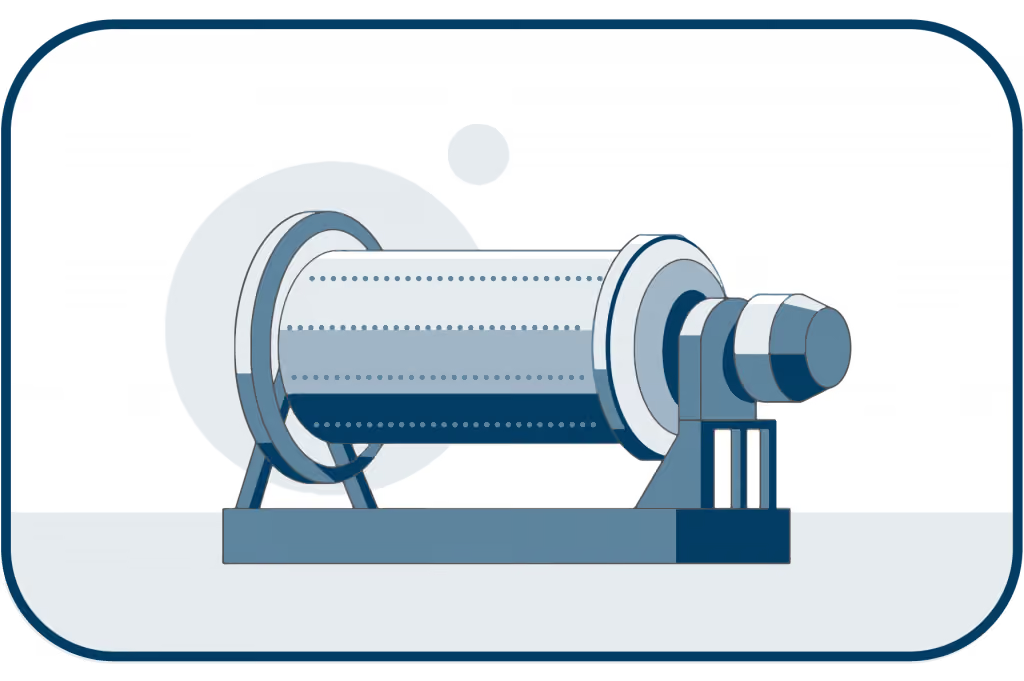
Did you know that raw mills consume about 24% of the total electricity used in cement manufacturing?1
A poor setup doesn’t just increase power bills—it also causes uneven material quality and higher running costs. Raw mills (like ball mills and Quadropol mills) play a key role in raw material processing, directly impacting clinker quality and overall plant performance.
Raw Mills - Why do they matter?
1. Raw Material Grinding: Converts limestone, clay, and iron ore into fine raw meal, forming the foundation for clinker production.
2. Consistent Composition: Maintains a uniform blend of materials, preventing quality fluctuations in the final cement.
3. Optimized Kiln Efficiency: Enhances reaction rates in the kiln, reducing fuel consumption and improving energy efficiency.
Challenges in Raw Mills Procurement
1. High Energy Consumption
Grinding raw materials consumes a significant amount of energy in cement plants. Inefficient ball mills drive up power costs, reduce productivity, and impact sustainability.
2. Maintaining Raw Material Consistency
Cement manufacturing relies on raw materials (like limestone and clay) with different chemical and physical properties. If the mix isn’t right, it leads to wasted fuel, production hiccups, and quality inconsistencies.
3. Fine Grinding vs. Mill Capacity
Finer raw meal improves kiln efficiency, but excessive grinding overloads mills. It’s important to balance fineness with capacity—overloading increases energy use, reduces grinding efficiency, and wears out equipment faster.
4. Managing Dust Emissions
Raw milling produces a lot of dust, posing health risks for workers and making compliance harder. Effective dust collection and mitigation systems keep workers safe and help plants meet environmental regulations.
5. Foundation & Structural Strength
Raw mills generate heavy vibrations and impact loads. Poor foundation design or subpar construction can cause operational instability and long-term damage. Ensuring structural integrity with high-quality design and robust construction is essential.
Vendor Selection Criteria: Key Factors to Consider Choosing the right vendor is key to a cement plant’s long-term performance. Equipment suppliers don’t just provide machinery—they improve processes, lower energy use, and increase equipment lifespan. At the same time, civil contractors play a critical role in ensuring strong foundations and structural integrity, essential for managing raw mill vibrations and maintaining operational reliability. For general equipment :
1. Quality of Equipment: Durable, efficient, and reliable raw mill systems that can handle diverse raw material compositions while maintaining product quality.
2. Technical Expertise: Vendors with milling expertise can provide solutions to improve grinding efficiency and overall plant performance.
3. Energy Efficiency: Advanced, energy-efficient mills can significantly cut operational costs while reducing environmental impact—an essential factor in today’s manufacturing industry.
4. Maintenance & Support Services: Comprehensive support, including staff training, spare parts availability, and prompt technical assistance, minimizes downtime and ensures smooth operations. For civil work :
1. Proven Expertise in Industrial Foundations: Experience in designing and executing vibration-resistant foundations for heavy machinery, vendor’s proven experience in complex mill foundations.
2. High-Strength Construction: Skilled in using reinforced concrete, precision rebar placement, and advanced Civil construction techniques
3. Structural Load Management: Understanding of dynamic loads, particularly for rotating equipment, to prevent long-term structural failures.
4. Regulatory Compliance: Adherence to IS 456:2000 for concrete structures and IS 2974 for machine foundations, maintaining industry standards.
Read about Preheater
Preheater
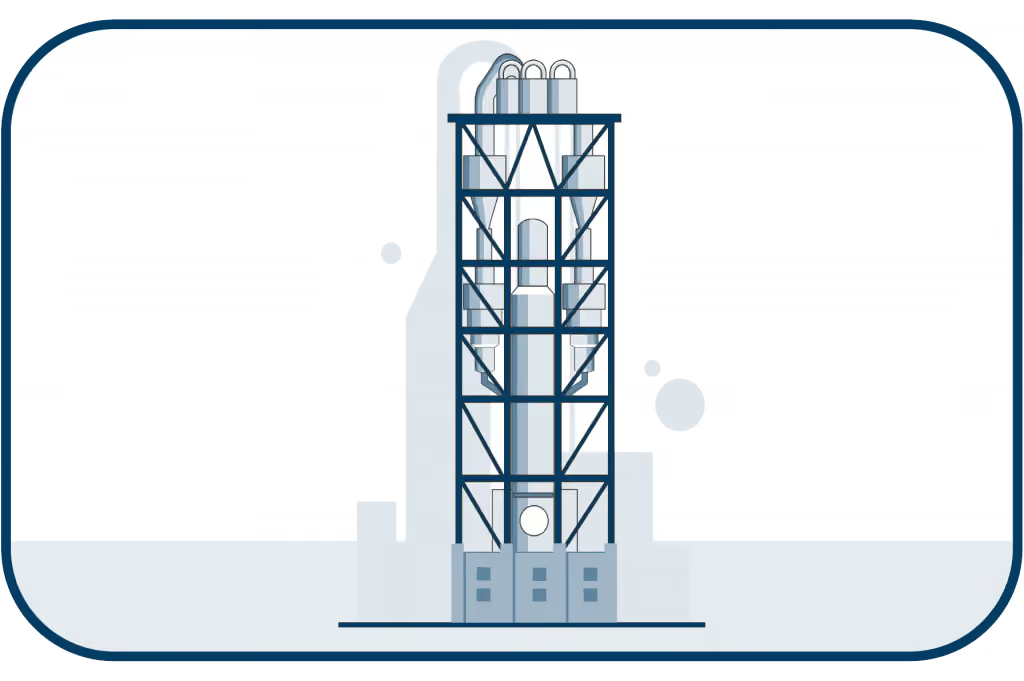
Have you ever thought about how towering preheater structures are built in cement plants? These giants, often over 150 meters high, are critical for heating the raw meal before entering the kiln.
Beyond their height, preheater towers are vital to the cement manufacturing process.
Here’s what makes them essential:
Preheater - Why do they matter? Enhanced energy efficiency Structural complexity Specialized construction needs Preheaters use multiple cyclone stages to preheat raw materials, significantly reducing fuel consumption in the kiln. These tall towers must support heavy equipment, withstand extreme temperatures, and maintain continuous material flow. Preheater towers require customized formwork, durable refractory linings, and precise structural engineering to ensure long-term stability and efficiency.
But constructing them isn’t easy. It demands vendors with expertise in high-rise industrial structures, and installing refractory and cyclone separator systems. Beyond installation, these systems must be built to last, operating reliably for 10 to 15 years under intense conditions. The right vendor ensures smooth operations from day one, preventing costly disruptions and maintaining raw meal quality.
Let’s explore the challenges and how Venwiz helps identify the best vendors for the job.
Challenges in Preheater Construction Procurement
1. Vendor Expertise for High-Rise Structures
Preheater towers are the tallest structures in cement plants, often reaching heights of 492 feet (150 meters) or more.
Undoubtedly, building them requires vendors with expertise in high-rise industrial projects to manage factors such as:
- Ensuring structural stability under height, wind loads, earthquake factors, static and dynamic loads, etc.
- Implementing safety protocols for working at significant elevations.
- Precision engineering to ensure the perfect positioning and alignment of the equipment housed inside the preheater tower.
2. Customized Formwork Solutions
Formwork is critical for shaping and supporting the preheater tower during cement plant construction. And it’s more than just a construction element—it’s a major cost driver. While specific data on preheater towers is limited, formwork costs 2 typically range from 30–40% of concrete work in buildings but can climb to 50% or more of concrete work for special structures like tall chimneys and towers.
Standard formwork solutions often don’t suffice, necessitating custom-designed formwork to:
- Accommodate the tower’s height and weight-bearing requirements.
- Improve construction efficiency by enabling faster concrete setting and curing.
- Minimize material wastage and cost overruns by ensuring precision during the first pour.
3. Limited Availability of Vendors
Unlike standard industrial construction, preheater tower projects are not prevalent in other industries except cement, making it difficult to find vendors with prior experience. The niche expertise required means that companies must carefully assess vendors who can:
- Handle preheater-specific construction requirements.
- Ensure compliance with industry safety and quality standards.
4. Challenges of High-Rise Industrial Construction
Building at extreme heights brings several obstacles that demand specialized solutions:
- Material Handling Efficiency: Transporting raw materials to various levels within the pre-heater building without disrupting the process.
- Wind & Weather Considerations: High winds and shifting weather can put crane operations and worker safety at risk. How dangerous can it get? During Cyclone Fani in Bhubaneswar, strong winds toppled a crane, causing major damage and highlighting the hazards of extreme conditions.3
- Structural Load Management: Managing phased cement plant construction to prevent instability and ensure long-term durability.
Addressing these challenges requires collaboration with vendors who possess the necessary expertise and experience in high-rise industrial construction within the cement industry.
Vendor Selection Criteria: Key Factors to Consider
Choosing the right vendor for preheater systems is essential for process reliability, and long-term performance. Key factors to consider include:
1. Advanced Engineering & Technology: Vendors must demonstrate expertise in designing high-efficiency cyclone preheaters with minimal raw meal recirculation, ensuring seamless integration with plant-specific capacity and structural needs. Additionally, expertise in the latest formwork technology for high-rise construction, fabrication, and erection is crucial.
2. Flexibility & Upgradability: Vendors must provide modular preheater construction support to facilitate construction and erection.
3. Reliability & Maintenance: Vendors must design preheaters that are easy to operate, durable, and require minimal maintenance during plant operations, reducing downtime.
Read about Rotary Kiln
Rotary Kiln
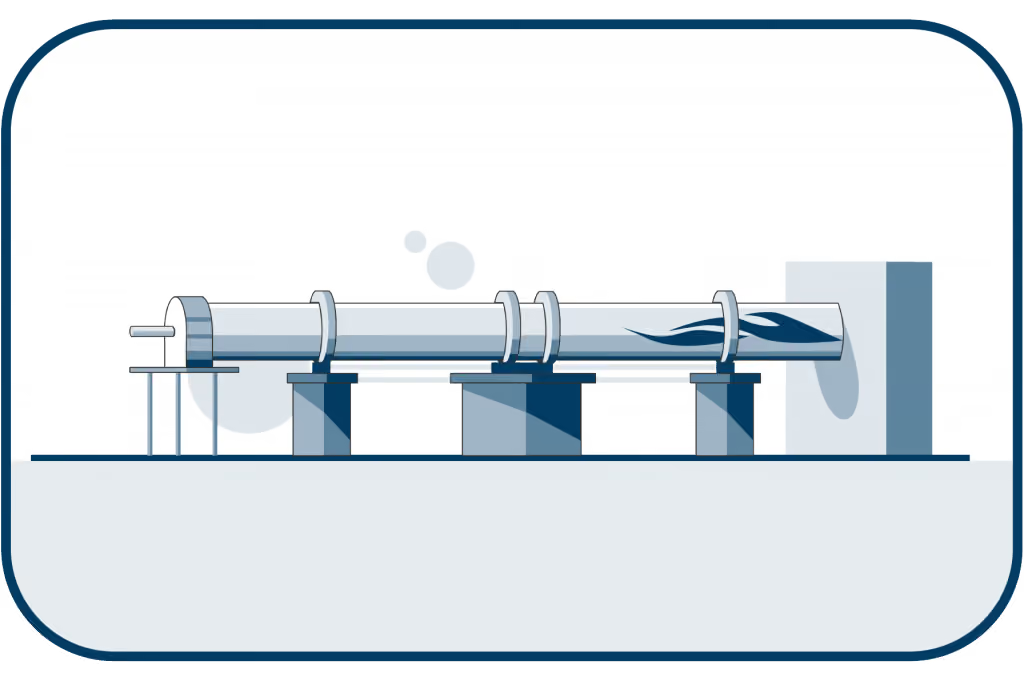
What does it take to turn raw materials into cement? Intense heat—reaching up to 1900°C inside a rotary kiln.
At extreme temperatures, limestone and clay react to form an essential clinker, the foundation of cement quality. To optimize kiln performance, understanding this transformation is critical.
Rotary Kilns – Why Do They Matter? 1. Calcination & Clinker Formation: High temperatures trigger chemical reactions, transforming raw materials into clinker, the core ingredient of cement.
2. Continuous Movement: Continuous movement ensures uniform heat distribution, prevents material buildup, and optimizes thermal efficiency.
Even minor inefficiencies—whether in temperature control, rotation speed, or heat distribution—can disrupt clinker formation, increase fuel consumption, and drive up operational costs. Precision and efficiency at every stage are critical to ensuring clinker quality and overall plant performance.
Here are some key challenges that cement plants must navigate:
Challenges in Rotary Kilns Procurement
Despite their importance, rotary kilns come with significant operational challenges that impact efficiency and product consistency. Let’s take a closer look:
1. Material Variability
Raw materials differ in composition, impacting clinker quality. A well-designed kiln adapts to these changes without disrupting production.
2. High Energy Consumption
A rotary kiln operates like a massive heat engine. Inefficient fuel usage can drive up costs and complicate compliance, making energy optimization crucial.
3. Emissions Management
With stricter regulations, reducing emissions is a priority for cement plants. Alternative fuels can help—but require careful kiln adjustments to maintain stability.
4. Control and Automation
Integrating AI-driven systems improves kiln efficiency but requires expertise and investment. The right partner and automation strategy ensures precision and long-term gains.
5. Refractory Failures
The kiln’s refractory lining endures extreme heat and chemical reactions, but when it fails, the consequences are costly—kiln shell damage, prolonged downtime, and expensive repairs. Each failure means days of lost production, affecting plant efficiency.
6. Mechanical Wear and Tear
Constant heat and movement wear down bearings, seals, and rollers. Without regular and proactive maintenance, breakdowns lead to costly downtime.
That's why addressing these challenges is key to kiln efficiency, higher output, and lower costs.
Vendor Selection Criteria: Key Factors to Consider
Vendor selection in cement plants must account for both general equipment and civil work—while the right kiln equipment ensures efficient clinker production, robust civil infrastructure is essential to support high-temperature operations and continuous movement For General Equipment: 1. Technical Expertise & Experience: Proven knowledge in designing, fabricating, and installing rotary kilns.Deep understanding of high-temperature processes and material flow.Expertise in process integration for maximum efficiency and minimal downtime.
2. Quality of Equipment: Heat-resistant alloys that withstand extreme kiln conditions.Design that ensures uniform heat distribution and efficient fuel usage.
3. Customization & Efficiency: Kiln size, capacity, and refractory linings tailored to plant requirements.Energy-efficient features to lower fuel consumption and emissions.Advanced sealing systems to minimize heat loss and enhance performance. For Civil Work :
1. Expertise in Industrial Foundations: Proven knowledge in designing and constructing kiln foundations for extreme heat and heavy mechanical loads.Deep understanding of reinforced concrete structures resistant to thermal expansion and stress.
2. Precision in Alignment & Leveling: High-accuracy foundation work to ensure proper alignment of the kiln shell, rollers, and drive systems. Optimized levelling to prevent misalignment, reduce wear and tear, and minimize maintenance costs.
3. Heat-Resistant & Durable Materials: Specialized refractory concrete engineered for continuous high-temperature exposure.Advanced expansion joint design to accommodate thermal movement without structural damage.
Read about Cooler
Cooler
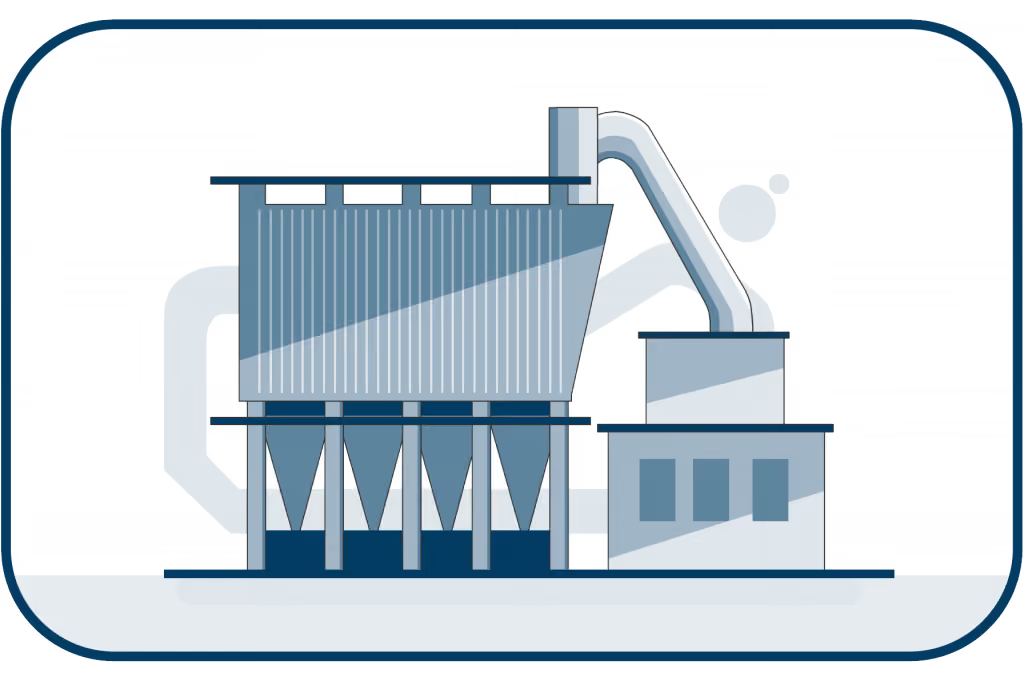
From blazing hot to stable—what does it take to cool the clinker efficiently?
Precision cooling and optimal heat recovery—because inefficient cooling impacts cement quality and increases energy consumption. The clinker cooler rapidly lowers temperatures, improves heat recovery, and enhances overall process efficiency.
Coolers – Why Do They Matter?
1. Rapid Cooling & Material Handling – Fresh clinker is red-hot and must be cooled quickly to prevent material damage and ensure safe handling and grinding.
2. Heat Recovery & Energy Efficiency – The cooler redirects waste heat to preheat combustion air, improving overall energy efficiency.
Just as preheater towers and rotary kilns require specialized expertise, coolers must be designed precisely and well-maintained. Without the right equipment and expert support, the plant can have operational setbacks, affecting its efficiency.
Here are some key challenges that cement plants face in clinker cooling:
Challenges in Cement Plant Cooler Procurement
1. Ensuring Uniform Cooling
Efficient heat transfer from the hot clinker to the cooling medium (usually air) is key to maintaining quality and optimizing efficiency. Poor transfer leads to inefficient cooling and higher energy use. And if cooling is uneven? Cracks, weakened clinker, and sticking issues can throw grinding off track.
2. Clinker Buildup & Blockages
- Clinker sticking to grates: Material buildup on cooler grates and transfer chutes reduces efficiency and increases maintenance demands.
- Impurities making it worse: Variations in clinker composition can accelerate buildup, complicating maintenance.
3. Equipment Failure & Maintenance
- Wear and tear: Extreme heat and abrasive clinker wear down grates, fans, and transfer chutes, leading to frequent repairs.
- Dust piling up: Cooler operations generate significant dust, requiring efficient collection systems to stay compliant and maintain workplace safety.
4. Environmental Challenges
- Air pollution concerns: Cooling adds to emissions, increasing the environmental footprint of cement manufacturing.
- Struggling with dust control: High dust levels can degrade air quality, impacting workers and surrounding communities.
- Energy costs too high: Cooling is energy-intensive—optimizing airflow and heat recovery can help cut costs and reduce environmental impact.
Addressing these challenges is key to maximizing cooler efficiency, improving production consistency, and minimizing downtime.
Vendor Selection Criteria: Key Factors to Consider
When it comes to clinker coolers, having the right equipment to drive efficiency and the right civil work to ensure long-term durability is crucial. The right partner for the cooling machinery can optimize performance, while the right civil vendor ensures that the foundation and structure can handle the pressure—making a huge difference in both performance and costs For general equipment :
1. Technical Expertise & Industry Experience: Proven experience in designing and manufacturing grate coolers, planetary coolers, or rotary coolers.Successful installation in cement plants. Understanding of heat recovery systems to enhance kiln efficiency.
2. Cooler Design & Engineering Capabilities: Ability to customize cooling solutions based on clinker properties and plant capacity.Expertise in designing uniform clinker flow systems to prevent heat imbalance. Precision engineering of critical components (including high-wear-resistant grates, cooling plates, and optimized air distribution systems) for effective cooling.
3. Equipment Quality & Performance: Use of high-temperature-resistant materials to extend service life.Design that minimizes clinker fines generation and ensures uniform cooling.Compliance with heat recovery optimization standards to boost kiln efficiency. For Civil Work : 1. Foundation & High-Temperature Expertise: Experience in constructing reinforced concrete structures that can withstand high-temperature stresses.Knowledge of expansion joint designs to prevent cracks caused by thermal expansion.
2. Precision Alignment & Leveling: Clinker coolers require precise alignment for optimal airflow and heat transfer. Poor levelling can lead to uneven clinker flow, heat imbalances, and mechanical failures over time. Precision in equipment and drive foundations ensures long-term performance.
3. Structural Stability & Load-Bearing CapacityCooler foundations must support heavy equipment such as grates, fans, and air distribution systems. Expertise in vibration-resistant construction ensures durability under continuous operation.
4. Dust & Environmental Compliance: Civil vendors must incorporate efficient dust control infrastructure, including sealed ductwork and collection systems. Compliance with environmental regulations ensures workplace safety and reduces air pollution risks.
Read about Grinders
Grinders
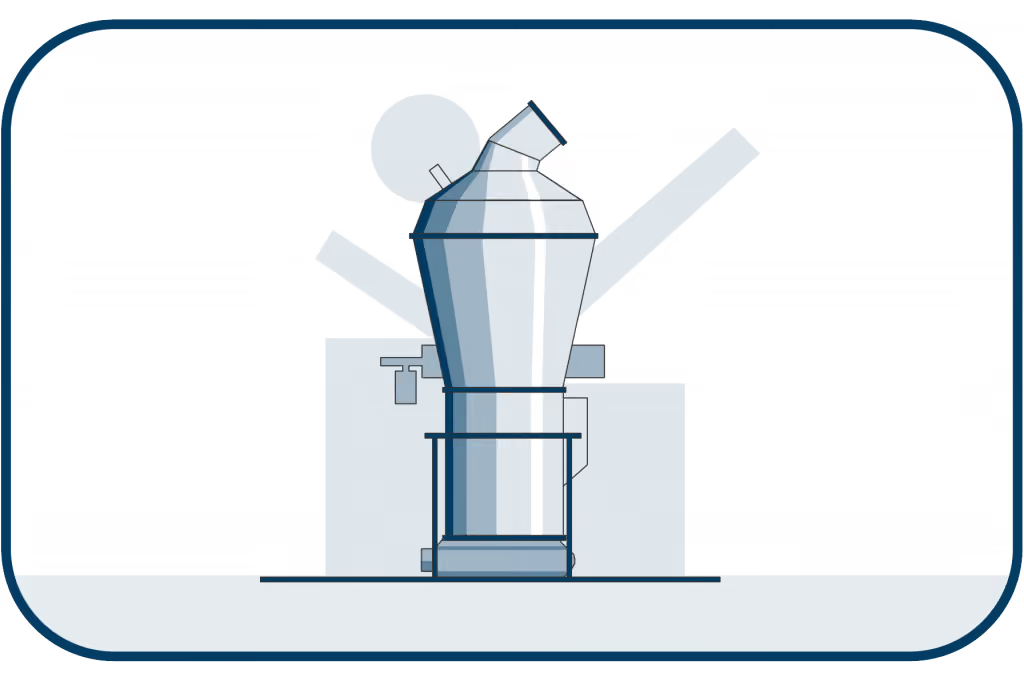
Did you know that grinding units account for more than 60% of the total energy consumption in cement manufacturing? 1
Grinding units are responsible for the final processing of clinker into cement. This stage significantly impacts the cement's quality and overall plant efficiency.
Cement Grinding Units – Why Do They Matter? 1. Final Cement Manufacturing Process – Clinker is ground with gypsum and other additives to produce the final cement product.
2. Quality & Strength Control – Ensures proper fineness and composition, impacting the setting time and strength of cement.
Grinding units are crucial in cement manufacturing, turning clinker into the final product and directly affecting the quality of the final product. So, how do you ensure everything runs smoothly? The right vendor can ensure the cement grinding unit operates efficiently.
Key Challenges in Cement Grinding Procurement
1. High Energy Consumption
Grinding clinker is power-intensive, making energy efficiency a critical factor in cost control.
2. Heat Generation & Process Optimization
Excessive heat during grinding can lead to gypsum dehydration, affecting cement properties.
3. Wear & Tear on Grinding Components
Grinding media and mill liners undergo continuous wear, requiring regular maintenance and replacements.
4. Dust Control & Environmental Compliance
Grinding units produce fine dust, and require effective dust collection systems for worker safety and regulatory compliance.
Energy use, heat buildup, wear on parts, and dust—these are the common painpoints. But the right vendor, with their expertise, can ensure smooth operations and cut down on costly disruptions.
Vendor Selection: Key Factors to Consider
For cement grinding units, selecting the right equipment can drastically improve efficiency and reduce operational costs. But just as important is the civil work, which ensures the foundation can handle the vibrations and heavy loads of the grinding mill, preventing issues and providing the stability needed for optimal performance over time. For General Equipment : 1. Equipment Quality & Reliability – Durable ball mills or VRMs that ensure consistent grinding performance.
2. Energy-Efficient Solutions – Advanced grinding technologies reduce power consumption and improve productivity.
3. Proven track record and after-sales service – Choose vendors with successful installations in cement plants and a reputation for reliable after-sales service. For Civil Work :
1. Expertise in Heavy Machinery Foundations – Proven experience in constructing strong, vibration-resistant foundations for grinding mills, ensuring stability under high-impact, dynamic forces.
2. Load Management & Stability – Deep understanding of dynamic and static loads, ensuring foundations can withstand high-speed, rotating mill operations without settling, cracking, or compromising structural integrity.
Read about RCC Silos
RCC Silos
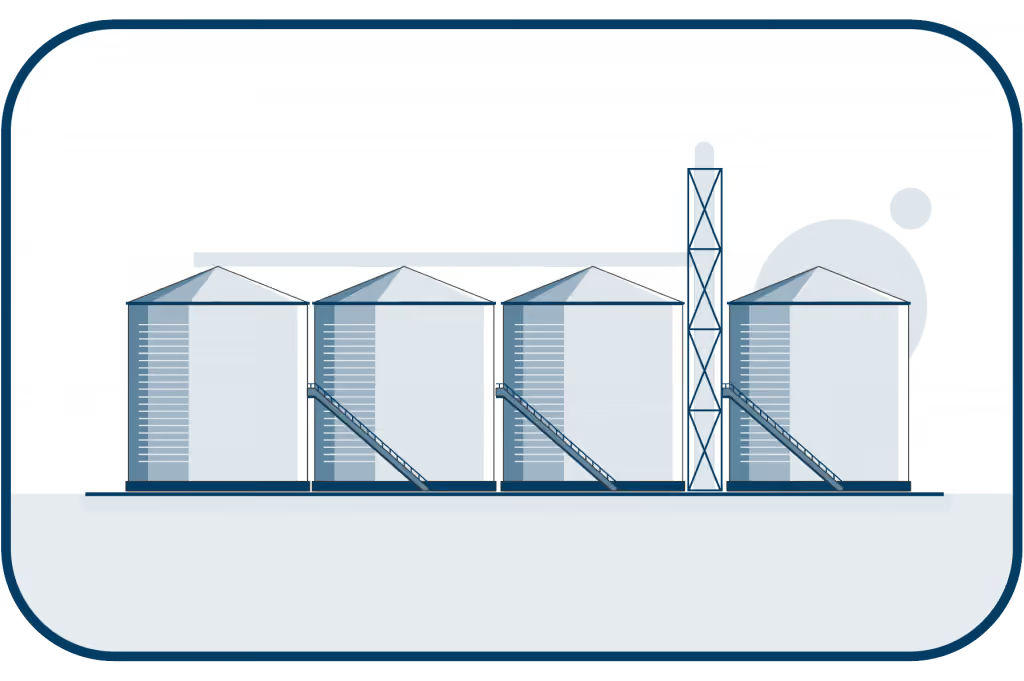
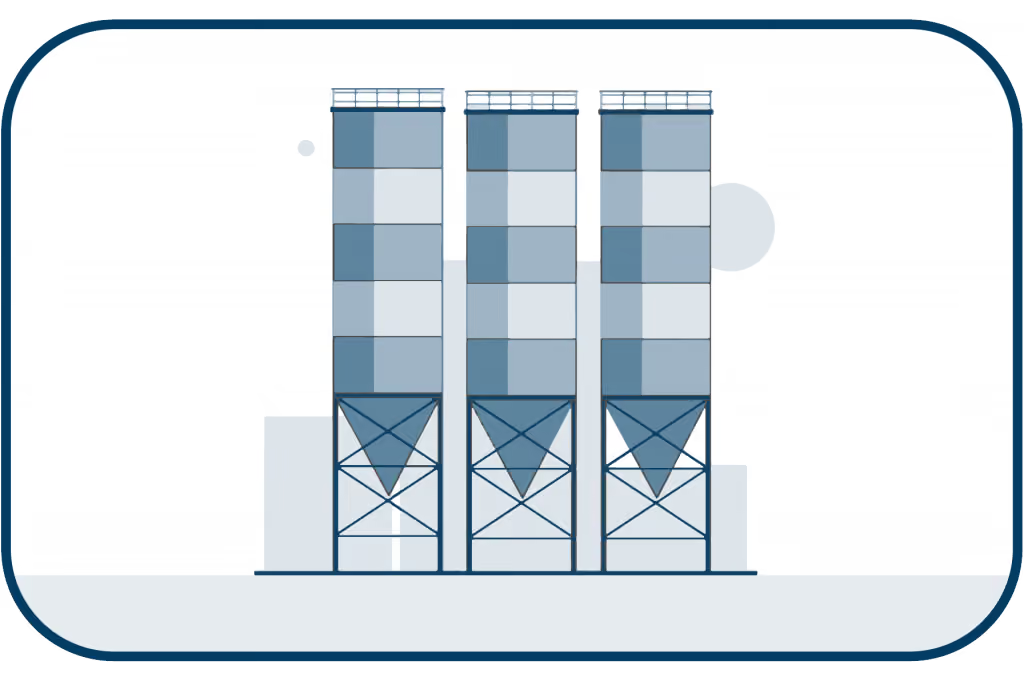
Did you know that improper storage can lead to significant waste in cement manufacturing?
That’s why silos aren’t just storage units—they keep intermediate processed materials (like clinkers) and cement dry, prevent waste, and ensure production runs smoothly.
Cement Silos- Why do they matter?
1. Continuous Storage: Ensures a steady supply of clinker and cement, preventing production halts.
2. Cost Efficiency: Bulk storage minimizes spillage, lowers handling costs, and ensures better material utilization.
Material Protection: Prevents contamination and moisture exposure, preserving cement quality.
Yet, building these silos is no simple task. With global cement demand—expected to reach 4.8 billion metric tons by 2026—efficient construction methods like slipform and prestressing are more crucial than ever. However, sourcing vendors with expertise in both remains a major challenge.
Challenges in Silo Construction Procurement
1. Specialized Construction Techniques
- Slipform Construction: This method involves the continuous pouring of concrete, allowing for rapid and seamless vertical structure formation. However, it demands meticulous control over the concrete mix's consistency and requires operations to run 24/7 to prevent structural inconsistencies. Additionally, cement silos can be multi-compartment, requiring vendors with proven expertise to handle the complexities of such construction with precision.
- Prestressing : Incorporating prestressed concrete techniques enhances the structural integrity of silos, ensuring they can withstand substantial internal pressure variations both when empty and fully loaded. This process requires specialized expertise to ensure the correct application of tensioned steel tendons within the concrete.
Identifying vendors proficient in slipform construction and prestressing techniques is challenging due to the specialized nature of these methods. The scarcity of such dual-expertise vendors can lead to project delays and increased costs.
2. Reducing Energy Costs in Material Flow
Did you know that optimizing silo flow alone can save a significant amount of material loss in cement plants? Poorly designed silos create operational bottlenecks that slow down production. In the worst-case scenario, failures can lead to worker injuries, structural collapses, material losses, and environmental risks. So, how can you ensure your silos are designed for maximum efficiency?
Vendor Selection Criteria: Key Factors to Consider
Choosing the right vendor for RCC silos is essential for ensuring structural integrity, durability, and seamless cement storage. Here’s what to consider:
1. Proven Industry Expertise: Opt for vendors with a strong track record in RCC silo construction, especially those skilled in slipform and prestressing techniques for high-capacity storage solutions. Evaluating their experience in constructing multi-compartment silos is crucial.
2. Structural & Engineering Capabilities: Vendors should design silos that can withstand internal pressure fluctuations, prevent material buildup, and meet seismic and wind load requirements for long-term stability.
3. High-Quality Construction Materials: Vendors must ensure the use of high grades of concrete and corrosion-resistant reinforcement to enhance structural longevity and provide protection against environmental factors.
4. Regulatory Compliance & Safety Standards: Vendors must enforce strict adherence to IS 3370 (Part 1 & 2), IS 800:2007, IS 1893:2016, EHS guidelines, and load testing protocols to guarantee worker safety and long-term structural reliability.
Read about Bagging and Packing
Bagging and Packing
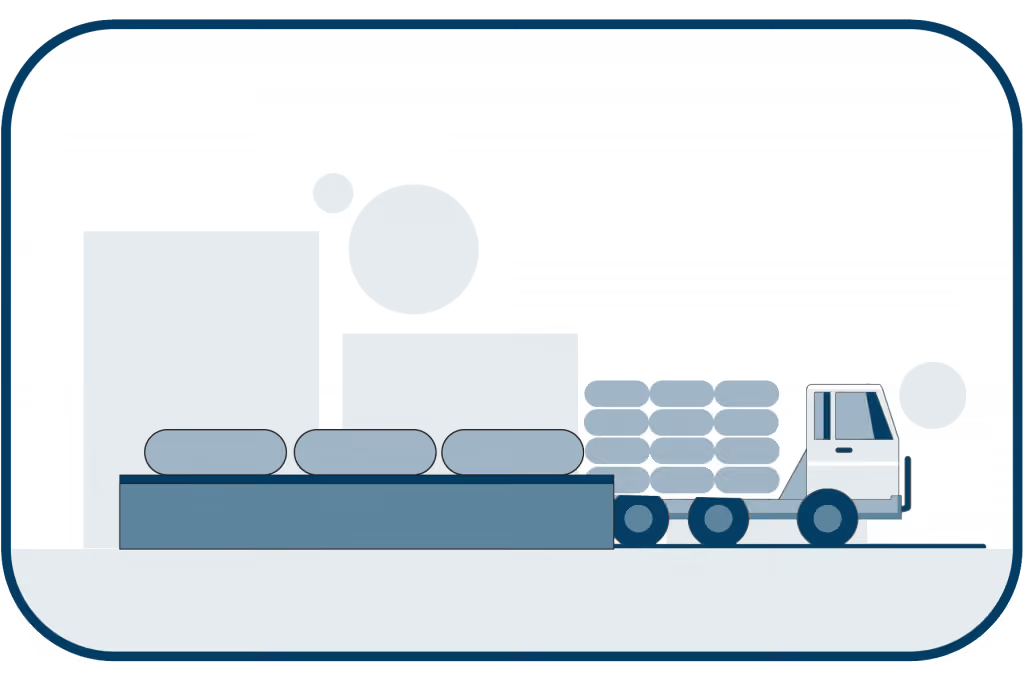
Cement packaging may appear to be just the finishing touch but it’s critical for safe transportation, storage, and delivery, ensuring the product’s quality and extended shelf life.
And here's the catch—how you package your cement can determine whether the product’s integrity is maintained or compromised.
Cement Bagging and Packing - Why does it matter?
1. Product Integrity: High-quality packaging shields cement from humidity, dust, and contamination, preserving its chemical composition.
2. Efficiency: Automated systems speed up packaging, reduce manual errors, and lower labor costs—ensuring each bag is packed uniformly with minimal wastage.
3. Cost Optimization: Smart packaging minimizes wastage and transport inefficiencies, reducing overall costs while enhancing precision.
4. Regulatory Compliance: Advanced systems control dust emissions, meeting safety and environmental regulations to ensure workplace safety and sustainability
After being stored in silos, cement is packed using high-speed roto-packers or shipped in bulk. With rising demand, manufacturers are adopting automated packing systems for faster, more accurate, and cost-efficient operations.
Challenges in Selecting Vendors for High-Speed Automation
High-speed, automated bagging and packing systems are essential for staying competitive. But the real challenge? Identifying vendors who can deliver on both speed and reliability while ensuring smooth integration with your packaging materials.
What does this require?
- E&I Capabilities: Your vendor’s ability to handle Distributed Control Systems (DCS), control panels, and instrumentation is essential. Only a vendor skilled in managing these systems with precision can ensure smooth operations, reducing the risk of disruptions that could impact efficiency.
- PLC Integration: PLC plays a central role in automation, yet it requires specialized knowledge to integrate seamlessly. Without a vendor who understands the complexities of PLC systems, the potential for poor integration increases—leading to costly downtime and setbacks that can disrupt operations.
Vendor Selection Criteria: Key Factors to Consider
Choosing vendors who are fast, reliable, and understand the unique challenges of cement packaging is key to improving efficiency. Equally important are the vendors who provide strong civil infrastructure, ensuring stable foundations, reliable equipment, and minimal downtime for long-term performance. For general equipment :
1. Technical Expertise: Vendors must have proven experience in designing cement bagging systems, including rotary and fixed packing machines. Expertise in handling both fine and abrasive materials is essential to maintain packing accuracy.
2.Automation & Scalability: Vendors should offer semi-automatic and fully automated systems that align with cement manufacturing needs and budgets. Seamless integration with existing material handling and control systems is crucial for smooth operations.
3. Material Handling Efficiency: Equipment must minimize dust emissions and material loss, ensuring smooth cement flow to prevent blockages and maintain consistent filling.
4. Precision & Speed: High-speed bagging systems should meet cement manufacturing targets without compromising accuracy. Advanced weighing systems are essential for precise cement measurement and reducing product loss.
5. Customization & Flexibility: Vendors must offer tailored solutions for various bag types (valve bags, open-mouth bags, FIBC) and sealing methods (heat sealing, stitching), along with adaptability to bulk loading and palletizing requirements. For Civil Work : 1. Expertise in Industrial Foundations: Experience in constructing vibration-resistant foundations for high-speed roto-packers and automated bagging lines.Ability to design reinforced concrete flooring that can handle heavy loads from bulk loading, conveyor systems, and palletizing units.
2. Precision in Layout & Alignment: Vendors must ensure precise levelling to avoid misalignment of packing machines and conveyors. Misalignment can lead to inconsistent bag filling, increased material loss, and frequent machine downtime.
3. Load-Bearing Capacity & Structural Durability: Bagging and packing areas must support continuous movement of bulk material without structural weaknesses.Use of high-strength concrete and corrosion-resistant reinforcements to extend facility lifespan.
Read about WHRS
Waste Heat Recovery System
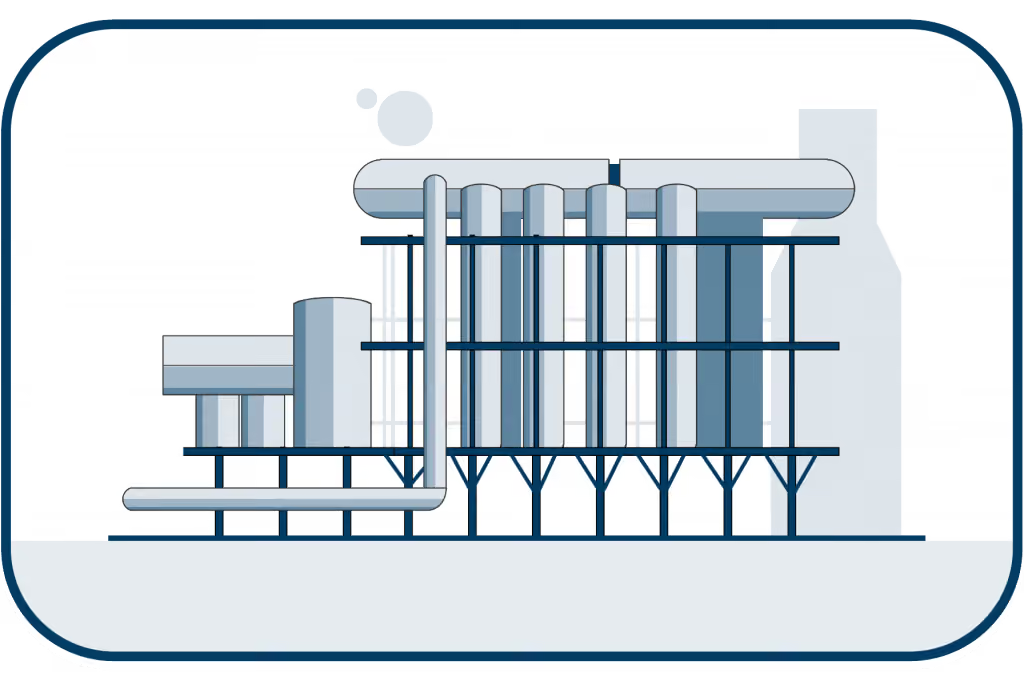
Did you know that about 40% of the total heat input is lost as waste heat in dry-process cement plants? 1
Ever wonder what happens to all that excess heat in cement manufacturing? Enter the Waste Heat Recovery System (WHRS), a game-changer in capturing heat and turning it into something far more valuable : energy.
Let’s first look at how this works :
Step-by-Step Process of How WHRS Works in Cement Manufacturing Step 1: The Rotary Kiln in Action
The rotary kiln (core of cement manufacturing) reaches temperatures between 800 to 1400°C. It generates both clinker and hot gases, which are crucial for the production process. These gases aren’t just byproducts—they're essential at multiple stages of cement manufacturing. Step 2: Recirculating Hot Gases for Efficiency
To maximize energy efficiency, the hot gases are recirculated and used in various ways:
1. Kiln Operations: These gases help maintain optimal temperatures in the kiln, ensuring smooth and efficient operations.
2. Preheating Raw Materials: The gases preheat raw materials like coal and limestone before they enter the kiln, reducing overall energy costs.
3. Drying Materials: The gases are also used to dry raw materials, saving time and energy. Step 3: Leftover Heat – The Waste Gases
Even after all these processes, waste gases are still generated and exit the system at temperatures between 250–400°C. Step 4: Harnessing Waste Heat for Power
Now, here’s where the magic happens—the WHRS. This system captures the leftover heat and uses it to generate steam which is converted into electricity through the turbine-generator, turning what was once wasted into a valuable energy resource. The WHRS system is usually set up between the preheater and cooler.
Curious about the impact of WHRS? Here’s why it’s a must-have for cement plants aiming for efficiency and sustainability.
WHRS - Why Does it Matter? 1. Reduced Energy Costs: Imagine cutting energy costs by 14–18%. With WHRS, cement plants can generate 25–30% of their power needs, which means significant savings. According to CII, the waste heat recovery potential in the Indian cement industry is close to 415 MW.1
2. Lower Carbon Emissions: Every step toward reducing reliance on fossil fuels counts. WHRS helps reduce CO₂ emissions by around 1.2 kg per kWh, when compared to thermal power plants 2, supporting cement plants in meeting their environmental goals and regulatory standards.
3. Enhanced Resource Efficiency: Waste heat isn’t just waste—it’s an untapped resource. By capturing and reusing it, WHRS boosts energy efficiency and minimizes resource wastage, ensuring that no energy goes to waste.
Key Considerations for WHRS Implementation
While WHRS can transform how cement plants handle waste heat, it’s not a plug-and-play solution. Successful deployment requires careful planning across technical, financial, and logistical aspects.
1. Waste Heat Characteristics
The effectiveness of WHRS largely depends on:
- Temperature, composition, and flow rate of the waste heat stream.
- The presence of sulfur, acids, or particulates, which can corrode conventional heat exchangers.
- Using specialized equipment, like heat pipe-based exchangers, to prevent corrosion and enhance efficiency.
2. System Design & Integration
Integrating the WHRS seamlessly with the existing plant infrastructure is key. The system must:
- Fit within the plant layout without disrupting operations.
- Minimize downtime and ensure compatibility with other equipment.
- Overcome space constraints, especially in brownfield plants, where retrofitting can be challenging.
3. Technology Selection
Choosing the right technology is crucial for maximizing heat recovery. The system’s technology should align with:
- The plant’s specific operational requirements.
- The quality and temperature range of available waste heat.
- Appropriate boilers, turbines, and control systems to optimize performance.
4. Economic Feasibility & ROI
Financial considerations are pivotal for WHRS adoption. Focus on:
- Installation and maintenance costs vs. expected energy savings.
- Payback period and potential government incentives.
- Comparison with alternative energy efficiency measures to determine the best investment.
5. Space & Resource Availability
WHRS is often installed 1-2 years after plant commissioning. Key concerns include:
- Ensuring adequate space for auxiliary equipment such as DM plants, piping, and heat exchangers.
- Avoiding disruption to ongoing plant operations.
- Higher heat recovery can be achieved when WHRS is installed post-preheater.
6. Maintenance & Operational Considerations
For long-term efficiency, WHRS must be easy to maintain. Considerations include:
- Regular maintenance to prevent fouling and maintain optimal performance.
- Availability of trained personnel to operate and troubleshoot the system.
- A robust design to minimize downtime and ensure continuous energy recovery.
Challenges in Finding WHRS-Qualified Vendors
1. Finding Vendors with WHRS Expertise
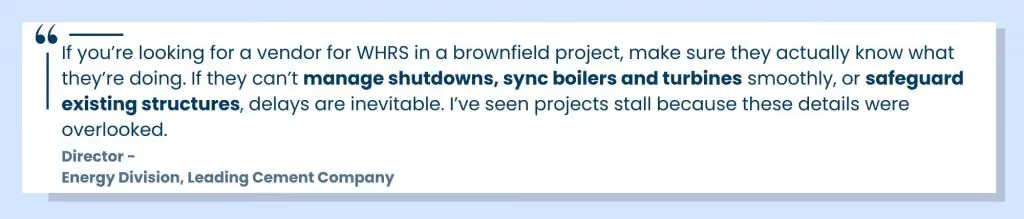
One of the biggest challenges in implementing WHRS is finding vendors with proven experience, particularly when dealing with brownfield projects. Cement plants are often cramped for space, and the installation of WHRS requires vendors who are skilled in retrofitting without interrupting ongoing operations.
Key requirements for selecting the right vendor include:
- Specialized Knowledge: Vendors must have a deep understanding of WHRS technology and how it specifically applies to cement plants.
- Brownfield Experience: They should be able to navigate the complexities of working within existing infrastructure, managing space constraints, and ensuring that the plant continues to run smoothly throughout the installation process.
- Reliability: Look for a vendor with a solid track record of delivering projects on time, within budget, and without disrupting plant operations.
2. Integration with Existing Plant Infrastructure
Integrating WHRS into an operational cement plant is no small feat—especially when working with tight spaces between the preheater and air-quenched cooler. This is where engineering challenges arise. To ensure seamless installation, precise planning and close coordination between the plant engineers and vendors are a must. The goal is to ensure the WHRS is integrated smoothly without causing operational disruptions.
Vendor Selection Criteria: Key Factors to Consider For General Equipment: 1. Specialized WHRS Knowledge: Choosing vendors with deep expertise in WHRS technology and experience in cement plants is essential. They should be able to manage input parameters for auxiliary equipment (like turbines) and understand the critical systems like hot gas, steam, water, and electrical systems.
2. Brownfield Experience: Working within existing plant structures is tricky. Vendors need to handle space constraints and integrate WHRS without disrupting operations, ensuring smooth transitions.
3. Strict Safety Compliance: Worker safety is non-negotiable. Vendors must adhere to industrial standards such as IBR 1959 or ASME BPVC to guarantee safe operations in high-temperature environments.
4. Reliability & Timely Execution: A proven track record of delivering projects on time and within budget is a must. Reliable vendors ensure your WHRS is up and running efficiently, helping you achieve sustainability goals without delay. For Civil Work :
1. Industrial Foundations & Structural Engineering: Experience in designing and constructing reinforced foundations for boilers, turbines, and heat exchangers.
2. Integration with Existing Cement Plant Infrastructure: Ensure precise alignment with preheater and cooler areas where WHRS is installed. Coordinate with mechanical and electrical teams to avoid structural and equipment conflicts. Tap utilities and power from existing structures with minimal disruption to ongoing plant operations.
3. Load-Bearing Capacity & Vibration Resistance: WHRS installations involve heavy rotating machinery that requires stable, vibration-resistant foundations. Civil contractors should incorporate anti-vibration measures to prevent long-term structural degradation and ensure operational stability.
4. Safety & Environmental Compliance: Proper ventilation and thermal insulation to manage heat dissipation and prevent material expansion. Compliance with environmental standards is essential for emissions control and heat recovery efficiency.
Venwiz Procurement Process
Streamlining Vendor Procurement & Project Management with Venwiz
At Venwiz, we understand that in the cement manufacturing industry, finding the right vendor is more than just about cost—it's about ensuring seamless execution and long-term value.
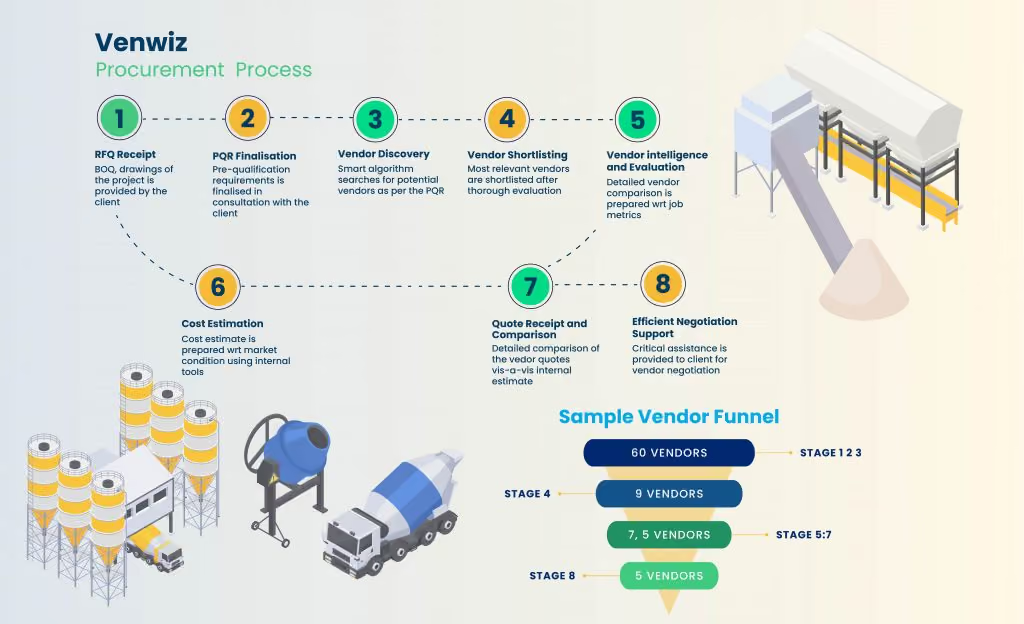
Our vendor procurement process guides you through every stage, from RFQ preparation to vendor shortlisting, evaluation, quote comparison, and negotiation support. We focus on delivering quality and reliability, not just the lowest bid, so your cement projects stay on track and maintain high standards of performance.
How does Venwiz simplify pre-procurement for industries?
<See Venwiz in Action: Optimizing Industrial Procurement>
Venwiz Milestone Management Tool
Managing multiple vendors and ensuring project timelines are met can be a challenge, especially in the cement industry. That’s where our Milestone Management Tool (MMT) comes in. With our on-ground expeditors keeping a close eye on fabricated equipment like rotary kilns and raw mills, we ensure everything stays on schedule.
Leveraging advanced technology, the tool eliminates information fragmentation, boosts transparency, and holds everyone accountable—helping projects run smoothly from start to finish.
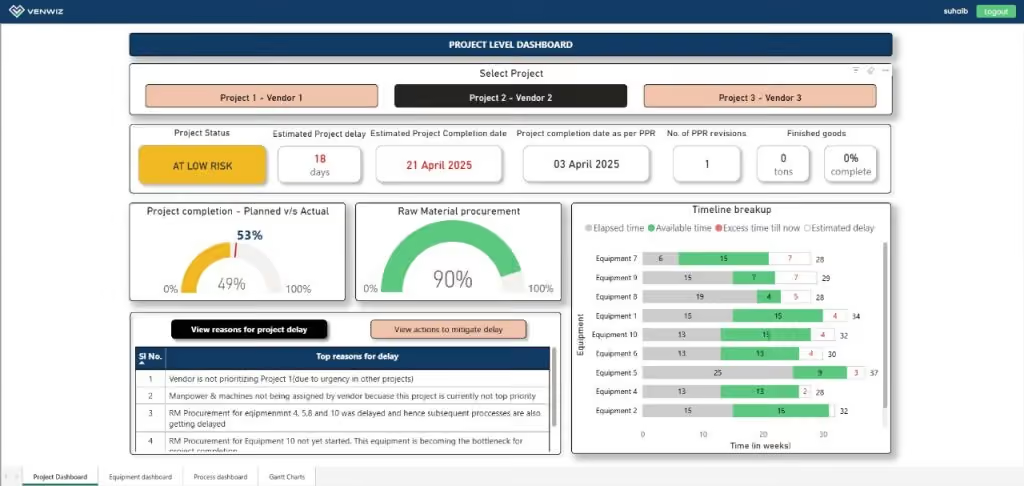
With our MMT, companies can gain:
- Real-time Project Tracking: A centralized dashboard provides a comprehensive view of the project, highlighting tasks on schedule and flagging potential delays before they become issues.
- Document Management System: A unified repository securely stores critical project documents—from technical drawings to dispatch records—ensuring easy access, traceability, and organization every step of the way.
Venwiz: Your Partner in Optimizing the Cement Manufacturing Process
In the cement industry, where precision, timeliness, and reliability are critical, Venwiz is your trusted partner in driving efficiency and seamless execution.
Looking for a real-world success story?
Here’s how we helped a leading cement manufacturer find the right vendors:
Greenfield Cement Plant Procurement Strategy – A Case Study
From vendor selection to real-time project tracking, we ensure every step is closely monitored, keeping your projects on track and minimizing delays. Venwiz simplifies procurement and project management, helping clients maintain control and meet deadlines efficiently.
Our approach goes beyond securing the best vendors; it’s about fostering long-term partnerships that prioritize quality, accountability, and value. With Venwiz, cement plants can confidently navigate procurement complexities, ensuring projects are completed on time, within budget, and with maximum efficiency.
Connect with Venwiz to explore how our expertise and cutting-edge platform can help you achieve your project goals on time, every time!
Related Blogs


Let’s talk about your next project
Our AI, expertise, and execution model close POs faster, cut slippages, and keep capital projects on schedule.