The Importance of Laser Cutting in Manufacturing
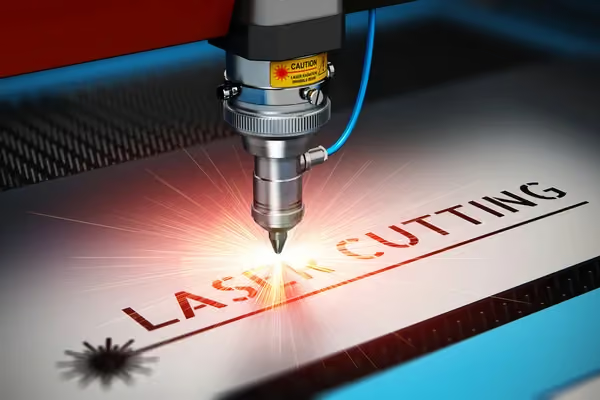
Collaboration blog between Venwiz and Krishna Profiles Industries sharing valuable insights on laser cutting
Laser-cutting technology has revolutionised the world of industrial cutting and manufacturing. With its precision, speed, and versatility, laser cutting has become the preferred method for cutting a wide range of materials, from metal and plastic to wood and fabric. This article will provide an overview of laser cutting technology, including its applications, benefits, and limitations. We will also compare laser cutting with other popular cutting methods, such as plasma cutting, to help you understand why laser cutting has become the go-to choice for many industries.
You can read more about different metal-cutting techniques here.
What is laser cutting?
Laser cutting uses high-powered laser beams to cut through various materials, such as metals, wood, paper, and acrylics. It is a subtractive process that uses controlled crack propagation, chemical ablation, melting, or vaporisation to remove material during the cutting process. Laser cutting is a very precise and reliable technique for cutting sheet metal that has several benefits, including high precision, cost-effectiveness, the capacity to cut intricate shapes, and reduced workpiece contamination.
Types of laser cutting
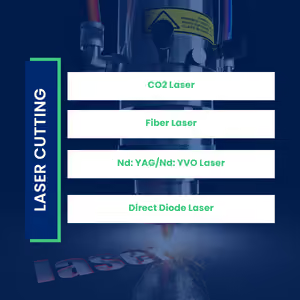
Comparing different laser cutting techniques
Metal cutting technologies used in the industry
Flame cutting
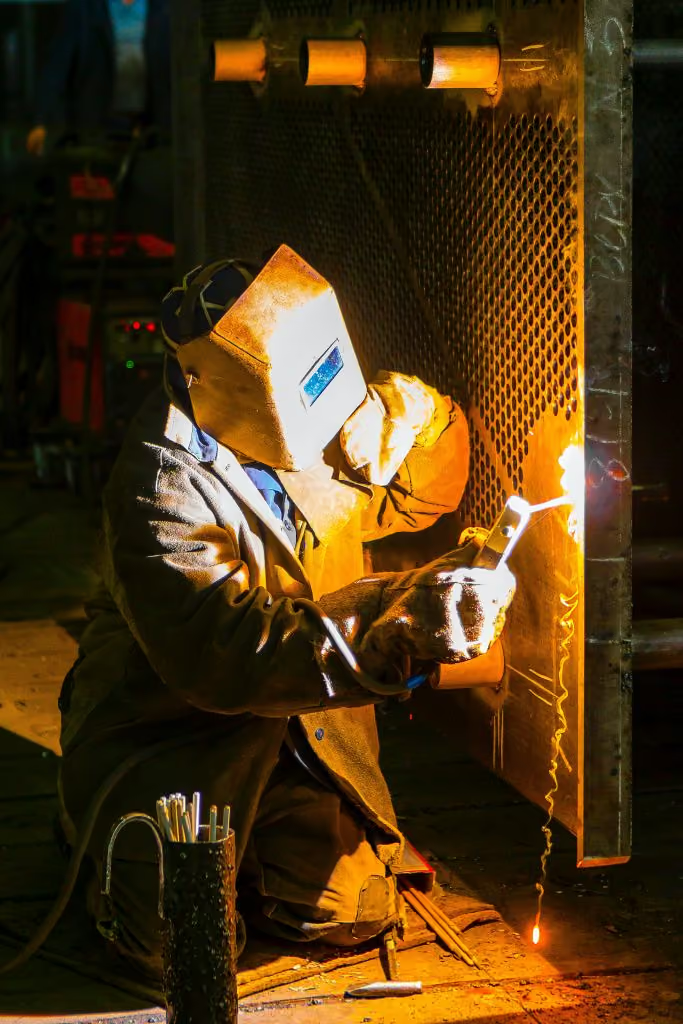
Flame cutting, also known as oxy-acetylene or oxy cutting, is generally used to cut through thick metal (generally mild steel). It is still widely used in manufacturing and aerospace. In a similar way to laser cutting, the temperature is very high (up to 3500 °C). The process utilizes a high-velocity oxy-fuel cutting torch with a premixed blend of oxygen and a combustible gas, typically acetylene.
Waterjet cutting technology
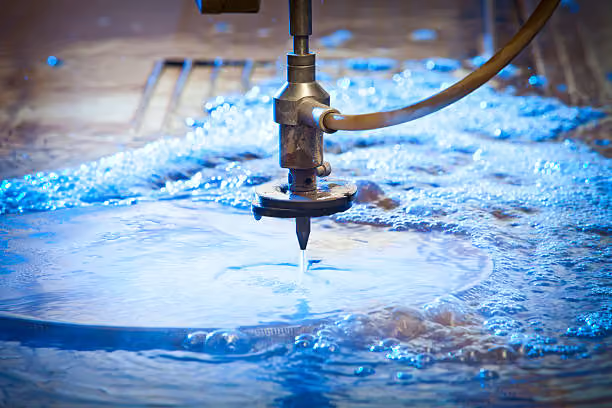
A waterjet cutting technology uses a high-pressure jet of water or a combination of water and abrasive material and can cut through a range of materials. It is a cold-cutting method and is versatile and precise.
Plasma cutting
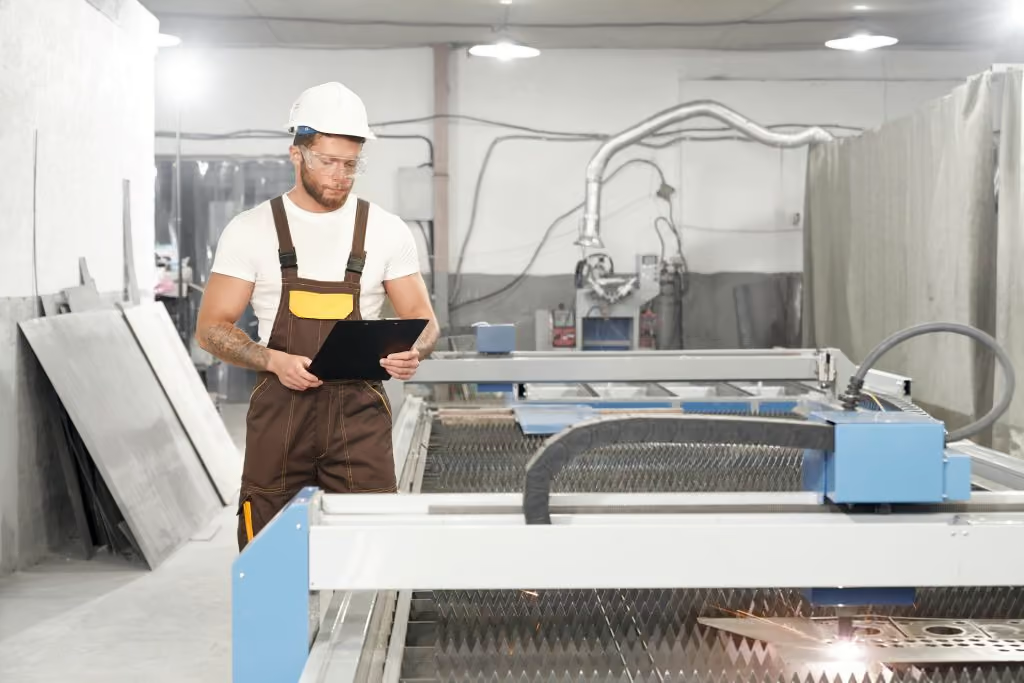
Plasma cutting is a process that uses an optimized nozzle orifice to constrict a high-temperature, ionized gas to melt and separate sections of electrically conductive metals. The plasma arc melts the metal, while the high-velocity gas removes the molten materials. Plasma is an electrically conductive gas created through ionization, resulting in the creation of free electrons and positive ions among gas atoms.
Advantages of laser cutting technology
- Precision: Laser cutting ensures precise and intricate designs with cutting tolerances as low as ±0.2 mm. It gives outstanding precision.
- Versatility: It is appropriate for a variety of industries and applications since it can handle a wide range of materials, including metals, plastics, wood, textiles, and more.
- Speed and Efficiency: Laser cutting ensures quick project turnaround times because it is a fast technique that can cut at speeds of several inches per minute to hundreds of inches per minute. Laser cutting has a high efficiency of 90%.
- Minimal wastage: The non-contact nature of laser cutting reduces material waste, which saves money and reduces environmental impact. It reduced waste from 5 to 8% compared to conventional cutting methods.
- Design Flexibility: Laser cutting lets you create elaborate and complicated designs, which encourages originality and personalization.
- Non-contact cutting: eliminating the need for physical contact with material lowers the risk of contamination or material damage.
Applications of laser cutting
Automotive industry
The automotive industry has embraced laser cutting for its flexibility and ability to create complex shapes and designs. This technology is popular due to its ability to meet tight tolerances and because it is more accurate than traditional methods like stamping and die-cutting. The sheet metal laser cutter is used in the automotive industry to produce car parts, components, die-castings, forgings, and stampings.
Fabrication industry
Fabrication involves shaping and forming metal into desired shapes using tools like laser cutting. Common products include beams, columns, pipes, tubing, and sheet metal, used in the construction, automotive, and aerospace industries.
Medical device industry
Laser cutting is a crucial tool in the medical device industry for producing products like pacemakers, stents, and catheters. The process involves melting, vaporizing, or burning the material, resulting in a clean, precise cut. This method is particularly useful for intricate designs, particularly those for human use. The type of laser used depends on the material and the final product, with CO2 lasers suitable for stainless steel and fibre lasers for plastics.
Agricultural
This procudure is increasingly used in irrigation systems and precision farming tools to create efficient systems and machinery components. It can precisely cut holes in pipes and tubing, reducing water waste and optimizing crop yields. This technology enhances efficiency and precision in various farming practices.
Venwiz: Your Go-To Solution for Finding Industrial Vendors.
Venwiz is your ultimate resource for locating industrial vendors. With over 15,000 trusted and verified service providers, Venwiz ensures seamless connections to reliable partners for your projects. If you need laser cutting services, Krishna Profile Industries stands out as a trusted and specialized partner.
Krishna Profile Industries
Krishna Profiles Industries was established in 1991, is based at MIDC Bhosari, Pune, and is involved in sheet metal trade, plasma cutting, and oxyfuel cutting. Later in 2016, they added precise new technology presses and laser cutting equipment with SS and MS fabrication capabilities to the workshop. TUV SUD certified the firm with an ISO 9001/2015 Quality Management System.
Processes
Krishna Profile Industry has a highly skilled and experienced team. The workshop offers:
| Machine | Specs | |
|---|---|---|
| Cutting Machines | ||
| Laser Cutting Machine | 6kW CNC laser cutting machine with a bed size of 2m x 8m, enabling precise cutting of metal sheets directly or as part of a multi-stage process. |
|
| Plasma Cutting Machine | 200 A plasma cutting machine with a bed size of 2.5m x 6m for precise cutting. It can cut through MS and SS 60-mm thickness easily. |

|
| Oxy Fuel Cutting Machine | The machine has a bed size of 2.5 m x 6m and can cut through mild steel of 250 mm easily. |

|
| CNC bending machine | 400-ton capacity with an 8-meter bed. |

|
| Welding | ||
| CO2 MIG Welding machine |
Current – 400 A fabrication range-MS: 1mm to 16 mm |

|
| TIG Welding Machine |
Current – 400 A fabrication range – SS: 1 mm to 12 mm |

|
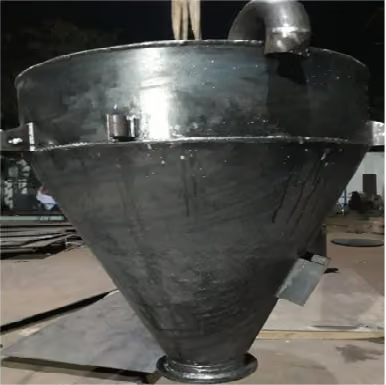
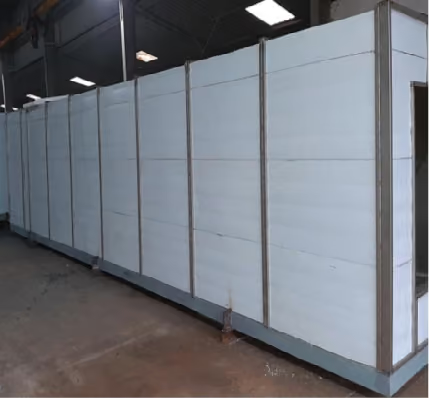
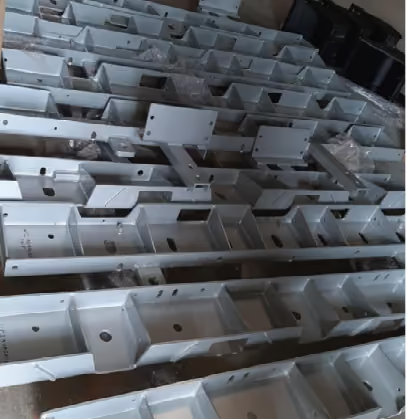
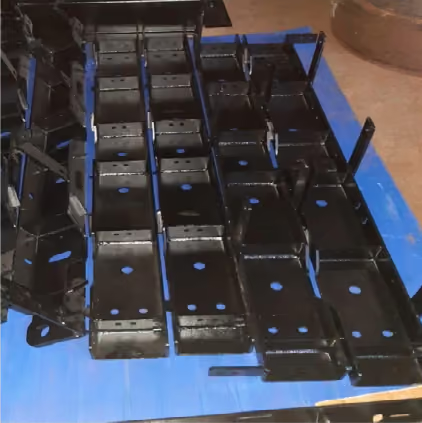
Previous projects
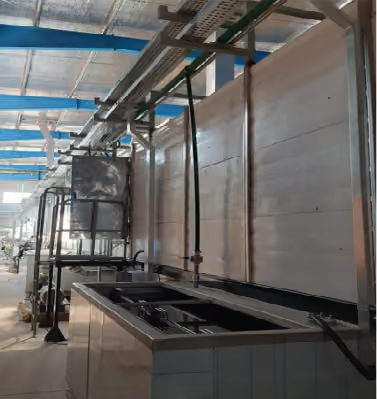
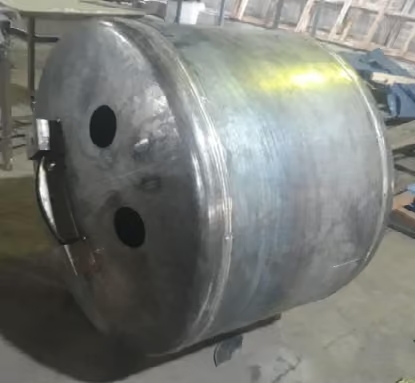
Guest Author
Rohit Agarwal, a 2014 Production Engineering graduate, brings 9+ years of expertise in sheet metal and fabrication. Leading M/s Krishna Profile Industries, a family business, and has supplied components to 10+ OEMs. His commitment to quality is reflected in the in-house CNC cutting, bending, and fabrication facilities.
Venwiz: Your Gateway to Unmatched Business Success
- For Clients: Access a vast network of pre-vetted vendors, experience seamless vendor management, and drive project success with Venwiz.
- For Vendors: Discover high-value clients, improve brand visibility, and grow your business with Venwiz. Partner with us today to unlock a world of possibilities.
If you need any other information, contact us at marketing@venwiz.com or call +91 8950512288 today.
Related Blogs




Let’s talk about your next project
Our AI, expertise, and execution model close POs faster, cut slippages, and keep capital projects on schedule.