Achieving On-Time Project Execution with Proactive Expediting for Chemical Plant Equipment

India’s chemical industry is a cornerstone of the nation’s economy, contributing approximately 7% to the GDP. As the 6th largest chemical producer globally, India offers a diverse portfolio of over 80,000 products, including agrochemicals, specialty chemicals, petrochemicals, and polymers. With robust government incentives, the sector is positioned for significant growth. Source
However, setting up a chemical plant is a complex undertaking. It involves the installation of diverse machinery, pipelines, and instrumentation, all requiring careful coordination and seamless communication with vendors.
Since equipment for chemical plants is sourced from multiple vendors, ensuring timely delivery becomes a major challenge. Many vendors struggle to meet deadlines, causing delays in installation and commissioning. When even one component is delayed, it can derail the entire project timeline, leading to extended schedules, increased costs, and operational disruptions.
Typical Equipment and Lead Times in Chemical Plants
Chemical plants rely on various equipment to carry out their processes. The lead times for these equipment can vary significantly, influenced by factors like size, complexity, customization, and the manufacturer's capacity.
Equipment Type Lead Time Factors Affecting Lead Time Chemical Reactors 13- 26 weeks Size, materials, pressure, temperature, design complexity, manufacturer capacity, component availability Distillation Column 17 - 22 weeks Size, material selection, and design of the column. Larger units can take longer. Pressure Vessels 8 to 16 weeks source Size, complexity, materials, regulatory requirements Heat Exchangers Stainless-steel (custom) 8-12 weeks Complexity, manufacturer’s capacity, and material needed Standard heat exchangers 6-8 weeks Filtration and Drying Equipment 8-12 weeks Complexity, manufacturer, production demands, size, customization, manufacturer backlog, component availability Storage Tanks - Fiberglass 8-10 weeks Size, material, complexity, manufacturing demands - Steel 18-34 weeks Industrial Mixers and Agitators 8-12 weeks (standard), longer for custom Design complexity, fabrication Centrifugal Pumps 4 to 6 weeks, larger pumps may take longer Size, material, customization Crushers and Grinders 4 to 12 weeks Size, capacity, design Conveyors 7-9 weeks Standard designs, expedited delivery options
This blog highlights how Venwiz’s expediting services can help you ensure that equipment manufactured by different vendors reaches your plant on time. By providing real-time visibility into vendor operations, enabling proactive monitoring, and ensuring timely delivery of equipment, Venwiz helps chemical companies tackle inefficiencies head-on.
Streamlining Vendor Management for Seamless Project Execution
Among these challenges, one recurring theme is the critical role of efficient vendor management. Delays in equipment readiness, lack of transparency in operations, and resource inefficiencies often exacerbate project risks, leading to production bottlenecks. This is where solutions like Venwiz’s streamlined vendor management system can transform project execution, ensuring timely deliveries and optimized resources while reducing costs.
Here’s how Venwiz addresses these issues:
Achieving Transparency in Vendor Shopfloor Operations
One of the biggest hurdles in tracking project progress is the absence of transparency in vendor shopfloor activities. Unstructured reporting further complicates this, leaving you uncertain about the project's status. Venwiz resolves these concerns with a network of experienced expeditors who monitor projects in real time. This ensures timely delivery, rigorous quality checks, and high-standard equipment reaching your site.
Taking Proactive Control with Predictive Planning
Vendors often fail to anticipate delays due to the lack of benchmarks for key metrics such as machine hours, manpower availability, or throughput per day (TPD). This creates gaps in production planning, leading to unexpected bottlenecks. Venwiz's Capacity Management Modeled Approach, driven by our trained expediting experts, identifies the root causes of delays. Milestone tracking at the bill of materials (BOM) level ensures ongoing work stays on track, reducing risks and mitigating delays.
Optimizing Resources and Reducing Expediting Costs
Frequent site visits and third-party agents (TPAs) often inflate costs without accountability for equipment readiness. Venwiz tackles this inefficiency with outcome-focused, agenda-oriented visits. Our extensive pan-India network of expeditors ensures local availability, minimizing travel expenses and response times. Additionally, our success-based pricing model ties payments directly to equipment readiness for dispatch, offering a cost-effective, results-oriented solution.
From Purchase Order to Dispatch: How Venwiz Ensures Timely Deliveries
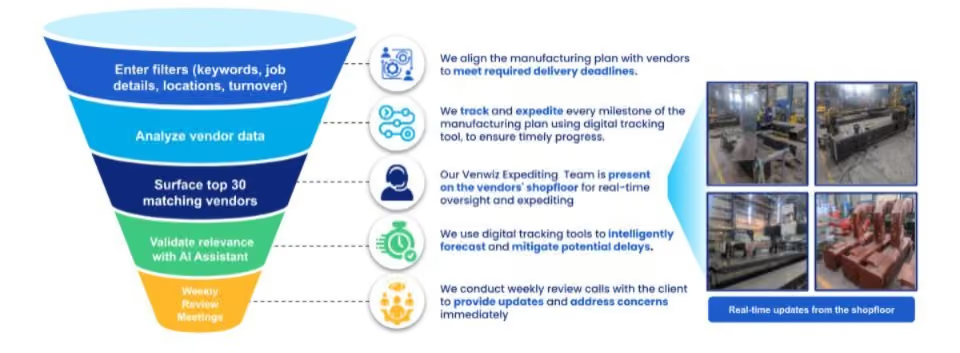
Efficient project execution doesn’t end with vendor selection—it extends to ensuring that every order progresses smoothly until dispatch. Here’s how Venwiz leverages its robust expediting process to deliver exceptional results:
- Seamless Order Integration: After an order is placed, Venwiz assigns a dedicated project lead from its network of experienced expeditors.
- Precision Monitoring: Using our specialized milestone tracking tool (MMT), the expeditor monitors progress and shares regular updates with the client.
- Proactive Interventions: Weekly or bi-weekly review meetings with vendors ensure any potential issues are addressed early.
- Targeted Actions for Timely Dispatch:
- Proactive Monitoring: Identifying bottlenecks in the vendor’s production schedule.
- Effective Communication: Maintaining open channels with vendors to promptly address concerns.
- Expediting Actions: Accelerating manufacturing and shipping processes to prevent delays.
Success Story: Strategic Expediting for WHRS Implementation to Enhance Efficiency in Chemical Manufacturing

Our client, a leading chemical manufacturer, specializes in a range of products, including specialty chemicals, chemical intermediates, picolines, ethanol, and advanced intermediates. They approached us with a critical need, to accelerate the installation of a Waste Heat Recovery System (WHRS) at their plant. This project was vital for improving energy efficiency and reducing operational costs.
A Waste Heat Recovery System (WHRS) is a technology designed to capture and reuse thermal energy that would otherwise be lost to the environment. By utilizing this recovered energy, WHRS can significantly:
- Reduce a plant’s overall energy consumption
- Lower carbon emissions
- Improve operational efficiency
A typical WHRS system consists of:
- Primary Heat Exchanger – Transfers heat from waste sources to usable processes
- Secondary Heat Exchanger – Enhances energy recovery efficiency
- Expansion Tank – Manages pressure variations within the system
- Induced Draft Fan with Motor – Facilitates airflow and heat transfer
- Make-up Water Pump – Maintains water levels in the system
How Venwiz Accelerated the WHRS Installation
To fast-track the WHRS project, Venwiz deployed an experienced expeditor to the vendor’s plant. His primary role was to:
- Map out the erection sequence and align it with the dispatch schedule
- Closely monitor progress to ensure timely material dispatch
- Actively expedite key WHRS components to prevent bottlenecks
By maintaining a tight workflow, our expert ensured that the right materials reached the site at the right time, minimizing delays and keeping the project on track.
On-Ground Expediting: 15+ Site Visits for Seamless Execution
A proactive approach was key to ensuring smooth execution. Our expeditor made over 15 site visits, continuously assessing vendor progress and addressing potential roadblocks.
Key Actions Taken:
- Ensured strict adherence to the project timeline
- Monitored material readiness and logistics coordination
- Minimized disruptions and optimized workflow
This hands-on oversight played a crucial role in avoiding setbacks and ensuring the smooth installation of the WHRS.
Delivering Impact: Faster Installation, Fewer Delays
Our expedited approach provided the client with:
- Optimized material delivery, preventing unnecessary stockpiling
- Minimized logistical complexities, ensuring seamless coordination
- Accelerated WHRS erection, keeping the project timeline intact
By streamlining processes and eliminating inefficiencies, we helped our client avoid costly delays while improving their plant’s energy efficiency.
Conclusion
By integrating expediting into their project management strategy, chemical manufacturers can execute complex installations with greater efficiency and reduced risk. A proactive approach, combined with technical expertise in expediting practices, enables project managers to stay ahead of potential challenges and avoid unnecessary delays.
Connect with Venwiz to explore how our expertise and cutting-edge platform can help you achieve your project goals on time, every time!
Related Blogs





Let’s talk about your next project
Our AI, expertise, and execution model close POs faster, cut slippages, and keep capital projects on schedule.