How Does Post-PO Expediting Ensure On-Time Project Delivery?

In most EPC and manufacturing projects, teams don’t face delays because of what they planned—they face delays because of what they miss.
Once the team issues the PO, real complexity emerges: parallel fabrication activities, non-linear workflows, multi-stage inspections, material dependencies, vendor capacity constraints, long-lead items, and dozens of moving parts that don’t always move in sync. And when on-ground visibility decreases, the classic “no visibility after purchase order” problem quietly compounds until it suddenly shows up as a crisis.
This is where post-PO expediting, purchase order tracking, and order progress monitoring become critical.
How does Expeditor Intervention Improve Project Delivery?
Post-PO expediting plays a central role in project delivery because expeditors close the gap between what teams plan and what actually happens on the ground. It’s a proactive function that keeps work moving through structured vendor performance monitoring, delivery commitment tracking, and risk alerts in procurement. This ensures vendors, manufacturers, and internal teams stay aligned to real timelines.

It’s this lived experience that defines the 2 dimensions of their work:
1. Operational Oversight
They continuously track progress across vendors, manufacturers, and internal teams. Because they’re close to day-to-day execution, they can see issues forming early, align the right stakeholders, and take quick corrective action before delays escalate. The expeditor closes routine bottlenecks with the vendor’s POC and escalates anything that threatens a milestone immediately.
2. Technical Insight
Expeditors with hands-on project experience know exactly which components are critical. Firstly, they detect gaps that may have been missed during planning, such as outdated manufacturing progress reports (MPR), missing technical approvals, or lapses in the vendor communication log. Secondly, they ensure corrective measures are taken so these gaps do not disrupt delivery.
Together, these two strengths give the project a steady rhythm, keeping timelines predictable and ensuring on-time project delivery.
Here’s how that plays out in practice.
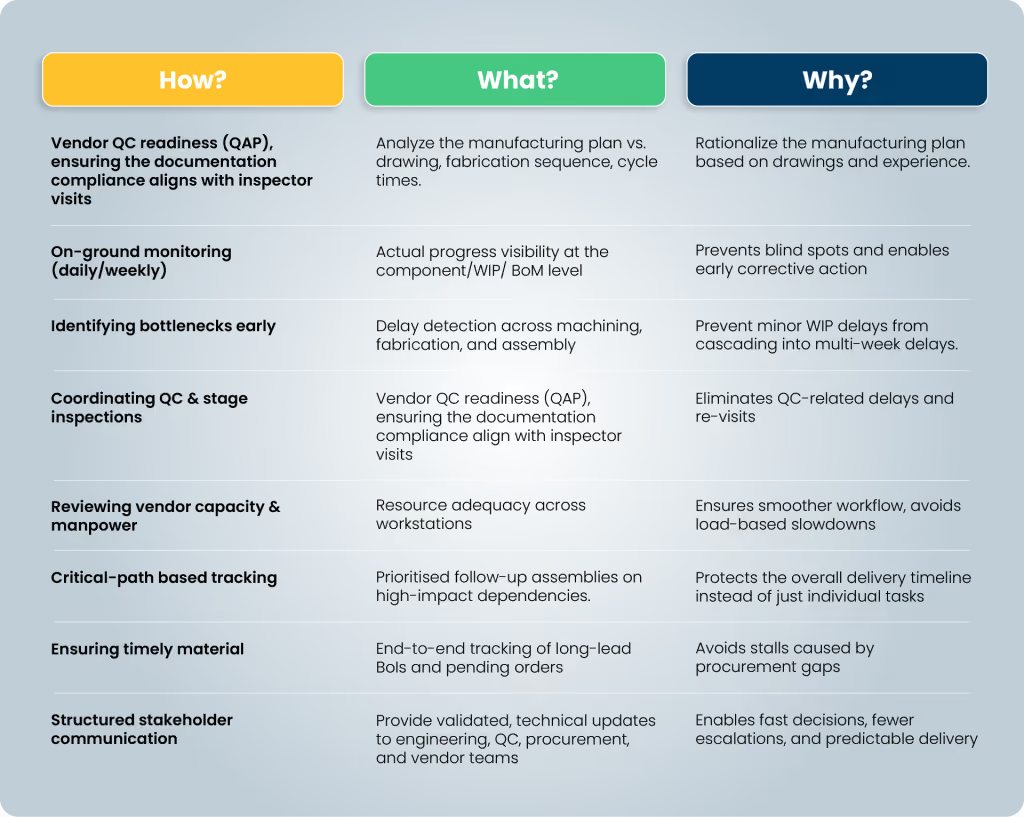
Venwiz’s Structured Expediting Process
Across the projects we’ve supported, certain post-PO expediting challenges consistently show up:
- Vendors often operate at 80–90% capacity, without any buffer.
- BoM items get ordered late due to unclear technical inputs or a lack of follow-ups.
- QC calls slip because teams are not aligned
- Long-lead items become long-delayed items
- Progress updates lack precision or completeness
These challenges compound quietly unless someone is watching the details closely, every day.
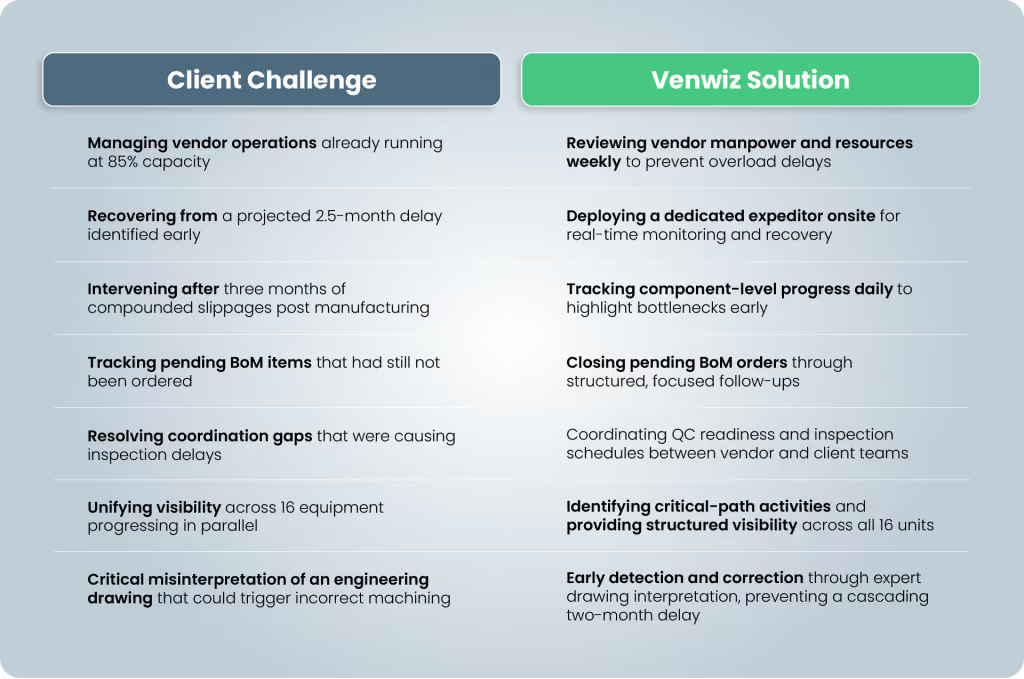
Case Study: Expediting Multiple Equipment at a Single Vendor for a Global Steel OEM.

Project Overview :
A top global steel industry OEM was executing a multi-equipment supply project for a leading Indian steel manufacturer.
The scope included 16 critical equipment units, each moving through different stages of fabrication, assembly, and inspection.
The project was already drifting off its planned timelines. Driven by the vendor operating at 85% capacity, long-lead material dependencies, andslippages that had begun appearing within the first three months.
This created a high and growing risk of missing delivery timelines.
Impact
- 75 → 47 days: Delivery delay reduced significantly
- 100% visibility achieved across all manufacturing stages
- INR 1.5 crore saved by preventing machining errors
- Zero QC delays due to coordinated inspection readiness
- All long-lead items closed, preventing further slippages
- Faster decisions are enabled through reliable on-ground updates.
This case shows a simple truth: when teams pair on-ground expediting with structured governance, they stabilize supplier performance and keep delivery timelines from slipping. For teams managing complex, multi-vendor orders, this combination becomes the difference between constant firefighting and predictable execution.
If you’d like to explore the full breakdown, the detailed case study is available here.
Conclusion: Expediting as the Key to Predictable Project Delivery
Across industries, the story is similar: delays rarely come from one major breakdown. They come from the small misses: unnoticed workflow delays, misaligned QC schedules, or overlooked material movements. And these things stay invisible until they turn into real problems.
Expeditor intervention changes that. It brings discipline and clarity back into execution. By staying close to daily execution, asking the right questions, identifying workflow constraints early, aligning QC schedules, and keeping material movement on track, an expeditor ensures nothing silently derails the project timeline.
This is the predictability organizations are looking for. Not just dashboards or periodic updates, but real on-ground visibility supported by structured follow-up and governance.
If your goal is to reduce uncertainty, tighten control, and improve project delivery, Venwiz helps you achieve the execution confidence and reliability your projects need.
Interested to learn more? Book a Demo
Related Blogs









Let’s talk about your next project
Our AI, expertise, and execution model close POs faster, cut slippages, and keep capital projects on schedule.