Did you know delays in capital-intensive projects start earlier than you think? Here’s how to deliver on time.

If nearly 67% of projects in India face delays, we need to start asking “What’s really going wrong?”
India is on track to push its manufacturing output to $1 trillion by FY26, driven by massive investments in power, oil & gas, defence, and sustainable energy.
These are not small projects but capital-heavy, tightly scheduled and deeply interdependent. And when one activity gets delayed, it shows up as stalled site work, rework, liquidated damages and ultimately, loss of client confidence.
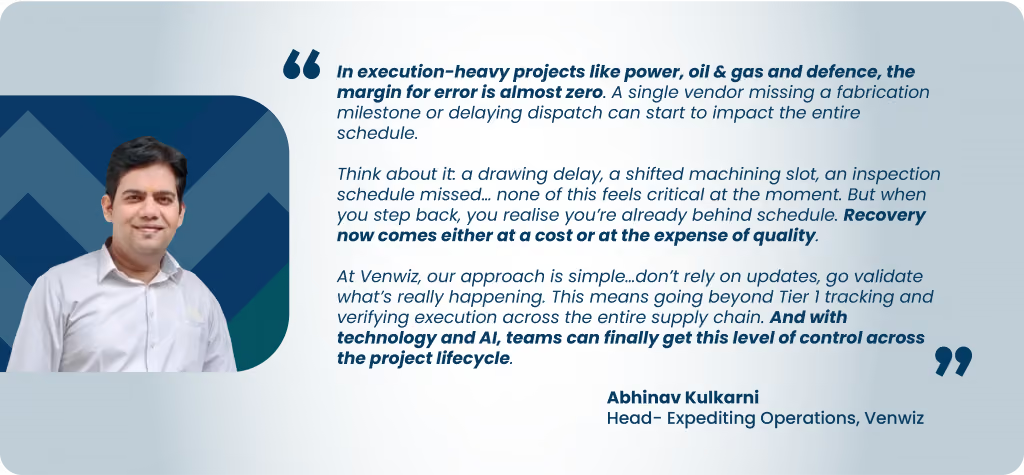
This is where industrial project expediting becomes critical. By combining on-ground validation with AI-driven insights, teams can reduce the gap between reported progress and real execution.
In this blog, we’ll break down:
- Where do delays start in large manufacturing and EPC projects?
- Why do teams struggle to track progress after the PO?
- How do teams take control of execution after the PO?
Where do delays start in large manufacturing and EPC projects?
First, let’s look at where these gaps actually show up across industries.
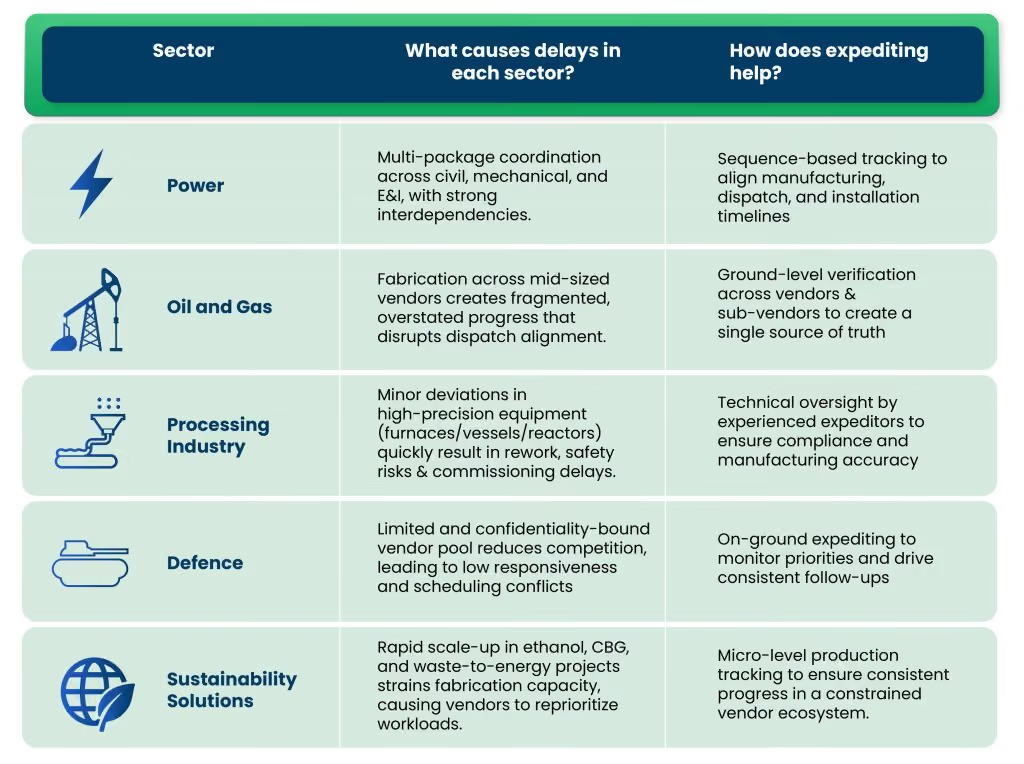
Execution gaps don’t show up the same way across sectors, but they all come back to one underlying issue: limited visibility and control across vendors and dependencies.
Here’s a quick look at how these challenges show up across industries and how expediting addresses them:
Why do teams struggle to track progress after the PO?
These sector-specific gaps share a common thread: traditional expediting was not built to handle them. Periodic vendor calls, self-reported updates, and email-driven timelines may have worked when projects were simpler and supply chains shallower.
In sectors involving multi-tier fabrication networks, long-lead imported equipment, and parallel workstreams across civil, mechanical, and E&I packages, a single undetected gap can stall an entire site.
Four structural issues consistently surface:
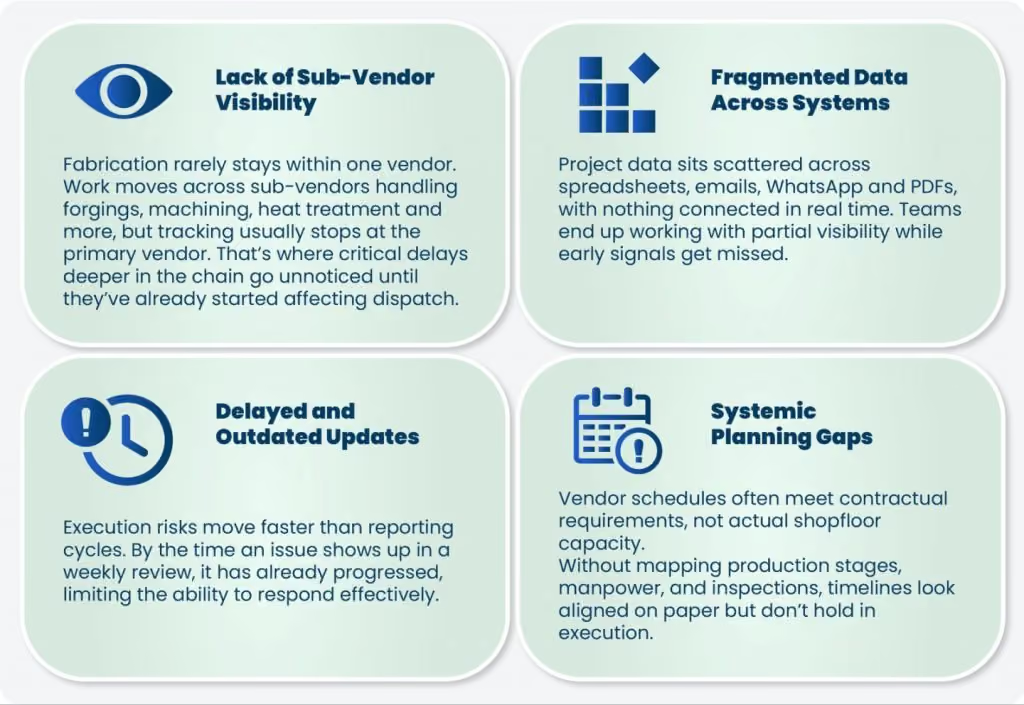
All of these point to one thing: the issue is not the volume of updates, but how reliable and timely they are. This is exactly the gap structured expediting is designed to close.
How do teams take control of execution after the PO?
In the kind of projects we’ve been talking about: power, oil & gas, defence, and process industries, execution is not linear.
In these environments, multiple vendors are working in parallel, dependencies are tightly linked, and by the time something looks off, you’re already dealing with the impact.
This is where the shift happens. Not in reacting faster, but in stepping in earlier and building control into execution from the start.
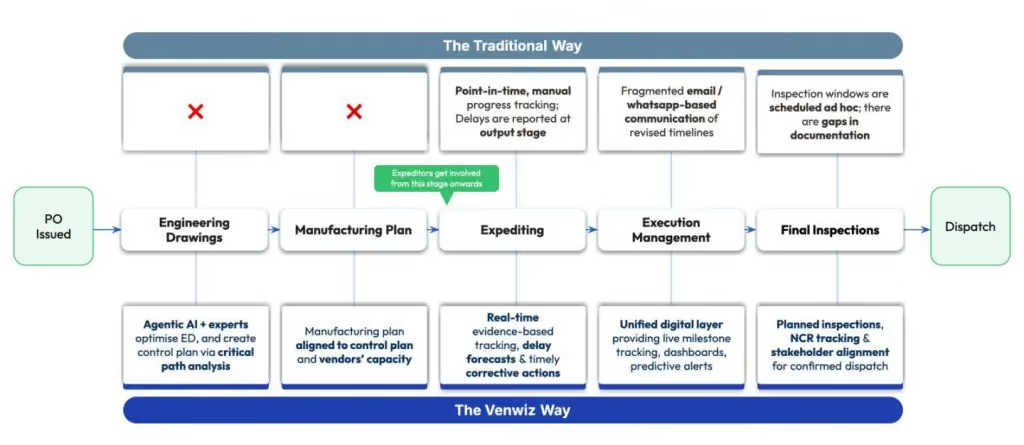
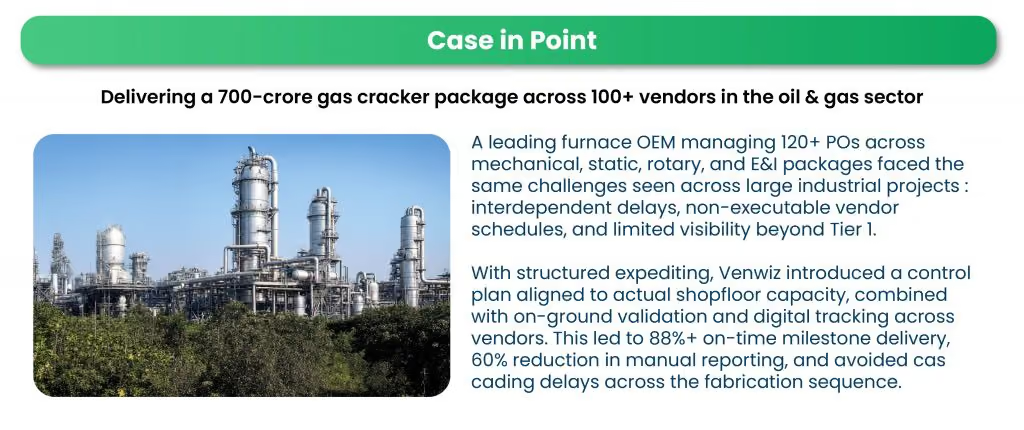
Instead of relying on vendor-submitted schedules, structured expediting begins with a validated control plan that reflects how work will actually move across vendors and packages.
The infographic below shows how this shifts execution from reactive tracking to structured, stage-wise control across engineering, fabrication, inspection, and dispatch.
What Makes This Work?
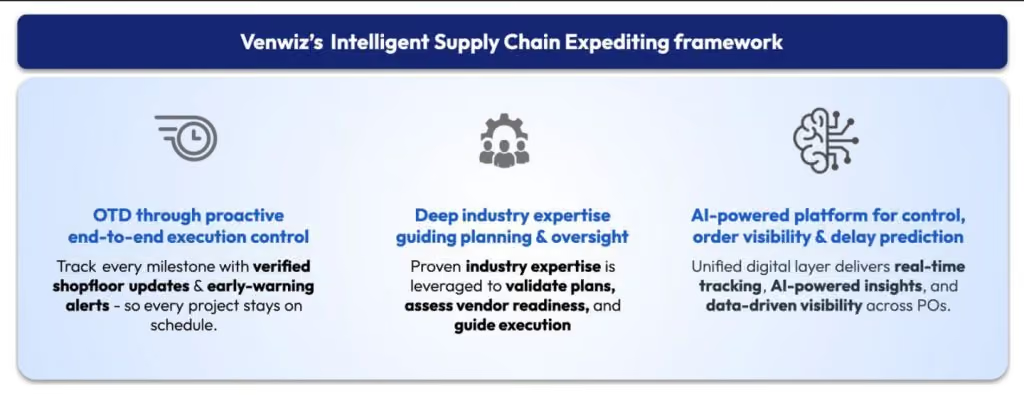
This is enabled by Venwiz’s Intelligent Supply Chain Expediting framework, where we take ownership from PO through to dispatch, ensuring delivery stays on track.
It combines technology with on-ground execution to bring visibility and control into the production process across vendors and packages. Teams act on what is happening in real time, not on updates that come in later.
With a structured control plan, verified shopfloor progress, and continuous coordination, execution stays aligned as it moves from engineering through fabrication, inspection, and dispatch.
The infographic below breaks down the key elements of this approach :
Conclusion
If you look back at most delays in capital-intensive projects, the signals are always there. Project teams can spot them across vendors, in fabrication shops, or in updates that don’t reflect ground reality.
If they aren’t acted on in time, they start impacting downstream execution. That’s the gap most procurement and project teams end up dealing with.
What actually changes this is not more tracking or more follow-ups, but better control over how execution is moving across vendors, dependencies, and timelines that don’t always stay aligned.
Structured expediting brings that control into project planning and execution, enabling teams to stay close to real-time progress and step in before delays begin to compound.
Interested to learn more about the Venwiz way of supply-chain expediting? Book a Demo today!
Related Blogs




Let’s talk about your next project
Our AI, expertise, and execution model close POs faster, cut slippages, and keep capital projects on schedule.