The 2025 Guide to Managing Multi-Site Solar Projects with AI
Solar isn’t the future anymore, it’s the new normal.
And in India, it isn’t just growing - it’s multiplying.
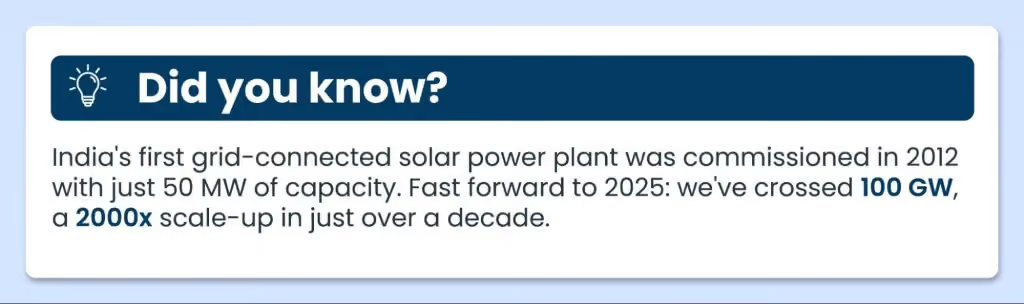
Solar execution today means operating across extremes : remote deserts, active farmlands, and industrial zones. Momentum is building on both fronts - public and private. Players like NTPC Renewable Energy, SECI, Tata Power Solar, Sterling and Wilson Solar, and Azure Power are all laying the groundwork for this scale.
But as project sizes increases and execution becomes more decentralized, timely delivery becomes a challenge. And not only is the pressure on faster project completion, but also on scaling delivery across multiple sites, without cost overruns or execution slip-ups.
The real catch? Solar development seemingly follows a linear sequence, but its execution on-site is anything but predictable. In fact, it is marked by shifting timelines, interdependencies, and logistical complexity. Take, for instance, long lead times for transformers and cables, or staggered planning between civil and electrical works. With each one capable of disrupting even the most detailed project plans, especially without ground-level visibility.
With a national target of 280 GW by 2030, procurement support must go beyond vendor discovery. The scope has expanded - it’s now about equipping teams with tools that enable real-time milestone tracking, issue resolution, and cross-site visibility.
This blog explores how AI-enabled milestone-based execution tracking can address these risks before they escalate. Drawing from ground-level challenges and real project experience, we break down what it takes to stay on schedule, on budget, and in control while scaling solar projects.
Common Execution Challenges in Solar Projects
Many execution risks in solar projects stem from early procurement gaps: limited vendor visibility, manual quote comparisons, loosely defined scopes, and supplier over-reliance often create hidden risks. But even with strong procurement processes in place, execution can still falter.
Without standardisation, speed, and visibility across multi-location rollouts, these risks stay buried until they surface as timeline or cost overruns. That’s why milestone-level tracking becomes critical. Coordinating vendors, materials, and civil work across remote sites is inherently complex. Without real-time visibility, even minor issues can ripple across delivery schedules, budgets, and billing cycles.
What exactly goes wrong on the ground? These recurring challenges tell the story.
1. Delays in Sourcing and Delivery
- Long lead times for transformers, especially Inverter Duty and Power Transformers, now range from 80 to 210 weeks.
- High Tension (HT) cable sourcing delays, a critical link between the solar substation and the grid, can stretch from weeks to several months, holding up commissioning.
2. Regulatory Delays
Projects require a range of permits: land use, environmental clearances, grid connection, PPAs, and more. These often move sequentially across authorities, causing weeks of delay if not tracked proactively.
3. Site-Specific Construction Issues
- Water ingress during piling often forces redesign or relocation of mounting tables.
- Water accumulation in foundations delays concreting and requires constant dewatering, especially during monsoons.
4. Utility and Infrastructure Barriers
Clearance or relocation of HT lines is a frequent blocker, often requiring utility approvals that can take months.
5. Logistics and Transport Constraints
Transporting large transformers and PV modules over poor roads or through restricted routes requires upfront planning and permits, often missed during scheduling.
In isolation, these challenges are manageable. But across multiple sites or bigger projects, they quickly compound, causing timeline slippages, budget overruns, and missed billing cycles.
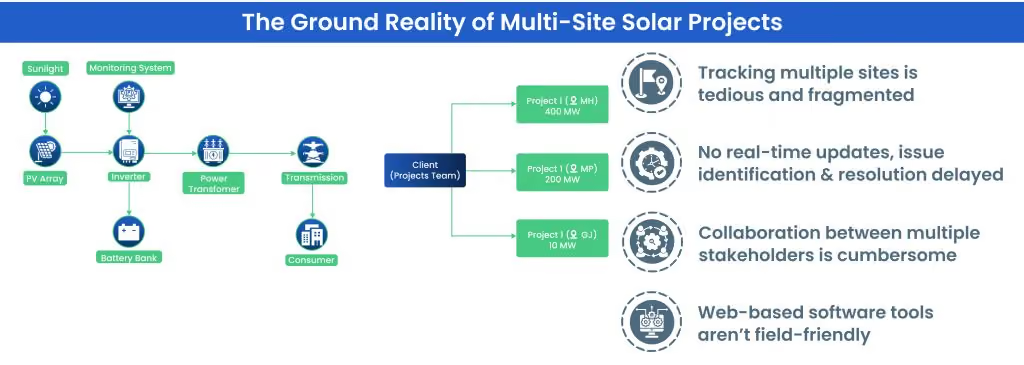
Illustrative Example | The Ground Reality of Scaling Solar Projects A solar EPC gearing up for a 1,300 MW rollout across 100+ locations in 4 districts flagged what execution looks like at scale: - Vendor fragmentation: Identifying and coordinating qualified vendors across dispersed sites was a constant bottleneck.
- Multi-level reporting pressure: With updates demanded by management, ministries, and district officials, reporting became chaotic and inconsistent.
- Limited real-time visibility: Without a unified tracking system, site-level issues weren’t escalating in time, delaying decisions and delivery.
Their takeaway? Traditional tools weren’t enough. At this scale, execution needed digital systems purpose-built for coordination, visibility, and control.
In such large-scale rollouts, the challenge is now to ensure consistency and control across the entire execution lifecycle.
Building Execution Visibility and Control with SitePulse Solar
In utility-scale solar projects, execution doesn’t collapse due to a single failure - it slips due to small delays scattered across multiple sites. Take civil foundations, MMS erection, electrical trenching, or switchyard commissioning; each brings site-specific hurdles that can quickly derail timelines, escalate costs, and stretch teams thin.
To manage growing execution pressures in solar infrastructure, many EPCs are turning to structured procurement platforms like Venwiz to bring transparency, speed, and control to project lifecycles.
That’s where SitePulse Solar comes in.
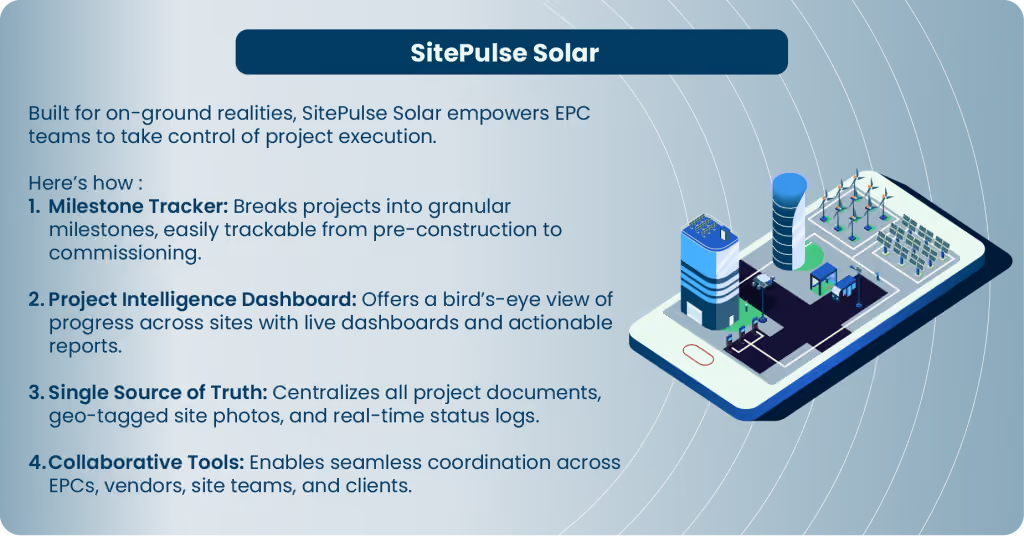
Whether you’re on-site or off-site, SitePulse offers a unified view, enabling smarter decisions, faster interventions, and sustained momentum.
Designed to integrate with existing workflows, it brings structure and visibility to complex, multi-stakeholder solar projects, without disrupting how teams already work.
Here’s how SitePulse Solar supports EPCs in project management:
1. Real-Time Risk Escalation
In solar projects governed by strict PPA and COD deadlines, identifying risks early is critical.
SitePulse Solar continuously tracks milestone speed and progress within each package to evaluate its overall risk level. Intelligent monitoring highlights high-risk issues like transformer delivery delays, incorrect MMS alignment, or approval bottlenecks are flagged in real-time through PO alerts. With AI capabilities built in, SitePulse Solar also enables users to generate summaries or ask contextual questions to better understand the nature of these risks.
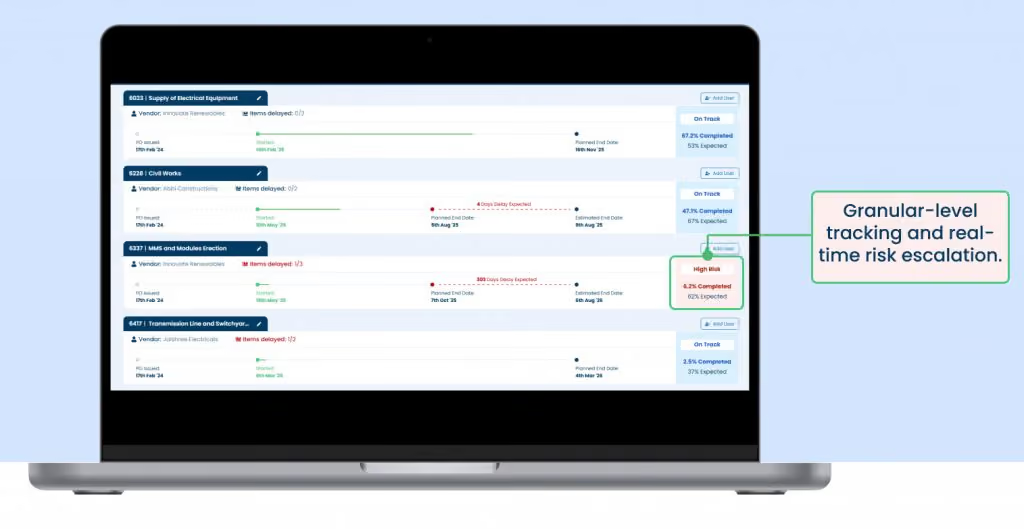
Here’s how risk-prone packages are visualised in SitePulse Solar, using delay projections, status flags, and milestone-level tracking to pinpoint where intervention is required.
In the example below, a civil work package with 7 milestones, each at a different project stages, was tracked with planned vs. actual dates to capture even minor slippages. This level of visibility enables EPC teams to catch delays early and take timely action to stay on track.
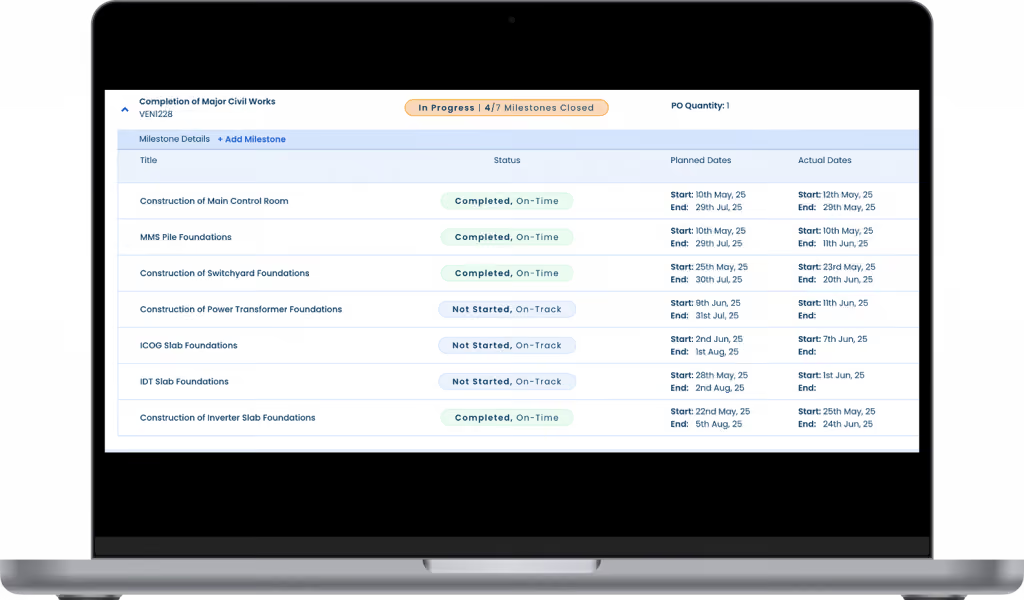
Why it matters? In large solar projects with overlapping EPC packages, milestone-level tracking ensures teams don’t work in silos. It enables tighter coordination across stakeholders, which is crucial given the strict PPA and COD deadlines. Early risk identification keeps execution on track and helps avoid billing disruptions and penalty exposure.
2. On-Ground Milestone Logging
Field teams can upload geo-tagged photos, QC checklists, and daily logs directly from site, using mobile devices, even in low-connectivity areas. These updates, covering activities like module installation, cable laying, or pre-commissioning are milestone-tagged, timestamped, and issue-flagged.
In addition to manual updates, contractors can also upload documents (like toolbox talks, DPRs, or meeting minutes) and SitePulse Solar’s AI reads and interprets these to auto-log milestone progress.
Through SitePulse Solar, these updates create a real-time, auditable execution trail that's accessible across teams.
The image gallery below shows how this information is logged on ground:
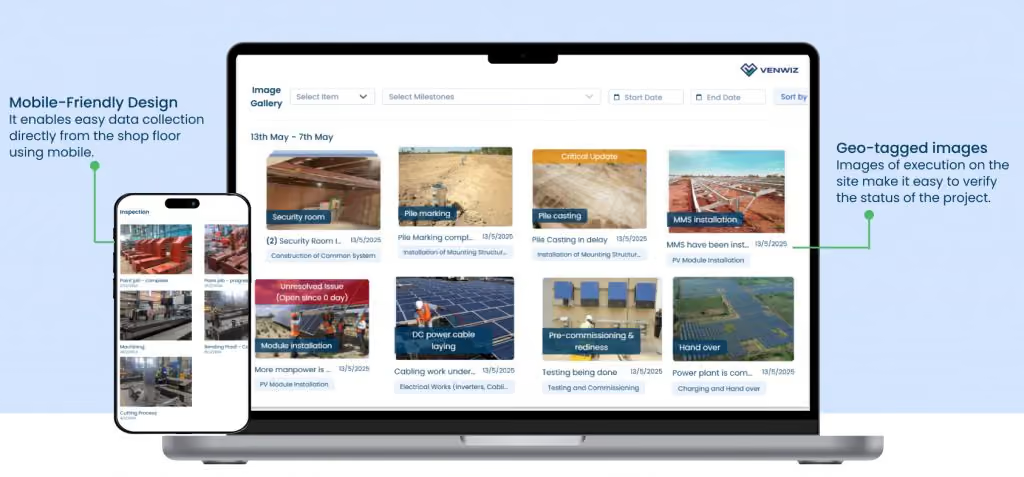
Why it matters? Large-scale solar sites are often in rural or Tier-3/4 areas or low-connectivity zones. Mobile-first updates ensure nothing is missed and reduce post-facto disputes with subcontractors.
3. Seamless Stakeholder Collaboration
SitePulse Solar connects developers, vendors, consultants, and internal teams on one shared platform. Every item is tracked at a granular level. All issues are time-stamped and tracked, creating a record that supports accountability and claims in case of project delays. Milestones are interlinked, helping teams see how a delay in one scope can affect the broader schedule.
Why it matters? In solar projects with overlapping EPC packages, this coordination prevents siloed discussions and eases collaboration between multiple stakeholders.
4. Audit-Ready Documentation
Within SitePulse Solar, all project documents - BOQs, drawings, permits, and inspection records are stored in one accessible location.
The view below offers a snapshot of how project-critical files are tracked and organised within the system.
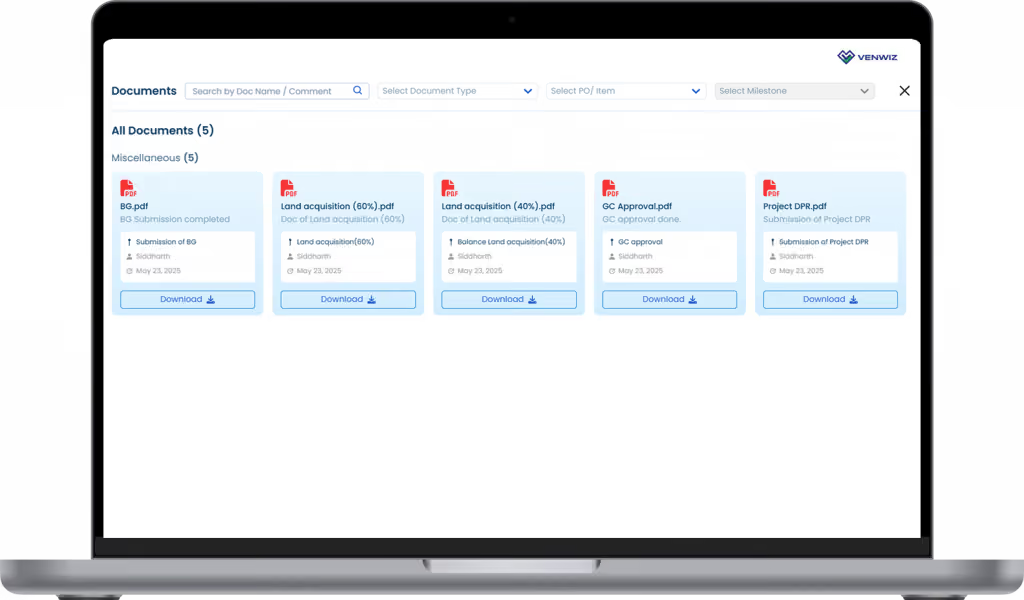
Teams can instantly access what they need during audits, billing checkpoints, or inspections. When team members update documents regularly, it speeds up compliance checks and avoids the risk of missing files.
Why it matters? When multiple EPC packages must meet varying DISCOM, consultant, or regulatory requirements, this ensures faster compliance and zero missing files.
5. Holistic View and Control
Track progress across every site with a centralized, milestone-level view covering scopes like piling, transformer installation, and switchyard commissioning. SitePulse Solar gives EPC teams complete visibility into each package, flags delays, and recommends actions to stay on track.
Real-time updates are accessible across the board from: site engineers to CXOs, enabling teams to act proactively, not reactively.
This level of visibility comes alive through SitePulse Solar dashboards.
Why it matters? In large-scale solar rollouts, execution runs in parallel across multiple sites and phases. SitePulse Solar brings everything together, so delays are flagged early and execution stays coordinated.
SitePulse Solar: The Real Differentiator in Solar EPCs With SitePulse Solar, execution shifts from reactive firefighting to proactive management:
1. Maintain billing cycles across distributed sites.
2. Reduce bandwidth spent on constant follow-ups.
3. Improve coordination across parallel work packages.
4. Ensure audit readiness and regulatory compliance.
For EPCs managing multi-site solar portfolios, SitePulse Solar acts as the digital execution layer that holds it all together, turning project plans into predictable outcomes.
AI-Powered Monitoring: The New Solar Differentiator
As outlined in this blog, multi-site rollouts, tight timelines, and complex on-ground coordination are the norm in solar projects. But these challenges shouldn’t come in the way of efficient execution.
Venwiz supports project developers, EPCs, and industrial clients by bringing structure, visibility, and control across every stage of execution.
Here’s how Venwiz helps teams move from friction to flow in solar project delivery :
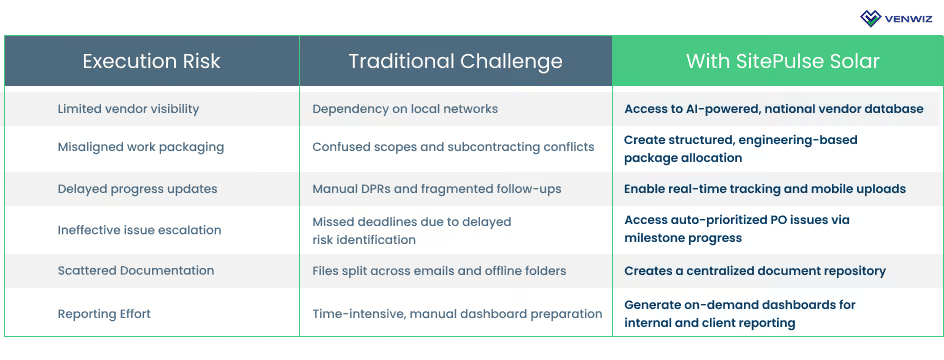
From structured vendor discovery to real-time milestone tracking, Venwiz helps solar teams minimize risk, maintain control, and deliver on schedule, even at scale.
Looking Ahead: Scaling Execution to Navigate Solar’s Next Challenge
With India ramping up its solar projects, so will the pressure to deliver faster. This means managing delivery across more locations, stricter deadlines, and growing expectations from stakeholders.
Whether you’re managing a 50 MW package or a multi-gigawatt portfolio, project success will depend on your ability to stay structured, deliver on time, and stay within budget.
Disciplined procurement and milestone-based execution tracking are no longer just process improvements - they are strategic enablers.
Ready to streamline and simplify your solar project execution?
Get in touch to see how Venwiz drives faster decisions, better coordination, and stronger outcomes for your specialized projects.
Related Blogs








Let’s talk about your next project
Our AI, expertise, and execution model close POs faster, cut slippages, and keep capital projects on schedule.