Best Practices in Vendor Assessment: The 4 Pillars of Comprehensive Evaluation
Vendor assessment shouldn’t be a yearly formality - it’s your frontline defense against risk. Yet for many companies, it remains an annual ritual still handled through fragmented, manual processes. Hours are spent evaluating spreadsheets, emails, and scattered data, leaving procurement teams with surface-level information and limited insight. This makes consistent, meaningful vendor evaluation difficult.
And this visibility gap carries real risk. Procurement leaders are under pressure to manage this rising risk while improving supplier collaboration
Deloitte’s 2025 Global CPO Survey shows that today’s top risk mitigation strategies all hinge on accurate, continuous vendor intelligence.
The survey found that CPOs ranked their most effective approaches as: • 74% maintain active alternate sources
• 64% prioritize stronger supply chain visibility
• 61% focus on deeper supplier collaboration
These priorities all depend on accurate and real-time vendor data. Fragmented and manual assessments delay the identification of procurement risks.
In this blog, we explore how a structured, tech-enabled approach to vendor assessment can transform it from a compliance exercise into a driver of resilience and growth.
Moving Beyond the Checklist: The Pitfalls of Traditional Assessment
Procurement teams have cycled through multiple vendor evaluation models over the years. While each is useful, they often create blind spots.
Let’s break down the pros and cons:
Method How it Works? Strength Limitations Evaluates total cost of doing business, incl. logistics, QA, and admin. Qualitative ratings (Excellent/Good/Poor) on broad parameters. Simple and easy to use. Lacks depth; insufficient for complex and critical vendor selection. Weighted Scoring Scores and weightages assigned to priorities (delivery vs. cost). Captures business priorities. Still subjective; relies heavily on evaluator judgment. Cost-Ratio Method Evaluates total cost of doing business, incl. logistics, QA, admin. Brings financial clarity. Narrow focus; misses qualitative performance factors. Performance-Based Agreements (PBA) Links evaluation to measurable targets and incentives. Highly effective if metrics are clear. Requires robust data and clear KPIs to work well. Before-the-Fact vs. After-the-Fact Pre-contract vs. post-delivery evaluations. Offers critical pre- and post-engagement insights. Often disconnected; weak on continuous monitoring. Understanding the Landscape: Common Vendor Assessment Methods 1
The lesson? Relying on standalone models results in partial assessments, leaving businesses exposed to hidden risks.
Before we get into best practices, it’s important to examine why vendor evaluation processes often fail to deliver consistent results. Across industries and procurement models, 3 themes stand out:
1. Subjective Parameters
When assessment parameters are vague, evaluations become subjective and difficult to compare. Without a standardized framework, it’s nearly impossible to track vendor performance or benchmark across projects. In such cases, outcomes often rely on the personal opinion of the reviewer rather than a systematic, objective model.
2. Visibility Gaps
Vendor information is scattered across spreadsheets, PDFs, and emails. This fragmentation makes it hard to get a full picture of vendor capabilities and risks, leaving procurement teams without actionable intelligence.
3. Reactive Risk Management
Without real-time visibility, issues are flagged too late to prevent disruptions. This reactive approach increases costs, erodes trust, and limits the ability to build strong supplier partnerships.
The Hidden Pitfalls Behind These Gaps
The result is a flawed evaluation process that reinforces legacy practices instead of enabling smarter vendor strategies: • The Familiar Vendor Paradox: Procurement teams default to existing vendors, even when performance is subpar, because sourcing new partners feels too costly or time-consuming.
• Human Constraints: Without structured processes, vendor evaluation easily slips back to simplistic metrics (like lowest-bid), undermining procurement’s strategic goals.
For a deeper dive into these challenges and their industry-wide implications, explore our report: “Beyond the Bid: A Strategic Lens on Vendor Selection.”
The 4 Pillars of Holistic Vendor Assessment
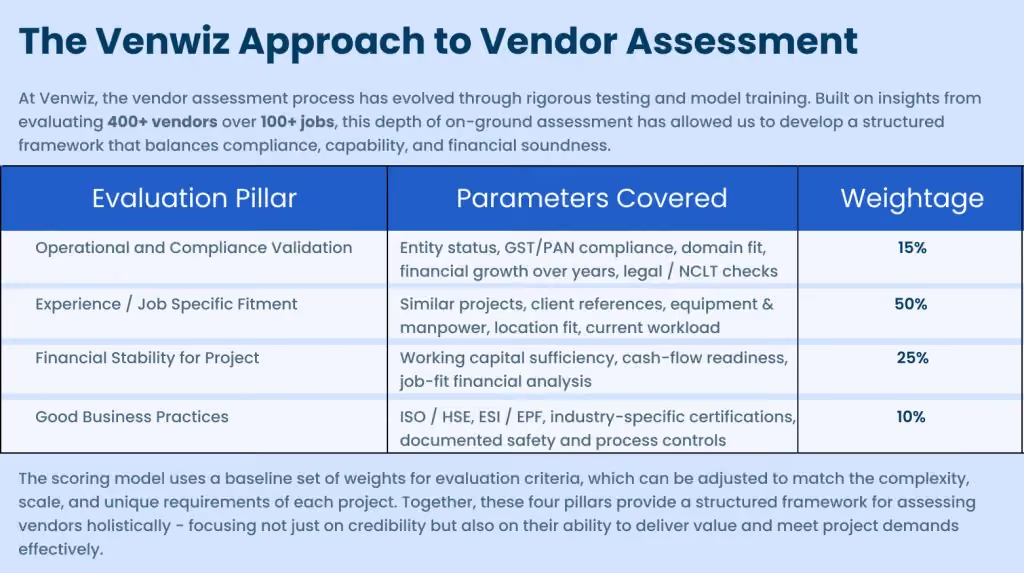
A strong assessment framework takes a holistic approach rather than relying on any single parameter or method. It considers quality standards, delivery reliability, financial health, and a supplier’s ability to scale with future demand. By grounding decisions in this well-rounded evaluation, procurement teams gain a clear picture of vendor suitability, mitigate risks, and build stronger, long-term partnerships.
Pillar 1: Operational and Compliance Validation
The first step in vendor assessment serves as a credibility checkpoint. This means confirming their legitimacy, regulatory compliance, and basic financial and operational stability upfront. By filtering out vendors with high risk or weak fundamentals at this stage, procurement teams ensure that time and resources are invested only in credible vendors who merit deeper evaluation.
Parameters Evaluation Focus Assessment Value Entity Type Identify the vendor’s legal structure (Proprietorship, Partnership, Pvt. Ltd., Ltd., Group, etc.). Clarifies liability, ownership, and decision-making authority and accountability. GST Compliance Confirm active GST registration, state coverage, and recent GSTR filing history. Validates operational legitimacy, tax compliance, and financial discipline, reducing regulatory risk exposure. Operational Domain Determine if the vendor operates in industrial or non-industrial sectors and relevant environments. Ensures alignment with job-specific conditions, mitigating domain-specific risks. Years of experience Review the vendor’s duration in business and track record Indicates stability, credibility, and proven expertise, helping filter inexperienced or high-risk vendors. Turnover & Growth Evaluate year-wise turnover trends and financial growth trajectory. Confirms financial stability, scalability, and ability to support project execution without risk of underperformance. Legal Cases Check Investigate ongoing or past civil, criminal, arbitration, or labour disputes. Highlights potential legal or reputational risks, enabling proactive mitigation before engagement. NCLT Check Examine active insolvency, bankruptcy, or merger proceedings filed in NCLT. Prevents partnering with financially distressed vendors, safeguarding project continuity and investment security. Basic Company Check
Pillar 2: Experience / Job Specific Fitment
Not every capable company can execute every project. This assessment focuses on a vendor’s technical expertise, past track record, and operational readiness to ensure they can deliver on the project’s scale, complexity, and standards.
Parameters Evaluation Focus Assessment Value Location Fit Assess proximity of vendor facilities to the site and experience in similar regions or industrial zones. Enables faster mobilisation, reduces logistics costs, and ensures familiarity with local site conditions. Client References / Past Work Review past client list, project details, completion certificates, and feedback. Builds trust through verified track records and validates authenticity of claimed experience. Past PO Value (Highest/Relevant) Check the highest-value purchase orders executed for comparable projects. Confirms ability to manage similar project scale and complexity with financial confidence. Turnover (TO) Value Assess the availability of skilled and semi-skilled manpower, including deployable teams. Indicates financial health and capacity to handle large or complex projects without disruption. Manpower Strength Builds trust through verified track records and validates the authenticity of claimed experience. Ensures execution quality by confirming workforce scalability and reducing the risk of delays from labour shortages. Local/Regional Material Sourcing Assess the proximity of vendor facilities to the site and experience in similar regions or industrial zones. Reduces procurement lead time, improves cost control, and minimises supply chain risks. Equipment Ownership Verify ownership, condition, and maintenance of critical tools and machinery. In-house equipment ensures control over execution timelines and reduces dependency on rentals or third parties. Ongoing Workload vs. Current Project Review current commitments, resource allocation, and execution bandwidth. Confirms the vendor’s bandwidth to take on new work and allocate sufficient resources without causing delays Past Client Review Score / Feedback Collect and analyse client ratings on quality, safety, timeliness, and responsiveness. Assess the proximity of vendor facilities to the site and experience in similar regions or industrial zones. Job Specific/ Project Specific Checks
Pillar 3: Financial Stability for the project
Financial capability is as critical as technical skill in ensuring timely, disruption-free project execution.
This section evaluates a vendor’s financial stability and working capital position against the project’s requirements. At Venwiz, we’ve built an internal financial modelling framework that evaluates a vendor’s ability to allocate sufficient working capital for mobilisation and continuity, factoring in client payment terms. This helps ensure vendors can meet workforce and supplier commitments without delays or compliance risks. This structured approach makes financial analysis a core pillar of vendor risk assessment.
Parameters Evaluation Focus Assessment Value Working Capital (WC) Suitability Analyse current assets vs. liabilities, liquidity ratios (Current/Quick), and free cash flow. Confirms if the vendor has sufficient liquid funds to support procurement, manpower mobilisation, and execution needs. Job-Fit Financial Analysis Compare project value with vendor’s working capital and cash reserves to assess funding capability. Ensures the vendor can fund project expenses in line with client payment terms, reducing mid-project cash flow risks. Financial Analysis
Pillar 4 : Good Business Practices
Compliance with recognised standards and certifications is a strong indicator of a vendor’s credibility and operational maturity. This section checks whether vendors follow industry-recommended processes, hold relevant certifications, and meet safety and workforce welfare obligations.
Parameters Evaluation Focus Assessment Value Business Certifications Verify ISO certifications and industry-specific credentials (ASME, NABL, CE, etc.). Demonstrates a vendor’s commitment to quality, safety, and environmental standards, ensuring process reliability. HSE (Health, Safety & Environment) Policy Review documented HSE policy, safety practices, PPE compliance, safety drills, and incident reporting systems. Minimises accident risks, promotes safe work environments, and shields the client from legal liability for on-site mishaps. ESI (Employee State Insurance) & EPF Check valid registration, payment history, and latest challans for ESI/EPF compliance. Ensures compliance with government policies on labour welfare and provides social security and medical benefits to workers. Good Business Practices
Together, the 4 pillars prioritizes capability and delivery readiness of the vendors while ensuring compliance and operational discipline, giving procurement teams a balanced, risk-aware view of vendor suitability.
Conclusion: A Strategic Approach for a Resilient Future
Selecting the right vendors is no longer just a procurement task. It’s a strategic lever for risk management, compliance, and long-term success. By combining structured evaluation pillars with AI-led intelligence, Venwiz helps transform assessments into a transparent, data-backed process that helps teams choose the right partners with confidence.
This approach doesn’t just streamline decision-making; it strengthens compliance, improves execution readiness, and builds a supply chain that’s resilient enough to support complex projects at scale.
Ready to see how strategic vendor intelligence can reshape your procurement process?
Related Blogs






Let’s talk about your next project
Our AI, expertise, and execution model close POs faster, cut slippages, and keep capital projects on schedule.