Not Just Another AI Assistant: How Venwiz Is Rethinking AI for Expediting

The enterprise world is flooded with AI copilots and assistants. Most promise faster answers, smarter dashboards and automation. But for execution-heavy environments like manufacturing and EPC, the real challenge isn’t answering generic questions. It’s making sense of complex, real-time project data and helping teams act before delays escalate.
That’s where Venwiz Pocket Expeditor is different.
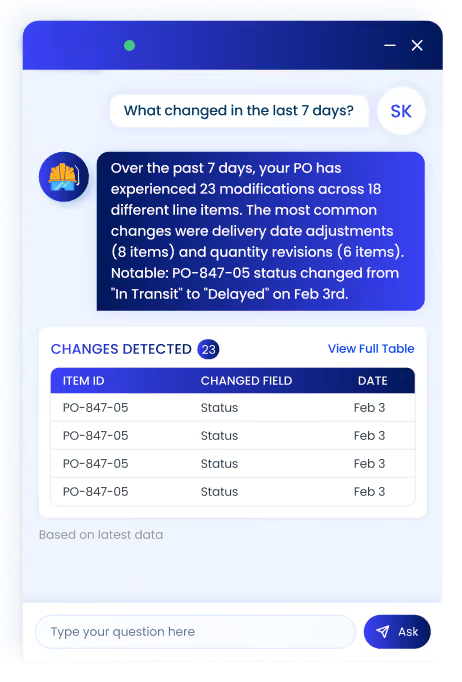
A proprietary tool built to give teams instant clarity throughout the project lifecycle, without sifting through multiple dashboards.
Here’s how:
- PO & Item Summaries: Consolidates live PO data into clear summaries (quantities, status, changes and pending actions) all in one view.
- Milestone Benchmarking: Compares planned vs. actual progress across vendors, items and stages, surfacing delays and deviations instantly.
- Root-Cause Insights: Explains why something is delayed by analyzing inspections, material readiness, vendor load and documentation gaps.
- One-Click Answers: From “Which equipment is critical?” to “What changed this week?”, the AI agent delivers precise, data-backed answers on demand.
It’s not designed like other chatbots that are layered on top of workflows. It’s built to understand how OrderPulse actually works on the shopfloor, across vendors, items, milestones and moving constraints.
If you’re evaluating AI in project execution, here are the key differences that separate Venwiz Pocket Expeditor from Generic AI assistants :
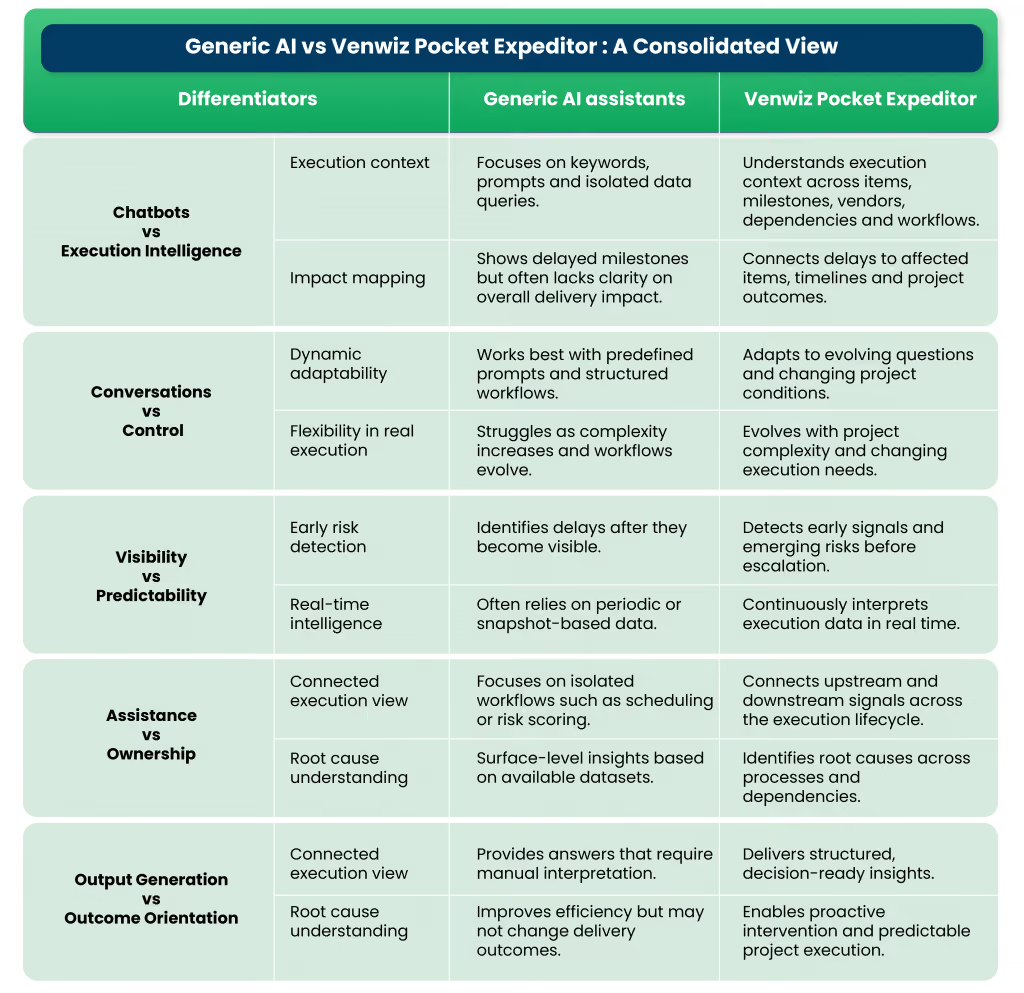
1. Chatbots vs Execution Intelligence
Most AI assistants work like search engines. They rely on keywords, predefined workflows or static reports. That works in predictable environments. But execution is rarely predictable.
In large purchase orders, hundreds of components and milestones move in parallel. Delays don’t show up clearly in dashboards, which is why expediting teams often struggle to detect early signals. They emerge from small changes in machining, inspection, documentation or dependencies.
This is where execution intelligence becomes critical. Instead of searching data, teams need systems that understand how manufacturing actually flows. This supports real-time expediting across vendors and milestones.
Pocket Expeditor interprets project signals using business logic, milestone dependencies and real-time tracking. It surfaces insights in context, helping teams move from reactive monitoring to proactive control.
This shift from searching to understanding execution is what makes it valuable in real project environments.
2. Conversations vs Control
One of the biggest limitations in project execution tools is the lack of flexibility. Real projects don’t follow fixed workflows and user questions rarely stay the same.
This is especially true in material delivery expediting, where vendor capacity, inspection outcomes, inventory levels and engineering changes constantly reshape delivery timelines. As execution progresses, teams constantly need new insights.
They want to know: What’s delayed today vs. yesterday? Which process is slipping the most? How does current progress compare to benchmarks? What changed after inspection?
Generic AI assistants struggle in this environment. Pocket Expeditor, however, is designed to interpret natural language queries and generate insights dynamically. This means teams don’t have to adapt their thinking to the tool. The tool adapts to how execution teams actually work.
Over time, this creates a flexible intelligence layer that scales across projects, vendors and industries.
3. Visibility vs Predictability
Most AI assistants rely on periodic or snapshot-based data. They summarise what has already happened. But expediting teams need to understand what is happening now and which interventions will protect delivery timelines.
In capex projects, planning is not the biggest problem. Post-PO execution and expediting gaps drive most delays. This is where real-time intelligence and proactive expediting become critical.
Generic AI assistants often struggle to identify early signals because it lacks deep context around workflows, dependencies and real-time deviations. This leads to delayed awareness and reactive escalation. Pocket Expeditor is designed to interpret execution as a connected system. It is also designed through real-world project experience of domain experts and expeditors.
It moves teams from post-facto reporting to real-time, proactive intervention. This proactive visibility allows expeditors, project teams and clients to take corrective action before delays compound into cost and schedule overruns.
4. Assistance vs Ownership
Many generic AI assistants are strong at individual tasks such as autonomous scheduling, risk scoring or document summarisation. But execution problems rarely exist in isolation.
A delay in cutting affects inspection → Inspection impacts assembly → Assembly influences shipment —> Shipment determines overall project milestones.
Generic AI assistants often lack the context to connect these signals, leading to fragmented insights and incomplete decision-making. Pocket Expeditor interprets execution as a connected system rather than a set of isolated milestones. Tracking progress is only a fraction of its role. It mirrors how experienced expeditors think; linking engineering readiness, manufacturing, inspection, assembly and dispatch to understand how risks actually propagate.
By connecting these signals, Pocket Expeditor provides a unified view of project health. This holistic understanding is critical for complex projects where delays rarely originate from a single source
5. Output Generation vs Outcome Orientation
Most generic AI assistants focus on speed and response quality. But in execution, clarity and actionability matter more than speed. Teams need insights they can trust and act upon immediately.
Pocket Expeditor is built to support expediting decisions that directly impact delivery timelines.This ensures expeditors know not just what is delayed, but what to do next.
Over time, this approach transforms AI from a simple assistant into a trusted execution partner, helping teams move from reactive monitoring to predictable project delivery.
The Verdict: From Monitoring to Intelligent Expediting
As AI adoption accelerates, the real question is no longer whether organisations will use AI, but whether that AI truly understands execution.
Generic AI assistants are designed to support workflows. But expediting demands something deeper: an understanding of execution dynamics, dependencies and emerging risks.
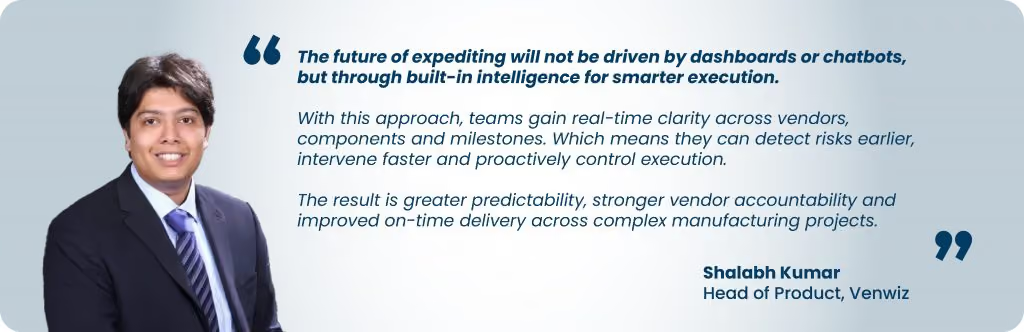
Venwiz Pocket Expeditor represents this shift. It brings together real-time visibility, contextual reasoning and continuous learning. It is also grounded in deep expediting expertise and real-time shopfloor visibility, helping teams anticipate challenges and respond with confidence.
If you’re exploring how execution intelligence can transform supply-chain expediting in your organisation, we’d be happy to share how Venwiz Pocket Expeditor is being used across complex manufacturing and EPC projects today. Connect with us to see it in action.
Learn how Venwiz Expediting brings real-time control and alignment to your capex projects.
Related Blogs








Let’s talk about your next project
Our AI, expertise, and execution model close POs faster, cut slippages, and keep capital projects on schedule.