The Capex Procurement Paradox: Why a Slow Sourcing Cycle is the Biggest Bottleneck

Capital expenditure defines an organization’s growth trajectory.
If you’re expanding capacity or setting up new plants, then a capex strategy should steer boardroom conversations. As a fundamental driver of long-term growth, its scale and strategic importance are only increasing.
In 2024–25, 40% of enterprises planned new Capex investments, according to data from the Ministry of Statistics and Programme Implementation (MoSPI). Over 53% of this spend was directed towards machinery and equipment.[1] The message is clear: industrial investment is accelerating, and procurement must keep pace.
These are high-stakes, high-value commitments that shape competitive advantage for years to come. Yet, many organizations still rely on slow, manual procurement processes that hold back execution.
To bridge this gap and turn procurement into a true strategic lever, businesses need to embrace the next evolution: AI-enabled procurement efficiency.
Why Traditional Procurement Falls Short?
Capex procurement today goes far beyond sourcing. It’s about how organizations balance cost efficiency, vendor capability, and execution control.
But when these decisions depend on manual workflows and disconnected systems, the process becomes slow, error-prone, and difficult to scale.
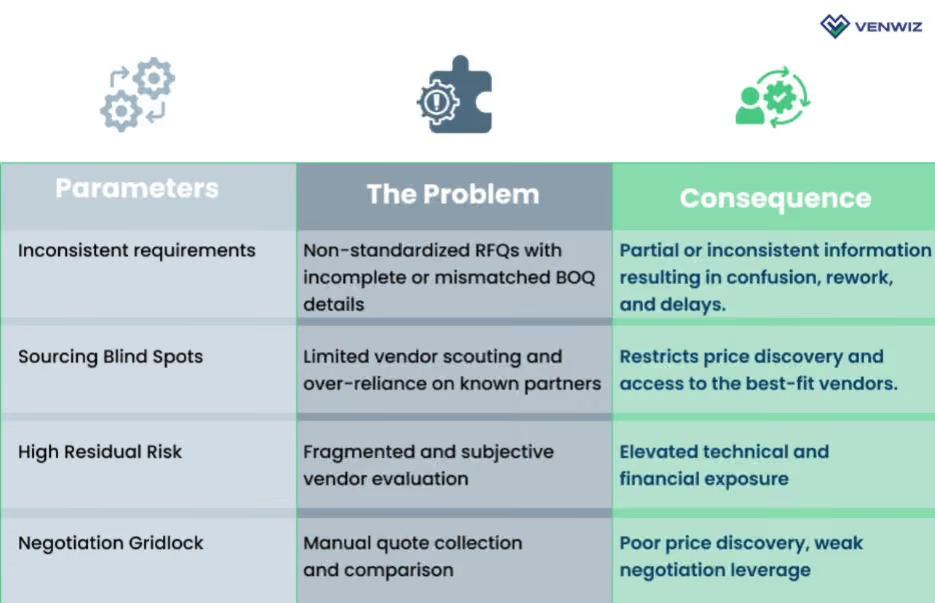
Each of these issues compounds the delay, stretching procurement cycles and stalling Capex projects before they even begin.
The Real Bottleneck: A 6–8 Week Procurement Lag
A typical Request for Quotation (RFQ) to Purchase Order (PO) process in capex procurement takes over 6-8 weeks, often involving multiple departments, non-standard templates, and scattered communication. While projects plan for precision, procurement still operates on fragmented workflows that rely heavily on manual tracking and emails. For industrial organizations managing tight timelines and multiple packages, that lag is costly! Resulting in delayed project execution, inflated budgets, and compounding risks. In complex EPC environments, sourcing delays alone can impact over 50% of the total project timeline.[2]
In other words, the real constraint in capex isn’t under-investment. It’s slow execution.
Bridging the Gap: From Manual to AI-Backed Procurement
The way forward isn’t just digitalization - it’s structured intelligence. Agentic AI systems enable procurement teams to move beyond repetitive tasks and automate entire workflows with precision.
These AI agents scan 1000s of vendors in parallel, evaluate capabilities, and shortlist the best-fit partners in hours. And all this at a level of scale and depth that is humanly impossible. At every stage of the procurement cycle, they capture insights that would either be time-consuming or overlooked.
That’s where Venwiz RFQPro comes in. Built for industrial Capex procurement, RFQPro brings structure, visibility, and speed to every sourcing cycle; cutting down timelines from over 6–8 weeks to just 2–3 weeks.
And it doesn’t just accelerate the process; it amplifies the output. With AI-driven vendor discovery and evaluation, teams get up to 3× more relevant vendor options, with higher alignment on capability and scope.
The result? faster project execution, reduced risk, and optimized pricing.
Take a closer look at the RFQPro workflow in this short video:
Inside RFQPro: How It Transforms the Pre-PO Process
The Pre-PO phase defines the success of every Capex purchase. It focuses on ensuring robust vendor selection, optimal pricing, and clear documentation before the contract is awarded.
With RFQPro, it becomes faster, more transparent, and completely data-driven.
1. RFQ Standardization and Assessment
Most sourcing delays start with inconsistent requirements. RFQPro solves this by using AI to interpret, extract, and structure data from BOQs, drawings, and technical documents automatically.
- Document comprehension: Venwiz AI reads and understands technical files, identifying key parameters and creating a structured summary.
- Structured PQR generation: Our proprietary AI technology converts these parameters into Pre-Qualifying Requirements (PQRs) to ensure a precise match between job needs and vendor capabilities.
Why does it matter? Standardized RFQs eliminate rework, reduce communication loops, and set a consistent baseline for evaluation.
2. AI-Powered Vendor Discovery
Partner selection shouldn’t depend on limited visibility. RFQPro expands the search with data-driven precision.
- PQR-driven scouting: First, the PQR is broken down into precise, technical search queries. Then the system searches vendors across 150+ parameters: from turnover and expertise, to geographic presence and sector experience.
- Smart shortlisting: From a network of over 1 Mn+ verified vendors, our smart search algorithm identifies around 50 most relevant vendors, ensuring broad market coverage and better price discovery.
Why does it matter? Procurement teams move beyond limited networks, gaining access to the best-fit vendors for every technical requirement.
3. Agentic 360° Vendor Intelligence
Evaluation shouldn’t depend on instinct; it should be informed by data. RFQPro aggregates financial, technical, and operational data to build a unified vendor scorecard.
- Standardized assessment: Each vendor is rated across financial, legal, and technical dimensions using a standardized vendor assessment score, providing an objective, unified basis for evaluation.
- Capability deep-dive: Detailed capability profiles summarize vendor strengths, financial fitment, past performance, and client reviews, helping teams make evidence-based decisions.
Why does it matter? Procurement moves from subjective judgment to measurable, comparable insights, minimizing post-contract risk.
4. Real-Time Cost Benchmarking and Quote Standardization
Negotiations work best when you have clarity. This function eliminates non-comparable bids and secures optimal pricing. Our teams combine detailed costing libraries with real-time market intelligence to deliver precise, data-backed estimates for every Capex requirement.
- Standardized quote collection: An automated communication channel is established with select vendors to collect documents and ask them to submit their quotes using a uniform template.
- AI-driven analysis: The integrated quote comparison and cost calculator tools highlight pricing anomalies, benchmark raw material costs, and identify savings opportunities, arming teams with actionable negotiation insights.
Why does it matter? With structured quote comparison, procurement can secure optimal pricing and validate costs confidently.
The Strategic Payoff
By compressing sourcing timelines and minimizing risk, Venwiz RFQPro helps organizations turn procurement from a bottleneck into a performance driver.
Here’s what it delivers:
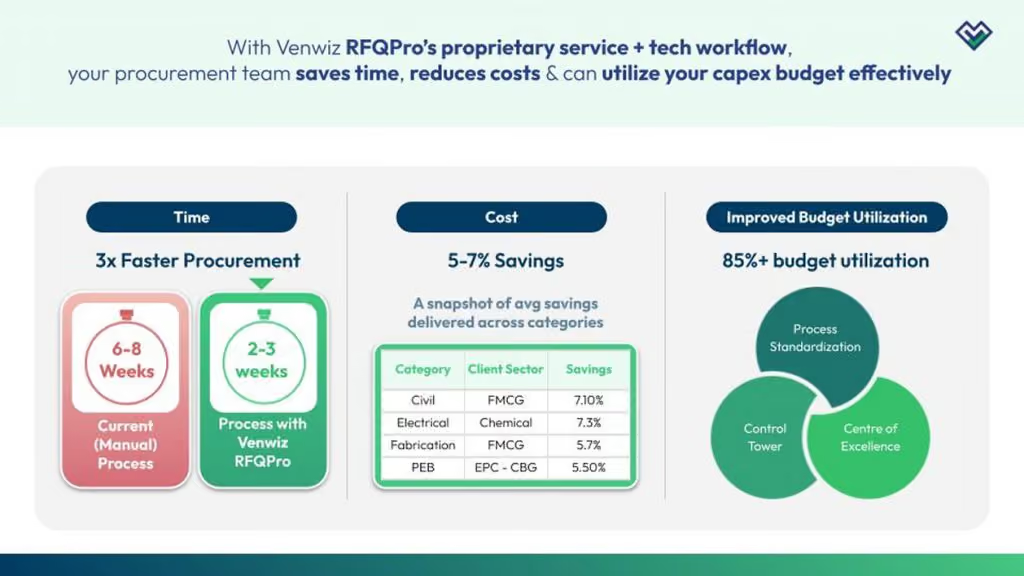
When teams spend less time chasing documents and more time analyzing data, CapEx procurement becomes not just efficient but strategic.
Conclusion: Turning Procurement into a Growth Engine
AI-backed efficiency isn’t just about moving faster; it’s about elevating the quality of every procurement decision.
With Venwiz RFQPro, procurement teams gain the bandwidth to focus on what truly drives value: supplier innovation, market intelligence, and resilient project execution. By standardizing RFQs, expanding vendor discovery, and bringing data-driven transparency into evaluation and benchmarking, the entire sourcing process becomes smarter and more predictable.
The result is a shorter cycle (from over 6–8 weeks to 2–3 weeks) with reduced vendor risk, optimized pricing, and stronger alignment across teams.
In the long run, that’s what defines Capex success: turning investments into impact, and plans into performance.
Interested to learn more? Book a Demo
Related Blogs



Let’s talk about your next project
Our AI, expertise, and execution model close POs faster, cut slippages, and keep capital projects on schedule.